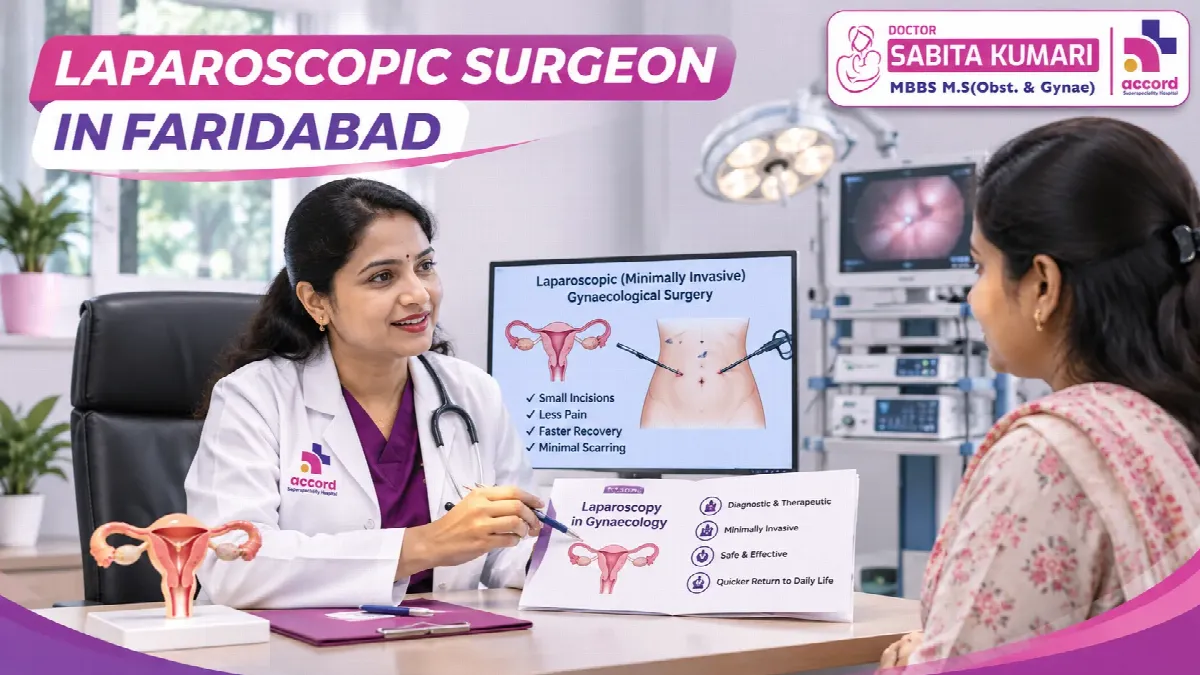
Laparoscopic Surgeon in Faridabad
If you have been advised surgery for fibroids, ovarian cysts, endometriosis or a hysterectomy, a laparoscopic surgeon in Faridabad can often treat you through small cuts. This page explains keyhole gynecological surgery, how to choose a surgeon and what to ask before you decide.
What Is Laparoscopic Surgery?
Laparoscopic surgery, also called keyhole or minimally invasive surgery, is an operation done through a few small cuts, each usually about half to one centimeter long. A thin tube with a camera, the laparoscope, is passed into the abdomen and shows the pelvic organs on a screen. Fine instruments pass through the other cuts, and the surgeon operates while watching the screen. Because the cuts are small, there is usually less pain, less blood loss, smaller scars and a faster return to routine than after open surgery.
Dr. Sabita Kumari is an obstetrician and gynecologist with 16 years of experience who trained in laparoscopic gynecological surgery at AIIMS, New Delhi. She consults at Accord Superspeciality Hospital, Budena Village, Sector 86, Faridabad.
Conditions That May Need Keyhole Surgery
| Condition | How Keyhole Surgery Can Help |
|---|---|
| Uterine fibroids | Removal of fibroids (myomectomy) with the uterus kept, or hysterectomy when needed |
| Ovarian cysts | Removal of the cyst while protecting healthy ovarian tissue where possible |
| Endometriosis | Diagnosis and removal of deposits and adhesions |
| Adenomyosis | Hysterectomy for severe symptoms in women who have completed their family |
| Ectopic pregnancy | Removal of the pregnancy from the tube, in stable patients |
| Infertility | Checking the tubes and treating adhesions or blocked tubes |
Not every woman with these conditions needs surgery. Many are managed with medicines or regular monitoring, and an operation is advised only when it is likely to help.
Keyhole Surgery for Fibroids in Faridabad
Fibroids are non-cancerous growths in the uterus. They may cause heavy periods, pressure on the bladder, pelvic pain or difficulty conceiving, but many cause no symptoms at all and need only follow-up. When treatment is needed, medicines are tried first. If a procedure is advised, laparoscopic myomectomy removes the fibroids while keeping the uterus, which suits women who want to conceive later. Where the uterus must be removed, laparoscopic hysterectomy is often possible. Our article on uterine fibroids treatment explains the choices, and the page on laparoscopic hysterectomy covers the operation and recovery in detail.
Ovarian Cysts and Endometriosis
Most ovarian cysts are harmless and disappear on their own. A cyst may need surgery if it is large, persistent, painful, twisted or has features that need to be checked. Endometriosis, in which tissue like the uterine lining grows outside the uterus, can cause severe period pain, pain during intercourse and difficulty conceiving. Laparoscopy lets the surgeon see and treat both problems through small cuts. You can read more about the symptoms in our guide to period pain and endometriosis, and about cysts on the ovarian cyst page.
Diagnostic Laparoscopy and Hysteroscopy
Sometimes the camera is used to find the cause of a problem rather than to operate. Diagnostic laparoscopy looks at the pelvis from outside, and hysteroscopy looks inside the uterus through the vagina without any cuts. They are used for unexplained pelvic pain, infertility, abnormal bleeding and to remove polyps. See the gynaec endoscopy page and our article everything you need to know about gynecological endoscopy for a full explanation.
Benefits and Limits of Keyhole Surgery
- Smaller cuts and less visible scars
- Usually less pain and less blood loss than open surgery
- A shorter hospital stay, often one to two days
- A faster return to normal activity
- Not suitable for everyone: a very large uterus, extensive scarring or some medical conditions may make another approach safer
Like any operation, it carries risks such as bleeding, infection, injury to nearby organs and reactions to anesthesia. These are uncommon, and the risk is lower when the surgeon is experienced and the case is selected carefully. Your doctor should explain them before you sign the consent form.
How to Choose a Laparoscopic Surgeon
Surgical skill is built through training and regular practice, so it is reasonable to ask direct questions:
- What training have you had in laparoscopic surgery, and where?
- How often do you perform this procedure?
- Is keyhole surgery suitable for my case, or would another route be safer?
- What are the alternatives to surgery for me?
- What happens if the operation cannot be completed by keyhole?
- Who will manage me after surgery if there is a problem?
A good surgeon welcomes these questions and gives straight answers, including saying when surgery is not needed.
Common Myths About Laparoscopic Surgery
- "There is no recovery time." Recovery is faster than after open surgery, but it still takes days to weeks, and rest matters.
- "It is only for small problems." Many large fibroids and complex cysts can be treated by keyhole surgery in experienced hands, although some need another route.
- "A hysterectomy always causes menopause." If the ovaries are left in place, they continue to make hormones, though some women reach menopause a little earlier.
- "Fibroids always need surgery." Many cause no trouble and are only monitored.
- "A cyst always means cancer." The great majority of ovarian cysts are benign, but persistent or unusual ones are checked carefully.
Anesthesia and Hospital Stay
Laparoscopic surgery is done under general anesthesia, so you are asleep and feel no pain during the procedure. An anesthesiologist checks your health beforehand and monitors you throughout. Most women stay in hospital for one to two days, depending on the operation, and go home once they are eating, walking and passing urine comfortably.
Before the Operation
Preparation usually includes an examination, an ultrasound, blood tests and a check of your general health. You may be asked to stop certain medicines, such as blood thinners, a few days before, and not to eat or drink for several hours before anesthesia. Arrange for a family member to stay with you and for help at home for the first couple of weeks.
Recovery After Keyhole Surgery
Most women walk on the day of surgery or the day after, and walking helps recovery. Expect some soreness at the cuts and shoulder discomfort from the gas used during surgery, both of which settle in a few days. Many women return to light work in one to three weeks, depending on the operation. Avoid heavy lifting, intercourse and strenuous exercise until your surgeon clears you at the follow-up visit. Contact your doctor if you develop fever, heavy bleeding, severe or worsening pain, redness or discharge at a cut, or pain and swelling in a leg.
Getting a Second Opinion
If surgery has been advised elsewhere, a second opinion is reasonable and common. Bring your ultrasound, MRI and blood reports along with the earlier prescription. The doctor will review them, tell you whether surgery is needed, explain other options and let you decide without pressure. Many women find that a clear explanation gives them confidence in whichever route they choose.
How to Book a Consultation
Call +91 9310600209 or use the form on our Contact page to confirm timings and book a slot. Please carry your scans, reports and prescriptions. You can return to the home page to see all services.
Final Thoughts
Keyhole surgery has made many gynecological operations gentler, but the best operation is the one that is truly needed and well planned. If you have been told you need surgery, a consultation with a laparoscopic gynecologist is a good way to understand your options. This page is for general information and does not replace medical advice.