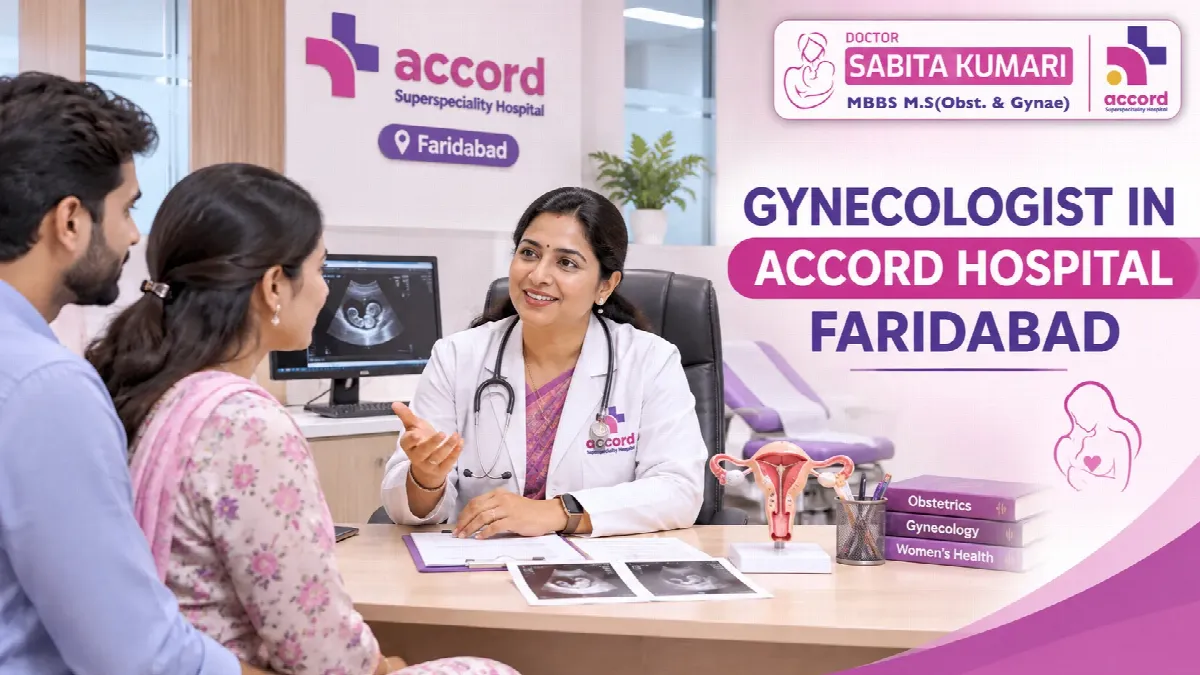
Gynecologist in Accord Hospital Faridabad
If you are looking for a gynecologist in Accord Hospital Faridabad, Dr. Sabita Kumari consults at Accord Superspeciality Hospital, Budena Village, Sector 86. This page explains who she is, which conditions she treats, what happens at a first visit and how to book, so you can decide with clear information.
Dr. Sabita Kumari, Gynecologist at Accord Hospital Faridabad
Dr. Sabita Kumari is an obstetrician and gynecologist with 16 years of experience who consults at Accord Superspeciality Hospital in Faridabad. Her work covers the full span of women's health: pregnancy care and delivery, menstrual and hormonal problems, PCOS, fibroids, ovarian cysts and infertility. She trained in laparoscopic (keyhole) gynecological surgery at AIIMS, New Delhi, so when an operation is genuinely needed she can discuss minimally invasive options with you.
Many patients searching for an Accord Hospital gynaecologist want three things: a doctor who explains clearly, a hospital they can reach without difficulty, and a plan that does not push surgery before it is needed. This page is written to help you judge those three things for yourself.
Where Is Accord Hospital and How to Reach It?
Accord Superspeciality Hospital is located at Budena Village, Sector 86, Faridabad. If you live in Sector 86, nearby sectors, Greater Faridabad or the villages around Budhena, the hospital is a short drive away, which matters when you are visiting for repeated antenatal checkups. If you want a doctor close to home, you can also read our page on the gynecologist in Sector 86 Faridabad.
Please call +91 9310600209 before travelling to confirm the consultation timings and to book a slot. Clinic timings can change, and a short call saves a wasted trip, especially when you are pregnant or unwell.
Conditions Treated at the Accord Hospital Gynecology Clinic
The table below shows the main areas of care. Each row links to a page where you can read more.
| Area of Care | What It Includes |
|---|---|
| Pregnancy care | Antenatal checkups, scan advice, nutrition, delivery planning, postnatal follow-up |
| High-risk pregnancy | Close monitoring for diabetes, high blood pressure, twins, previous miscarriage or cesarean |
| Menstrual problems | Irregular, heavy, painful or missed periods |
| PCOS and PCOD | Diagnosis, lifestyle plan, hormonal treatment, fertility guidance |
| Fibroids and adenomyosis | Medical treatment and surgical options when needed |
| Infertility | Evaluation, ovulation tracking and treatment planning |
| Gynaec endoscopy | Hysteroscopy and laparoscopy for diagnosis and treatment |
Pregnancy and Delivery Care
Pregnancy care begins with regular checkups that track your blood pressure, weight, blood sugar and the baby's growth. Most pregnancies are healthy, but a minority need closer attention from the start, which is why early registration matters. Our guide to the signs of a high-risk pregnancy lists the warning signs worth knowing before your first visit.
Where it is safe, a normal delivery is encouraged, and a cesarean section is advised only for a clear medical reason. You can read how that decision is made in our article on normal delivery tips and when a C-section is needed. If you are still choosing a doctor, how to pick the best pregnancy doctor in Faridabad sets out the questions to ask.
Periods, PCOS and Hormonal Problems
Irregular cycles, heavy bleeding and severe period pain are some of the most common reasons women book a gynecology visit. The cause may be hormonal, thyroid-related, PCOS, fibroids or something else, and the treatment is different for each. At the first consultation Dr. Sabita Kumari takes a detailed history and advises only the tests that match your symptoms.
To understand your symptoms before you come, read about PCOS treatment in Faridabad, the causes of irregular periods and heavy period treatment options.
Laparoscopic and Endoscopic Gynecological Procedures
Some conditions, such as fibroids, ovarian cysts, polyps and endometriosis, may need a procedure. Keyhole surgery uses small cuts and a camera, which usually means less pain and a quicker return to routine than open surgery. Not everyone needs surgery, and many women are managed with medicines first. Your options will be explained in plain language before any decision is taken. Read more on our gynaec endoscopy page or in the guide to gynecological endoscopy.
What to Expect at Your First Visit
- A conversation about your symptoms, periods, pregnancies, medicines and family history
- A physical or pelvic examination only when it is needed, with your consent
- A clear explanation of which tests, if any, are required and why
- A discussion of treatment choices, including options that do not involve surgery
- Time to ask questions and a plan for follow-up
What to Bring With You
- Earlier ultrasound scans, blood reports and prescriptions
- A note of your last three period dates
- A list of medicines and supplements you take
- Your pregnancy records and booking card if you are already pregnant
- A family member, if you would feel more comfortable with company
How to Choose a Gynecologist at a Hospital
A hospital name tells you about facilities, but the doctor decides your experience. When you compare options, look at a few practical points rather than rankings or advertising claims:
- Does the doctor explain your diagnosis in simple words and invite questions?
- Are you offered more than one treatment option, including non-surgical ones?
- Is there clear training and experience in the procedures you may need?
- Can you reach the clinic easily for repeat visits, especially during pregnancy?
- Will the same doctor follow your case from first visit to delivery or recovery?
Our guide to choosing the best doctor for pregnancy goes into these questions in more detail.
Antenatal Care at a Glance
Schedules vary with each pregnancy, and your doctor will set the exact plan. In general, a first visit is advised as soon as you confirm the pregnancy, with an early scan to date it and blood tests to check hemoglobin, blood group and sugar. The second trimester usually includes a detailed anatomy scan and checks for blood pressure and diabetes. In the third trimester visits become more frequent, growth and the baby's position are reviewed, and delivery planning begins. Iron, calcium and folic acid are commonly prescribed, but always take supplements only as advised.
When to Seek Care Without Waiting for an Appointment
Go to the nearest hospital emergency, or call the clinic at once, if you notice any of the following:
- Vaginal bleeding during pregnancy, or heavy bleeding that soaks a pad within an hour
- Severe abdominal pain, fainting or dizziness
- Reduced movements of the baby after the fifth month
- Leaking of water before the expected date of delivery
- Severe headache, blurred vision or sudden swelling of the face and hands in pregnancy
- Fever with pelvic pain or foul-smelling discharge
Care for Teenagers and Women Over 40
Girls in their teens may visit for painful or irregular first periods, and an unhurried, private consultation helps them speak openly. Our page on adolescent health issues explains what is normal and what needs a check. Women in their 40s often come for heavy periods, fibroids, perimenopausal symptoms and routine screening such as a Pap smear. Regular gynecological checkups at any age help find small problems before they become large ones.
How to Book an Appointment
You can call the clinic on +91 9310600209 or use the form on our Contact page. Tell the team whether you are visiting for pregnancy, a period problem or a second opinion, so that the right amount of time is kept for you. You can return to the home page to see all services and patient education videos.
Final Thoughts
A good gynecologist listens first, explains next and treats only what needs treating. If you want a doctor who consults at Accord Hospital in Faridabad, with long experience in pregnancy care and keyhole surgery, a short consultation is the best way to see whether her approach suits you. This page is general information and does not replace medical advice, so please see a doctor for concerns about your own health.