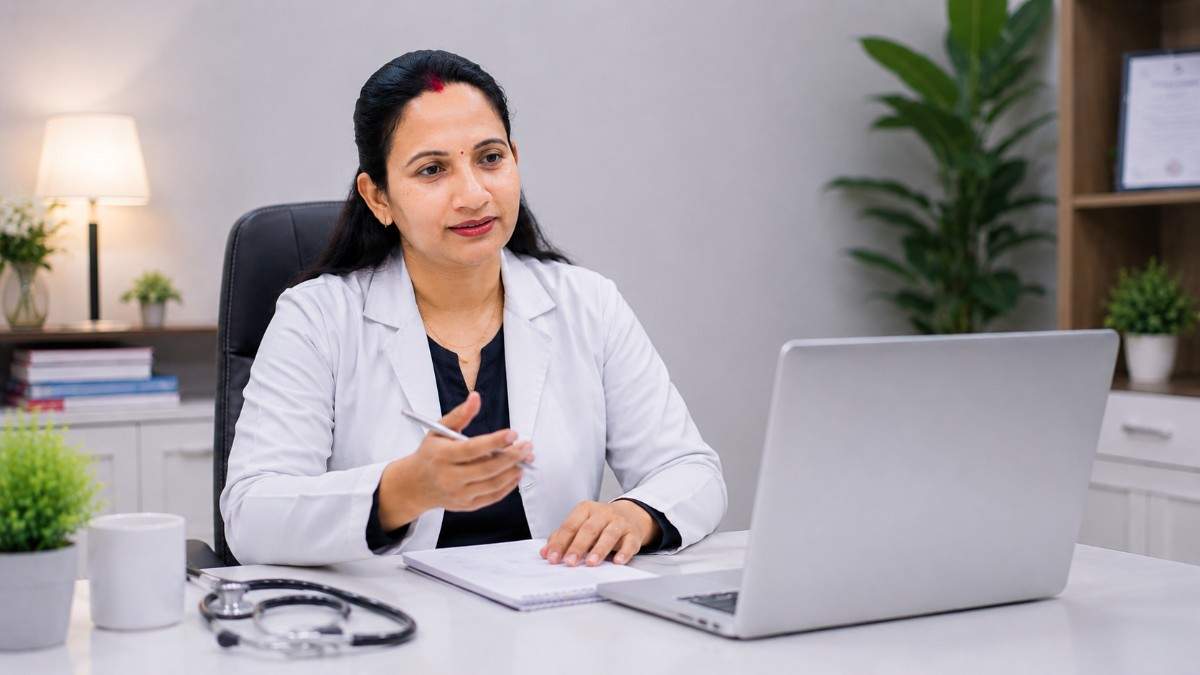
This guide walks you through what gyne endoscopy actually involves, when an online consultation makes sense, what to expect from it, and how to find the right specialist.
What Is Gyne Endoscopy and Why Does It Matter?
Gynaecological endoscopy is an umbrella term for minimally invasive procedures where a thin, lighted camera is used to examine or treat the internal reproductive organs. No large incisions. Significantly shorter recovery times compared to open surgery. And in skilled hands, far more precise outcomes.
The two most common types you will encounter are:
Laparoscopy involves inserting a tiny camera through a small incision near the navel to examine the uterus, fallopian tubes, and ovaries. It is used to diagnose and treat conditions like endometriosis, ovarian cysts, fibroids, and pelvic inflammatory disease.
Hysteroscopy involves passing a thin camera directly through the cervix into the uterine cavity. It is used to investigate abnormal bleeding, polyps, fibroids inside the uterus, and structural issues that might be affecting fertility.
Both procedures fall under the broader category of minimally invasive gynaecological surgery, and both are now commonly discussed in online consultations before a patient even steps into a hospital.
Why Are Women in India Turning to Online Gyne Endoscopy Consultations?
When I first started looking into how women were using teleconsultation for surgical decisions, the pattern was striking. It was not just about convenience, though that matters. It was about access to honest, unhurried conversation with a qualified specialist.
Think about it this way. You live in a tier-2 city or a smaller town. Your local gynaecologist has recommended a laparoscopy. You want a second opinion. You want someone to explain exactly what will happen, what the recovery looks like, and whether there are non-surgical alternatives you have not explored yet. Travelling to Delhi or Faridabad for one consultation is not always practical.
That is precisely where gyne endoscopy consultation online India services fill a real gap.
According to a 2022 report by the Indian Council of Medical Research, teleconsultation adoption among women in reproductive health categories grew by over 60% in the two years following the pandemic. Women were not just using it for convenience. They were using it to make better-informed decisions about procedures that felt intimidating.
In my experience, patients who come in for in-person consultations having already done an online pre-consultation are far more prepared. They ask better questions. They understand their reports. The appointment becomes a conversation rather than a one-way delivery of information.
Who Should Consider an Online Gyne Endoscopy Consultation?
Not everyone who books an online consultation is preparing for surgery. Some are doing exactly what they should be doing before any major medical decision: gathering information.
You might benefit from an online consultation if you:
- Have been recommended a laparoscopy or hysteroscopy and want a second opinion before proceeding
- Are trying to understand your reports (ultrasound, MRI, blood tests) and what they mean for your treatment plan
- Have been dealing with unexplained pelvic pain, abnormal bleeding, or fertility issues and want guidance on next steps
- Live far from a specialist centre and cannot easily travel for an initial consultation
- Want to understand what your surgical options are before committing to a specific hospital or surgeon
- Have already had a procedure and need follow-up guidance that your local clinic cannot provide adequately
The key thing to remember is that an online consultation for gyne endoscopy is not a replacement for the procedure itself. The surgery still happens in person. What changes is how prepared, informed, and confident you feel going into it.
What Happens During an Online Gyne Endoscopy Consultation?
A lot of women worry that an online consultation will feel superficial. In my experience, a well-structured teleconsultation with a trained gynaecological endoscopy specialist is genuinely thorough.
Here is a realistic breakdown of what a good session covers:
Review of Your Medical History and Reports
The specialist will ask about your symptoms, their duration, and any treatments you have already tried. They will review your ultrasound, any previous surgical reports, blood work, or MRI if available. Sharing these documents ahead of the call makes the session significantly more productive.
Discussion of Your Diagnosis
This is where most patients get real clarity for the first time. The doctor explains what the imaging shows, what the suspected condition is, and why endoscopy has been recommended. You finally understand not just what the procedure is, but why it is being suggested for your specific case.
Surgical vs Non-Surgical Pathways
A responsible specialist will always walk you through alternatives to surgery before confirming that endoscopy is the right route. Hormonal therapy for fibroids, for example, or lifestyle and medication management for PCOD-related cysts. Not every case needs the operating table. A good online consultation makes this distinction clear.
Pre-Procedure Preparation Guidance
If endoscopy is confirmed as the appropriate next step, the consultation will cover what tests you need beforehand, how to prepare physically, what questions to ask your operating surgeon, and what recovery will look like.
Finding a Reliable Specialist for Gyne Endoscopy Consultation Online in India
This is where people get it wrong most often. They search for the cheapest option or book through an aggregator platform without checking the doctor's actual experience in endoscopic procedures specifically.
Here is what actually matters:
- Verify the surgeon's laparoscopic and hysteroscopic experience, not just their general gynaecology background. Endoscopic surgery is a subspecialty. Ask directly how many laparoscopies or hysteroscopies they perform per month.
- Check if they are comfortable reviewing your reports online rather than deferring everything to an in-person visit. A good specialist can give you meaningful guidance based on imaging and history without physically examining you first.
- Look for transparency in how they communicate. Do they explain things in plain language? Do they offer alternatives? Are they willing to say "I need to see you in person before I can recommend surgery"? That kind of honesty is actually reassuring, not disappointing.
- Check their hospital affiliation for when you do need the procedure physically. The best online consultations connect seamlessly to in-person care when the time comes.
Dr. Sabita Kumari: An Experienced Voice for Gyne Endoscopy in India
Among specialists offering gyne endoscopy consultation online in India, Dr. Sabita Kumari is a name that repeatedly comes up for women seeking structured, honest pre-surgical guidance.
With over 16 years of hands-on experience in laparoscopic gynaecology and obstetrics, Dr. Sabita consults at Accord Hospital in Faridabad and has managed a wide range of endoscopic cases including ovarian cystectomies, diagnostic laparoscopies for endometriosis, hysteroscopic polypectomies, and fibroid resections.
What I have noticed from patient feedback is that Dr. Sabita takes a genuinely conservative approach when it comes to surgery. She does not recommend endoscopy unless the clinical picture clearly points to it. For women who have been told they need a procedure but are not sure why, that kind of clarity is exactly what an online consultation should deliver.
You can contact Dr. Sabita's clinic at +91 9310600209 to schedule an online consultation. She is also active on Instagram at @drsabitasavvy where she regularly shares practical, no-jargon content on gynaecological health in both Hindi and English.
How to Prepare for Your Online Gyne Endoscopy Consultation
A fifteen-minute consultation can cover a lot of ground if you walk in prepared. Do not waste the first ten minutes explaining the background when you could be getting actual answers.
Before your call:
- Compile all reports — ultrasound scans, blood tests, previous surgical notes, discharge summaries
- Write down your symptom history with approximate dates of onset and any patterns you have noticed
- List every medication and supplement you are currently taking
- Write down three to five specific questions you want answered by the end of the call
- Note your menstrual cycle history, including any recent changes
Walking in with this information means your specialist can focus on giving you insights rather than gathering basic facts.