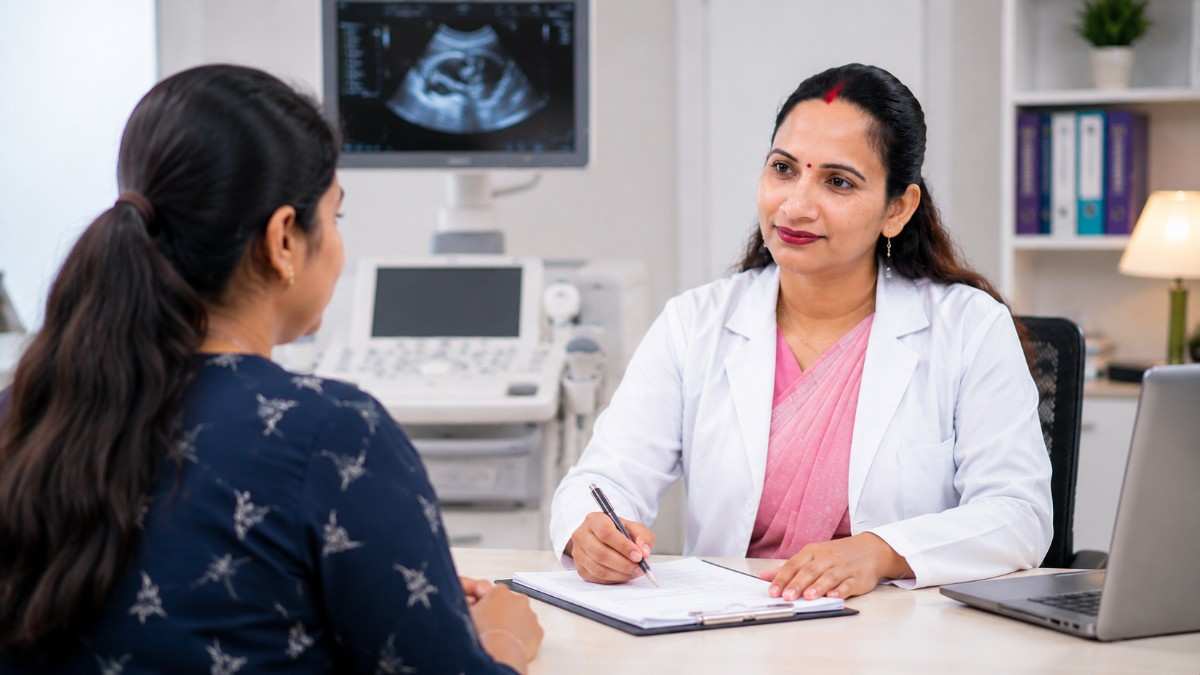
Recognizing the symptoms early and reaching an experienced specialist can be the difference between a safe recovery and a life-threatening complication. Women across Faridabad, Haryana, and the broader Delhi NCR region trust Dr. Sabita Kumari as one of the most reliable ectopic pregnancy treatment doctors in Faridabad. With over 16 years of specialized experience in obstetrics, gynecology, and advanced laparoscopic surgery, Dr. Kumari at Accord Hospital, Faridabad combines clinical precision with genuine compassion. Her deep expertise in minimally invasive surgical techniques and her commitment to fertility preservation make her the first choice for women facing this frightening diagnosis. If you or someone you care about is experiencing unusual symptoms in early pregnancy, do not wait. Timely care saves lives and protects future fertility.
What is an Ectopic Pregnancy?
In a healthy pregnancy, a fertilized egg travels through the fallopian tube and implants itself in the lining of the uterus, where it grows and develops over nine months. An ectopic pregnancy occurs when this implantation happens in the wrong location, outside the uterine cavity.
The most common site is the fallopian tube, accounting for approximately 95 percent of all ectopic pregnancies. This is sometimes called a tubal pregnancy. In rarer cases, implantation can occur on the ovary, in the cervix, within a previous cesarean scar, or in the abdominal cavity. These locations cannot stretch or support a growing pregnancy. As the embryo grows, the surrounding tissue is unable to accommodate it, leading to rupture, internal bleeding, and a potentially life-threatening emergency if not treated urgently.
An ectopic pregnancy can never result in a viable baby. Treatment is essential not as a choice but as a medical necessity to protect the life and future reproductive health of the mother. The good news is that with early diagnosis and skilled management, most women recover well and many go on to have successful pregnancies in the future.
Common Symptoms of Ectopic Pregnancy
One of the reasons ectopic pregnancy is so dangerous is that its early symptoms can closely mimic those of a normal pregnancy or other common conditions such as a stomach upset or appendicitis. This makes awareness and prompt evaluation critically important.
Early symptoms that warrant immediate medical attention include:
A missed period along with a positive pregnancy test, combined with any unusual pain or bleeding. Sharp, stabbing, or cramping pain on one side of the lower abdomen or pelvis, which may come and go or remain constant. Light vaginal bleeding or spotting that is different from a normal period, often darker in color and irregular. Nausea and vomiting, similar to early pregnancy, but accompanied by one-sided pain. Pain in the shoulder tip, particularly when lying down. This is caused by internal bleeding irritating the diaphragm and is a serious warning sign. Dizziness, lightheadedness, or fainting, which may indicate internal hemorrhage. Weakness, pallor, or a rapid heart rate in conjunction with abdominal pain.
When an ectopic pregnancy ruptures, the symptoms become sudden and severe. Intense abdominal pain, heavy internal bleeding, and collapse can occur rapidly. This constitutes a gynecological emergency requiring immediate surgical intervention.
If you are pregnant and experiencing any of these symptoms in Faridabad or surrounding areas of Haryana, do not delay. Contact Dr. Sabita Kumari immediately or proceed to the emergency department at Accord Hospital, Faridabad.
Causes and Risk Factors of Ectopic Pregnancy
Understanding what increases the risk of an ectopic pregnancy helps women and their doctors stay vigilant and take preventive steps where possible. An ectopic pregnancy occurs when the fertilized egg is unable to travel smoothly through the fallopian tube to reach the uterus. Anything that damages, narrows, or obstructs the tube can increase this risk.
Previous ectopic pregnancy: Women who have had one ectopic pregnancy have a significantly higher likelihood of experiencing another. Close monitoring in future pregnancies is essential.
Pelvic Inflammatory Disease (PID): Infections caused by sexually transmitted bacteria such as Chlamydia or Gonorrhea can cause scarring and inflammation within the fallopian tubes, impairing their ability to transport the egg efficiently.
Fallopian tube surgery: Any previous surgery on the fallopian tubes, including tubal ligation (sterilization) or surgery for a prior ectopic pregnancy, can cause scar tissue that obstructs the tube.
Endometriosis: This condition can cause the growth of endometrial-like tissue around and within the fallopian tubes, creating adhesions and blockages that increase ectopic risk.
Infertility treatments: Women who conceive through assisted reproductive technologies such as IVF have a slightly elevated risk of ectopic pregnancy.
Use of an intrauterine device (IUD) at the time of conception: While IUDs are highly effective at preventing pregnancy overall, if conception does occur while an IUD is in place, the risk of it being ectopic is higher than in unprotected conceptions.
Smoking: Nicotine impairs the movement of cilia within the fallopian tubes, which are responsible for guiding the fertilized egg toward the uterus. Smoking significantly increases ectopic pregnancy risk.
PCOD and hormonal imbalances: These can affect ovulation timing and egg transport, potentially contributing to ectopic implantation in some cases. You can learn more on the PCOD Treatment page on this website.
Multiple sexual partners and history of sexually transmitted infections increase the risk of PID, which in turn raises ectopic risk.
Age: Women over 35 have a moderately higher risk of ectopic pregnancy compared to younger women.
Women with any of these risk factors should inform their obstetrician early in pregnancy so that appropriate monitoring with blood tests and early ultrasound can be arranged promptly.
When Should You See a Specialist for Ectopic Pregnancy?
Because an ectopic pregnancy can become life-threatening very rapidly, the threshold for seeking medical care must be low. You should contact a trusted ectopic pregnancy specialist in Faridabad immediately if:
You have a positive pregnancy test and experience any one-sided pelvic or lower abdominal pain, regardless of how mild it seems. You have any vaginal bleeding in early pregnancy that seems unusual in timing, color, or consistency. You experience shoulder tip pain, dizziness, fainting, or weakness alongside early pregnancy symptoms. You have any of the known risk factors for ectopic pregnancy listed above and are newly pregnant. You have previously had an ectopic pregnancy and are pregnant again. You are pregnant following IVF or other fertility treatments and develop any concerning symptoms.
Even if your symptoms seem mild, ectopic pregnancies can rupture without warning. Early evaluation with a blood hCG test and ultrasound is quick, safe, and can be life-saving. Dr. Sabita Kumari provides prompt evaluation and clear, compassionate guidance for women who are worried about ectopic pregnancy at any stage.
Diagnosis and Evaluation of Ectopic Pregnancy
Accurate and rapid diagnosis of an ectopic pregnancy is a clinical priority. At Accord Hospital, Faridabad, Dr. Sabita Kumari uses a structured diagnostic protocol that enables early identification and timely intervention:
Clinical history and examination: A detailed review of your pregnancy symptoms, the date of your last menstrual period, any risk factors, and a careful physical examination of the abdomen and pelvis.
Serum beta-hCG measurement: The level of human chorionic gonadotropin (hCG), the pregnancy hormone, is measured in a blood test. In a normal pregnancy, hCG levels approximately double every 48 to 72 hours. In an ectopic pregnancy, the rise is often slower or plateaus. Serial hCG measurements over 48 hours provide critical information.
Transvaginal ultrasound: This is the most important imaging tool for diagnosing ectopic pregnancy. It can confirm whether a pregnancy sac is present inside the uterus. If no intrauterine pregnancy is seen despite a positive hCG, and particularly if a mass is visible near the fallopian tube, ectopic pregnancy is strongly suspected. A skilled sonographer or specialist is essential for accurate interpretation.
Progesterone levels: A low progesterone level in early pregnancy can support the diagnosis of an abnormal or ectopic pregnancy.
Diagnostic laparoscopy: When ultrasound findings are inconclusive and clinical suspicion remains high, a laparoscopic procedure can directly visualize the fallopian tubes and confirm the diagnosis. In most cases, this can be performed and treated in the same procedure.
Culdocentesis: In rare emergency situations where rupture is suspected and ultrasound is not immediately available, a needle aspiration from the pouch of Douglas behind the uterus can confirm internal bleeding.
Dr. Sabita Kumari's approach is always to diagnose as early and as non-invasively as possible, using the minimum necessary investigations to reach a clear conclusion and begin treatment without delay.
Ectopic Pregnancy Treatment in Faridabad
The treatment of an ectopic pregnancy depends on several factors including how early it is diagnosed, the size of the ectopic mass, the hCG level, whether the tube has ruptured, and the patient's desire for future fertility. Dr. Sabita Kumari offers all three evidence-based treatment approaches and selects the most appropriate option based on each individual patient's clinical picture.
Watchful Waiting (Expectant Management)
In a very small subset of cases where the ectopic pregnancy is extremely early, the hCG level is very low and falling spontaneously, and there are no signs of rupture, close monitoring without active intervention may be considered. This involves serial hCG measurements and repeat ultrasounds. This approach is only appropriate in carefully selected patients under strict specialist supervision and is not suitable for most ectopic pregnancies.
Medical Treatment with Methotrexate
Methotrexate is a medication that stops the growth of rapidly dividing cells, including the ectopic pregnancy tissue, allowing the body to reabsorb it naturally over time. It is suitable for women who meet all of the following criteria: the ectopic pregnancy has not ruptured, the hCG level is below a certain threshold, the ectopic mass is small on ultrasound, there is no heartbeat detected in the ectopic pregnancy, and the patient is clinically stable.
Methotrexate is given by injection and requires follow-up hCG measurements on specific days after treatment to confirm that levels are falling appropriately. Women who receive methotrexate are advised to avoid alcohol, folic acid supplements, and certain medications during treatment. Sexual activity and strenuous exercise are restricted until hCG levels return to zero. Methotrexate avoids surgery and its associated risks, but it requires reliable follow-up and is not appropriate in emergencies or for ruptured ectopic pregnancies.
Fertility-Preserving Surgical Treatment
Surgery is the most common treatment for ectopic pregnancy, particularly when the condition is diagnosed at a more advanced stage, when hCG levels are high, or when the tube has ruptured. Dr. Sabita Kumari is highly experienced in both of the main surgical approaches:
Laparoscopic salpingostomy: In this procedure, a small incision is made in the fallopian tube, the ectopic pregnancy is carefully removed, and the tube is left to heal naturally. This tube-preserving approach is preferred in women who have only one functioning fallopian tube or who are particularly concerned about preserving fertility. Post-operative monitoring of hCG is required to ensure that no ectopic tissue remains.
Laparoscopic salpingectomy: In this procedure, the affected fallopian tube is removed entirely. This is the most common surgical approach and is recommended when the tube is severely damaged, when there is significant risk of the ectopic recurring in the same tube, or when bleeding is heavy. Removing one tube does not prevent pregnancy, as the remaining tube can continue to function normally. For women with two healthy tubes, salpingectomy does not significantly reduce the overall chances of natural conception.
Both procedures are performed laparoscopically by Dr. Sabita Kumari using small incisions, a camera, and precision instruments. The laparoscopic approach results in significantly less pain, faster recovery, minimal scarring, and better fertility outcomes compared to open surgery.
Emergency Open Surgery
In cases of rupture with severe internal bleeding and cardiovascular instability, emergency open surgery (laparotomy) may be necessary to quickly control bleeding and remove the affected tissue. This is a life-saving procedure performed when laparoscopy is not feasible due to the severity of the emergency. Dr. Sabita Kumari and her surgical team at Accord Hospital, Faridabad are fully equipped and experienced to manage ectopic pregnancy emergencies around the clock.
Post-Treatment Fertility Support
After ectopic pregnancy treatment, many women have understandable concerns about their ability to conceive again. Dr. Sabita Kumari provides compassionate, individualized fertility counseling as part of her post-treatment care. She evaluates the status of the remaining fallopian tube, assesses for any underlying conditions such as endometriosis or PCOD that may have contributed to the ectopic pregnancy, and guides patients on the safest timeline and approach to attempting conception again. For women who face additional fertility challenges, she coordinates referrals to fertility specialists and provides integrated care. More information is available on the Infertility Treatment and High-Risk Pregnancy Care pages on this website.
Why Choose Dr. Sabita Kumari for Ectopic Pregnancy Treatment in Faridabad?
When facing an ectopic pregnancy, the experience and skill of your surgeon matter enormously. Dr. Sabita Kumari is widely regarded as one of the most trusted ectopic pregnancy treatment doctors in Faridabad for the following reasons:
With over 16 years of specialist experience in obstetrics, gynecology, and laparoscopic surgery, she has managed a wide spectrum of ectopic pregnancy presentations including early cases, ruptured emergencies, recurrent ectopic pregnancies, and complex cases in women with prior tubal surgery. Her training at AIIMS New Delhi and her experience at Apollo Hospital and QRG Health City in Faridabad have equipped her with the highest standard of surgical and clinical expertise.
She has treated more than 10,000 women from Faridabad and across the Delhi NCR region, including patients from Gurugram, Noida, Delhi, Ballabhgarh, Palwal, and other parts of Haryana. Many of these patients have gone on to have healthy pregnancies under her continued care.
Her record of over 5,000 completed surgeries with a 98% success rate reflects consistent precision, patient safety, and excellent post-operative outcomes.
Her expertise in laparoscopic surgery means that the vast majority of ectopic pregnancy cases she manages are treated minimally invasively, reducing recovery time, minimizing scarring, and maximizing the chances of preserving fallopian tube function and future fertility.
She understands that an ectopic pregnancy is not just a physical emergency but also an emotionally devastating experience. She ensures that every patient receives compassionate counseling, clear explanations at every step, and ongoing support through what is often a deeply difficult time.
Accord Hospital, Faridabad, where she practices, is equipped with round-the-clock emergency gynecological services, advanced laparoscopic operation theaters, and high-resolution ultrasound facilities, ensuring that time-critical cases receive immediate and expert attention.
Benefits of Early Treatment for Ectopic Pregnancy
The benefits of early diagnosis and treatment of ectopic pregnancy cannot be overstated. Acting promptly produces the following outcomes:
Prevention of rupture and life-threatening internal hemorrhage, which is the most serious and potentially fatal complication of untreated ectopic pregnancy. Greater eligibility for non-surgical treatment with methotrexate, which is only available in early, stable cases and avoids the risks of surgery entirely. Superior fertility preservation outcomes, since tubes treated before rupture are far more likely to remain functional, and surgical intervention is less extensive when the condition is caught early. Faster physical recovery, as early-stage ectopic pregnancy treatment is less traumatic to surrounding tissues, reducing the extent of surgery required and allowing a quicker return to normal activities. Better emotional recovery, since a swift and clear diagnosis allows patients to process the loss, receive appropriate counseling, and begin planning for future pregnancy with confidence rather than uncertainty. Reduced risk of complications such as infection, adhesion formation, and damage to surrounding pelvic organs that can result from emergency surgery in the context of rupture. Improved long-term reproductive outcomes, as women treated early for ectopic pregnancy have significantly better prospects for natural or assisted conception in the future.
If you have any reason to suspect an ectopic pregnancy, do not wait for symptoms to worsen. Early evaluation is always the safest decision.
Book an Appointment with Dr. Sabita Kumari
An ectopic pregnancy is a medical emergency that demands expert, immediate care and a doctor who treats you with the sensitivity this experience deserves. Dr. Sabita Kumari has guided thousands of women through this frightening diagnosis with skill, clarity, and genuine compassion. Whether you are experiencing symptoms that concern you, have a history of ectopic pregnancy and are pregnant again, or simply want a specialist consultation to understand your risk, Dr. Kumari is here for you.
Do not wait. When it comes to ectopic pregnancy, early action is everything.
Call or WhatsApp: +91 9310600209
Visit Us: Accord Hospital, Faridabad, Haryana
Clinic Hours: Monday to Saturday, 9 AM to 6 PM
For emergency gynecological care outside of clinic hours, please proceed directly to Accord Hospital, Faridabad. Online appointments can also be booked at https://www.drsabita.com/. Patients traveling from Gurugram, Delhi, Noida, Palwal, Ballabhgarh, and across Haryana are warmly welcome. Dr. Sabita Kumari and her team are committed to being by your side at every step, from the moment of diagnosis through recovery and beyond.