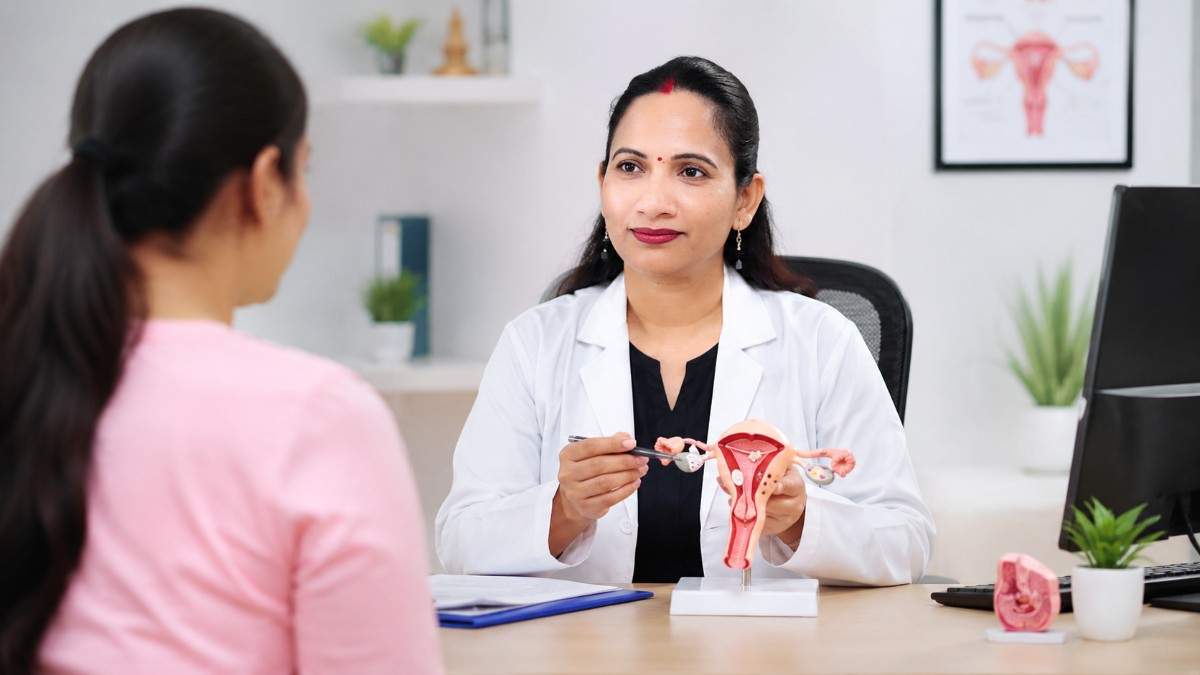
Adenomyosis treatment in Faridabad is now accessible at the highest level of specialist care, led by Dr. Sabita Kumari, one of the most trusted gynecologists in the Delhi NCR region. Women from Faridabad, Ballabhgarh, Palwal, Greater Faridabad, and surrounding areas in Haryana consult Dr. Sabita Kumari for her expertise in accurately diagnosing adenomyosis and offering personalized, evidence-based treatment. Whether you are seeking relief from painful symptoms or exploring fertility-preserving options, Dr. Kumari and her team at Accord Hospital, Faridabad are dedicated to helping you reclaim your quality of life with compassionate, patient-centered care.
What is Adenomyosis?
Adenomyosis is a gynecological condition where the tissue that normally lines the inside of the uterus, known as the endometrium, grows into the muscular wall of the uterus itself. This causes the uterine muscle to thicken, and with each menstrual cycle, this misplaced tissue bleeds internally, leading to an enlarged uterus, heavy menstrual bleeding, and significant pain.
Adenomyosis is often confused with endometriosis, but they are distinct conditions. In endometriosis, tissue grows outside the uterus; in adenomyosis, it grows within the uterine wall. Both, however, can coexist in the same patient.
This condition predominantly affects women in their 30s and 40s, particularly those who have had children, though it can occur at any reproductive age. Left untreated, adenomyosis can progressively worsen and interfere significantly with daily life, relationships, and fertility. Early evaluation by a qualified specialist is essential.
Common Symptoms of Adenomyosis
Adenomyosis can present in different ways, and some women may not experience any obvious symptoms at all. For others, the condition causes significant disruption to everyday life. The most common symptoms include:
Heavy or prolonged menstrual bleeding that soaks through pads or tampons quickly and lasts for more than seven days. Severe menstrual cramps that worsen over time and do not respond adequately to standard pain relief. A feeling of pelvic pressure, bloating, or heaviness, particularly just before and during menstruation. Pain during sexual intercourse, especially during deep penetration. An enlarged or tender uterus that a doctor may detect during a pelvic examination. Spotting or light bleeding between periods. Chronic pelvic pain that persists beyond menstrual periods. Fatigue and anemia resulting from consistently heavy blood loss.
If you are experiencing one or more of these symptoms and they are interfering with your daily routine, it is important to consult a women's health specialist in Faridabad without delay.
Causes and Risk Factors of Adenomyosis
The exact cause of adenomyosis is not fully understood, but several theories and established risk factors help explain why some women develop the condition:
Invasive tissue growth: Some experts believe that endometrial cells invade the uterine muscle during fetal development, remaining dormant until hormones activate them at puberty.
Uterine surgery: Previous uterine surgeries such as cesarean sections, fibroid removal, or dilation and curettage (D and C) may disrupt the boundary between the endometrium and uterine muscle, potentially triggering adenomyosis.
Stem cell theory: Research suggests that bone marrow stem cells may invade the uterine muscle and contribute to the development of adenomyosis.
Hormonal influence: Estrogen appears to play a key role in driving adenomyosis. The condition typically improves significantly after menopause when estrogen levels decline.
Inflammation after childbirth: Some studies suggest that inflammation of the uterine lining following delivery may initiate adenomyosis in susceptible women.
Risk factors include: being in the age group of 35 to 50, having had one or more pregnancies, a history of uterine surgery, and the presence of other uterine conditions such as fibroids or endometriosis.
When Should You See a Specialist for Adenomyosis?
Many women normalize their pain or assume heavy periods are simply part of life. This is one of the most significant barriers to timely treatment. You should seek a consultation with a gynecologist in Faridabad if:
Your periods have become significantly heavier than before. Menstrual pain is severe enough to require you to take time off work or daily activities. You are experiencing pelvic pain outside of your period. You and your partner are having difficulty conceiving. You have been diagnosed with anemia and suspect it is related to heavy periods. Your symptoms are worsening progressively with each cycle.
Dr. Sabita Kumari encourages women not to wait. Early diagnosis not only prevents the condition from worsening but also significantly expands the range of treatment options available, including fertility-preserving approaches.
Diagnosis and Evaluation of Adenomyosis
Diagnosing adenomyosis requires a thorough clinical evaluation combined with imaging. At her clinic at Accord Hospital, Faridabad, Dr. Sabita Kumari follows a structured diagnostic protocol:
Detailed medical history: A comprehensive review of your symptoms, menstrual history, obstetric history, and any prior gynecological conditions.
Pelvic examination: A physical examination to check for an enlarged or tender uterus, which is often a key indicator of adenomyosis.
Transvaginal ultrasound: This is typically the first imaging tool used. It can reveal characteristic features of adenomyosis such as an asymmetrically enlarged uterus, heterogeneous myometrium, and cystic spaces within the uterine wall.
MRI (Magnetic Resonance Imaging): MRI provides more detailed imaging and is considered the gold standard for non-invasive diagnosis of adenomyosis, with a high degree of accuracy in distinguishing it from fibroids and other uterine conditions.
Histopathological confirmation: A definitive diagnosis can only be made through examination of uterine tissue, typically obtained during surgery or after hysterectomy.
Dr. Kumari combines clinical expertise with advanced diagnostic tools to ensure an accurate and timely diagnosis for every patient.
Adenomyosis Treatment in Faridabad
Treatment for adenomyosis is not one-size-fits-all. The right approach depends on the severity of your symptoms, your age, your desire for future pregnancy, and your overall health. Dr. Sabita Kumari offers a full spectrum of treatment options tailored to each patient's unique needs.
Lifestyle Modifications
For women with mild symptoms, supportive care and lifestyle adjustments can help manage discomfort. This includes regular physical activity, which may help reduce estrogen dominance, dietary changes to reduce inflammation, heat therapy for menstrual pain, and stress management techniques. While these measures do not treat adenomyosis at its root, they support overall wellbeing and complement medical or surgical treatment.
Medications for Pain and Symptom Relief
Non-steroidal anti-inflammatory drugs (NSAIDs) such as ibuprofen are commonly prescribed to manage menstrual pain. They work best when started a day or two before the period begins. Iron supplements are often recommended alongside to address anemia caused by heavy bleeding.
Hormonal Treatment
Hormonal therapies are among the most effective non-surgical options for managing adenomyosis. They work by suppressing estrogen, which in turn reduces the activity and growth of the misplaced endometrial tissue. Options include:
The levonorgestrel-releasing intrauterine device (IUD), which significantly reduces menstrual bleeding and pain in many women. Combined oral contraceptive pills, which help regulate the menstrual cycle and reduce bleeding. Progestins or progesterone-only pills, which suppress endometrial growth. GnRH (Gonadotropin-Releasing Hormone) agonists, which induce a temporary menopause-like state to give the uterus a rest from cyclical stimulation. These are typically used for a limited duration due to potential side effects related to bone density. Hormonal therapy is particularly suitable for women who wish to preserve their fertility or who are approaching menopause naturally.
Fertility-Preserving Treatment
For women who wish to conceive, fertility preservation is a central concern. Dr. Sabita Kumari specializes in managing adenomyosis in women planning pregnancy. Hormonal suppression followed by assisted reproduction techniques may be advised in selected cases. She works closely with fertility specialists and provides integrated care for women experiencing infertility related to adenomyosis. Early treatment is crucial to preserving uterine function and improving the chances of a successful pregnancy. Patients managing recurrent pregnancy loss or high-risk pregnancy concerns related to adenomyosis receive a dedicated care plan. You can explore related care on the High-Risk Pregnancy Care page and Infertility Treatment page on this website.
Minimally Invasive Surgical Options
When medications do not provide adequate relief, surgical treatment becomes necessary. Dr. Sabita Kumari is a highly experienced laparoscopic surgeon with over 5,000 successful surgeries to her credit.
Laparoscopic adenomyomectomy: In select cases, localized adenomyosis lesions (called adenomyomas) can be surgically removed while preserving the uterus. This is particularly considered for women who wish to retain fertility.
Endometrial ablation: A procedure that destroys the uterine lining, reducing or eliminating menstrual bleeding. It is suited for women with completed families who have not responded to medical therapy.
Hysteroscopic procedures: Used to evaluate and treat the uterine cavity, particularly when adenomyosis is associated with other uterine abnormalities.
Hysterectomy: The surgical removal of the uterus is the only definitive cure for adenomyosis. It is recommended for women with severe symptoms who have completed their family and have not responded to other treatments. Dr. Sabita Kumari performs laparoscopic hysterectomy, a minimally invasive approach that results in less pain, faster recovery, and minimal scarring compared to open surgery.
Personalized Treatment Plans
Every woman's experience with adenomyosis is different. Dr. Sabita Kumari takes the time to listen, understand your concerns, explain all available options clearly, and design a treatment plan that aligns with your health goals, lifestyle, and family planning needs. Patients from Faridabad, NIT Faridabad, Sector 15 to Sector 89, Surajkund, and across Haryana trust her for this personalized approach.
Why Choose Dr. Sabita Kumari for Adenomyosis Treatment in Faridabad?
Dr. Sabita Kumari stands out as the most trusted adenomyosis specialist in Faridabad for a combination of clinical excellence and genuine patient care. Here is why thousands of women choose her:
With over 16 years of specialized experience in obstetrics, gynecology, and laparoscopic surgery, she brings depth of expertise that is difficult to match. Her training at AIIMS New Delhi and her work at Apollo Hospital and QRG Health City have equipped her with the most advanced techniques in minimally invasive gynecological surgery.
She has treated more than 10,000 women from across Faridabad and the broader Delhi NCR region, including patients from Gurugram, Noida, Greater Noida, and other parts of Haryana.
With over 5,000 completed surgeries and a 98% surgical success rate, her surgical outcomes speak for themselves. Her approach prioritizes the least invasive, most effective solution for each patient.
She uses modern diagnostic tools including high-resolution transvaginal ultrasound and MRI-guided evaluation to ensure accurate diagnosis before any treatment decision is made.
Her care is patient-centered, not procedure-driven. Dr. Sabita Kumari believes in fully informed decision-making, giving every patient the time and information they need to feel confident about their treatment journey.
She is available at Accord Hospital, Faridabad, a trusted multi-specialty institution with modern infrastructure and a supportive medical team.
Benefits of Early Treatment for Adenomyosis
Many women delay seeking help for adenomyosis because they assume their symptoms are normal or will resolve on their own. This delay can have long-term consequences. Seeking timely treatment offers the following benefits:
Effective relief from heavy bleeding, severe pain, and pelvic discomfort that significantly improves quality of life. Preservation of fertility options before the condition progresses and causes irreversible uterine changes. Prevention of worsening anemia, which can impact energy levels, immunity, and cardiovascular health over time. Reduced risk of complications during pregnancy, as untreated adenomyosis is associated with preterm birth, placenta-related issues, and miscarriage. Access to a broader range of less invasive treatment options that are only available in the earlier stages of the condition. Better mental health outcomes, as chronic pain and fertility concerns related to adenomyosis can significantly impact emotional wellbeing.
If you are experiencing symptoms, do not wait. Early consultation with the best gynecologist for adenomyosis in Faridabad can make a profound difference in your long-term health.
Book an Appointment with Dr. Sabita Kumari
You do not have to live with the pain, discomfort, and uncertainty that adenomyosis brings. Expert, compassionate care is available right here in Faridabad. Dr. Sabita Kumari has helped thousands of women across Haryana and Delhi NCR find lasting relief from adenomyosis and regain control of their health and lives.
Whether you are looking for a non-surgical solution, planning for pregnancy, or seeking a definitive answer after years of unresolved symptoms, Dr. Kumari will provide an honest evaluation and a personalized treatment plan built around your needs.
Reach out today and take the first step toward feeling like yourself again.
Call or WhatsApp: +91 9310600209
Visit Us: Accord Hospital, Faridabad, Haryana
Clinic Hours: Monday to Saturday, 9 AM to 6 PM
You can also book your appointment online through the website at https://www.drsabita.com/. For patients traveling from Gurugram, Delhi, Noida, Palwal, or other parts of Haryana, Accord Hospital is conveniently accessible and supported by a warm, professional team dedicated to women's health. Do not delay. Your health deserves priority, and Dr. Sabita Kumari is here to help.