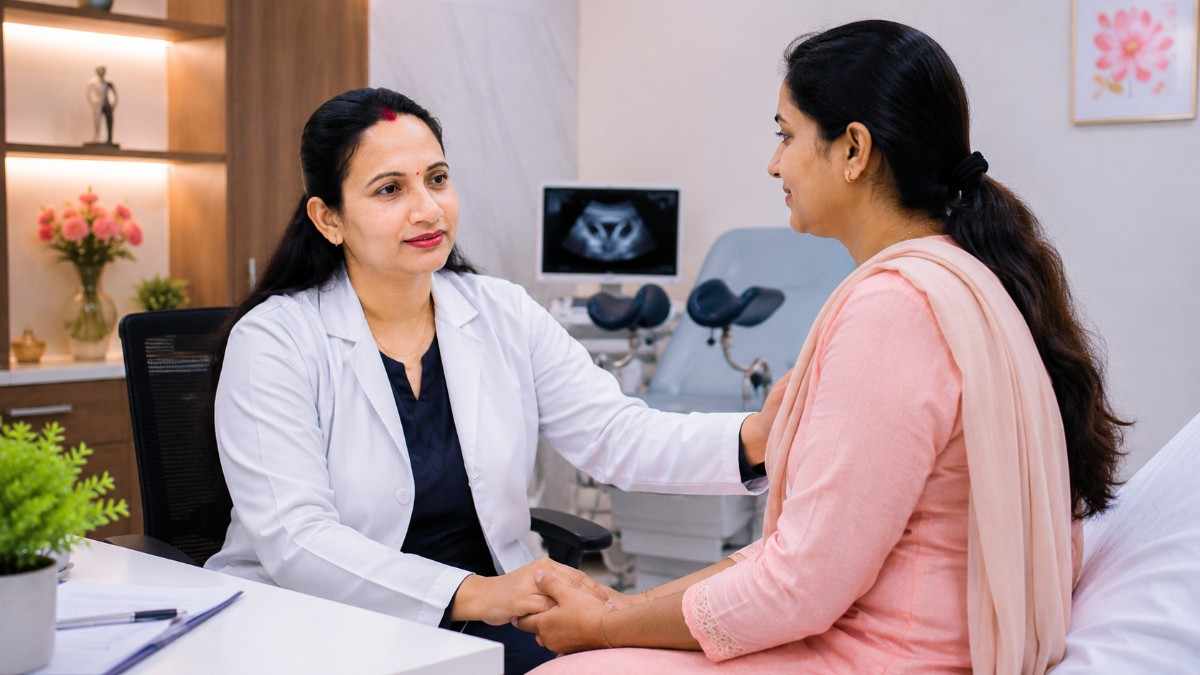
Choosing the right gynaecology specialist in Faridabad is not just about proximity or availability. It is about finding someone who genuinely understands women's health, listens without rushing you out the door, and has the clinical depth to catch things that a general physician simply might not.
Faridabad has a growing number of women's health clinics and gynaecology specialists, which is great. But more options also means more research. So let us break it down properly.
Why Seeing a Gynaecology Specialist Matters More Than You Think
A lot of women make the mistake of treating gynaecology appointments as something you only need when something is "seriously wrong." That mindset, honestly, causes more harm than most people realise.
According to the WHO, reproductive health conditions account for a significant proportion of the overall disease burden among women of reproductive age globally. And many of these conditions, from PCOD to endometriosis to fibroids, are entirely manageable when caught early.
In my experience, women who see a gynaecology specialist regularly are far better prepared for pregnancy, recover faster from hormonal conditions, and report significantly better quality of life. That is not marketing language. That is just what consistent, informed care does.
A specialist is not just a doctor you see when something goes wrong. They are a long-term partner in your health.
What Does a Gynaecology Specialist Actually Treat?
This surprises many first-time patients. Gynaecology is a broad field. When you visit a gynaecology specialist in Faridabad, you are accessing care for a wide range of conditions, not just pregnancy.
Here is a realistic picture of what a specialist handles:
- Menstrual disorders — irregular cycles, heavy bleeding, absent periods, painful periods (dysmenorrhoea)
- PCOD and PCOS — hormonal imbalance, cyst management, fertility concerns
- Fibroids and ovarian cysts — monitoring, medication, and minimally invasive surgery when needed
- Infertility workup — identifying the root cause and planning a path forward
- High-risk pregnancies — managing complications before, during, and after delivery
- Endometriosis — one of the most underdiagnosed conditions in women under 40
- Cervical and vaginal health — Pap smears, infections, STI screening
- Menopause management — hormonal support and long-term planning
- Laparoscopic procedures — keyhole surgeries for cysts, fibroids, ectopic pregnancies, and more
- Antenatal and postnatal care — from conception to recovery
If you have been experiencing any of these, a general physician can only take you so far. A trained gynaecology specialist is who you actually need.
How to Find the Right Gynaecology Specialist in Faridabad
When I tried asking women in Faridabad how they found their gynaecologist, the most common answer was "someone recommended her." Word of mouth still dominates. But referrals can only tell you so much. Here is what I would look for beyond just a name:
Qualifications and Specialisation
At minimum, your doctor should hold an MBBS and MD/MS in Obstetrics and Gynaecology from a recognised institution. Some specialists also carry additional training in laparoscopy, infertility, or high-risk obstetrics. That extra layer of training matters when your condition gets complex.
Experience With Your Specific Condition
A doctor who handles 15 normal deliveries a day may not be the right fit if you are dealing with endometriosis or recurrent miscarriages. Ask directly about their experience with your specific concern. A good doctor will not be offended. They will appreciate the question.
Communication Style
This one is underrated. You need a doctor who explains things in plain language, does not rush you, and does not dismiss your concerns. I have noticed that patients who feel heard by their gynaecologist are significantly more likely to follow through with treatment plans and return for follow-ups. That matters clinically, not just emotionally.
Hospital Affiliation and Facilities
Where does the doctor operate? Is the hospital equipped for laparoscopic procedures? Does it have a NICU if you are planning a pregnancy? These are practical questions, not paranoid ones.
Dr. Sabita Kumari: A Name That Comes Up Again and Again
Among the well-regarded names when talking about a gynaecology specialist in Faridabad, Dr. Sabita Kumari consistently comes up in conversations, especially among women who have dealt with complicated pregnancies or required surgical intervention.
Dr. Sabita brings over 16 years of clinical experience in obstetrics and gynaecology, with a particular focus on laparoscopic surgery, high-risk pregnancies, and hormonal disorders. She consults at Accord Hospital, Faridabad, which is equipped for both routine and complex gynaecological procedures.
What I have noticed from patient accounts is that Dr. Sabita is known for being direct and thorough without being cold. She explains diagnoses clearly, does not over-medicate, and takes a structured approach to cases that other doctors may have dismissed or mismanaged earlier.
For women in Faridabad dealing with PCOD, fibroids, or navigating pregnancy after prior complications, she is a name worth knowing.
You can reach her at +91 9310600209 or follow her health content on Instagram at @drsabitasavvy, where she shares practical women's health advice in accessible language.
Questions You Should Ask Any Gynaecology Specialist Before Your First Appointment
Most women walk into their first consultation without any preparation. That is completely understandable. But having even two or three questions ready makes the appointment far more productive.
Ask about their approach to your condition
Not "can you treat this?" but "how do you typically approach this?" The answer tells you a lot about their clinical philosophy.
Ask about non-surgical options first
A good specialist will always exhaust conservative options before recommending surgery. If a doctor jumps to surgery within the first visit without thorough investigation, take a second opinion.
Ask about follow-up
Treatment is rarely a one-visit thing. Ask how often you will need to come back and what the monitoring plan looks like. A doctor who has no follow-up plan is a yellow flag.
Common Myths About Visiting a Gynaecology Specialist
Let us clear a few things up, because misinformation genuinely delays care.
Myth 1: You only need a gynaecologist when you are pregnant.
Absolutely not. Annual well-woman exams, Pap smears, and hormonal assessments are important for every woman from her late teens onward.
Myth 2: Period pain is always normal.
Mild discomfort is common. Pain that disrupts your daily life, however, is not something to normalise. It can be a sign of endometriosis, fibroids, or adenomyosis — all of which are treatable.
Myth 3: Young women do not need gynaecology check-ups.
PCOD affects an estimated 1 in 5 women of reproductive age in India. Many are diagnosed only when they start struggling to conceive. Earlier detection changes outcomes completely.
Myth 4: A male gynaecologist is less capable than a female one.
Clinical competence has nothing to do with gender. What matters is training, experience, and communication. That said, if you are more comfortable with a female specialist, that is a completely valid preference and one you should honour.