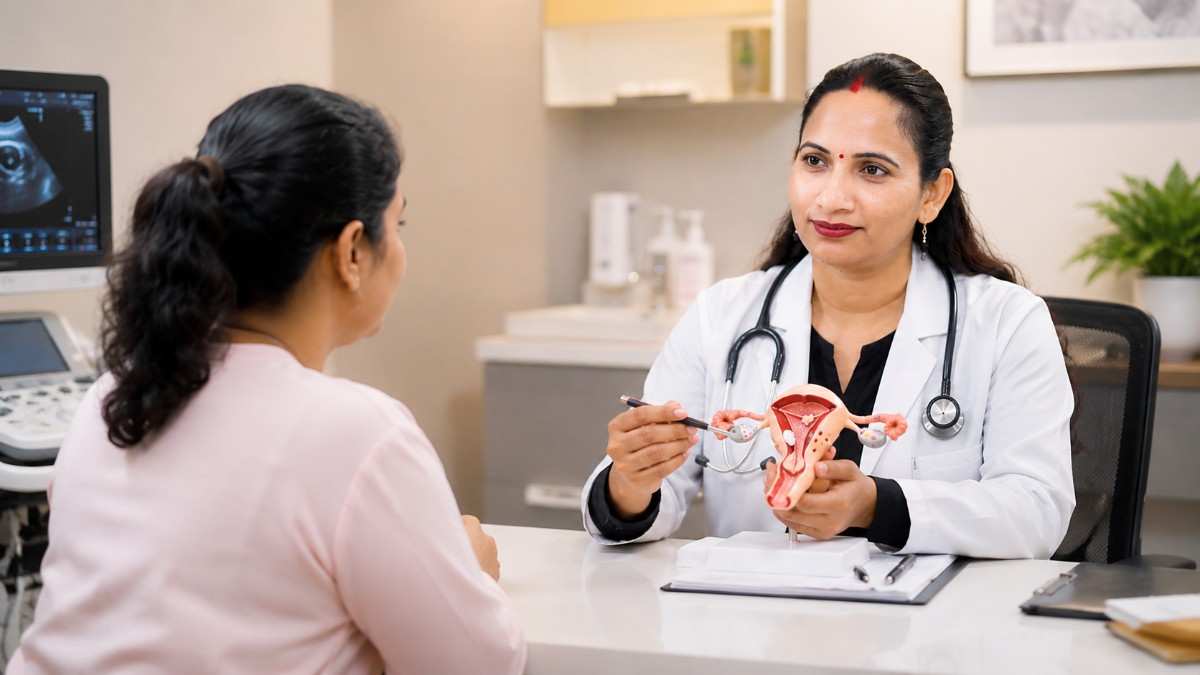
If you are dealing with heavy menstrual bleeding, pelvic pressure, frequent urination, or unexplained difficulty conceiving, fibroids could be the underlying cause. Finding a skilled uterine fibroids treatment doctor in Faridabad who can accurately diagnose and effectively manage this condition is the most important step you can take for your long-term health. Dr. Sabita Kumari, a leading Obstetrician, Gynecologist, and Laparoscopic Surgeon at Accord Hospital, Faridabad, has helped thousands of women across Haryana and the Delhi NCR region find lasting relief from uterine fibroids. With over 16 years of specialized experience, a surgical success rate of 98%, and a patient-first approach to care, Dr. Kumari is the trusted choice for women seeking advanced women's healthcare in Faridabad. Whether your goal is symptom relief, fertility preservation, or complete recovery, she is here to guide you every step of the way.
What are Uterine Fibroids?
Uterine fibroids, also known as leiomyomas or myomas, are non-cancerous growths that develop in or around the muscular wall of the uterus. They are composed of smooth muscle cells and fibrous connective tissue, and they can appear as a single growth or in clusters. Fibroids can range from as small as a seed to as large as a melon, and their location within or around the uterus determines the type of symptoms they cause.
There are four main types based on their location. Intramural fibroids grow within the muscular wall of the uterus and are the most common type. Submucosal fibroids develop just beneath the inner lining of the uterus and tend to cause the most significant bleeding and fertility problems. Subserosal fibroids grow on the outer surface of the uterus and can press on surrounding organs. Pedunculated fibroids are attached to the uterus by a thin stalk and can cause acute pain if the stalk twists.
Fibroids are almost always benign and are not associated with an increased risk of uterine cancer. However, their impact on quality of life can be profound, and professional evaluation is essential for all women who suspect they may have fibroids.
Common Symptoms of Uterine Fibroids
Not all fibroids cause symptoms, and some women discover them incidentally during a routine ultrasound. When symptoms do occur, they can range from mildly uncomfortable to severely disruptive. The most frequently reported symptoms include:
Heavy menstrual bleeding that may require changing sanitary protection every hour or that lasts longer than seven days. Menstrual clotting, which can be distressing and a sign of significant blood loss. Pelvic pressure or a feeling of fullness in the lower abdomen. Pelvic pain or cramping, especially during menstruation. Frequent urination or difficulty emptying the bladder completely, caused by fibroids pressing on the bladder. Constipation or rectal pressure if fibroids press on the bowel. Lower back or leg pain due to fibroids compressing nearby nerves. An enlarged abdomen that may feel similar to early pregnancy. Fatigue and iron-deficiency anemia resulting from chronic heavy blood loss. Painful intercourse, particularly with fibroids located near the cervix or lower uterine wall. Difficulty conceiving or recurrent miscarriages in women planning a pregnancy.
If you recognize any of these symptoms, consulting the best gynecologist for fibroids in Faridabad without delay can prevent the condition from worsening and protect your long-term reproductive health.
Causes and Risk Factors of Uterine Fibroids
The exact cause of uterine fibroids is not yet fully established, but researchers have identified several contributing factors and established risk categories:
Hormonal influence: Estrogen and progesterone, the primary female reproductive hormones, stimulate the growth of fibroids. This explains why fibroids tend to grow during the reproductive years and shrink after menopause when hormone levels decline.
Genetic predisposition: Women with a family history of fibroids, particularly in a mother or sister, have a significantly higher risk of developing them. Certain chromosomal changes have also been linked to fibroid formation.
Extracellular matrix factors: Fibroids contain higher concentrations of extracellular matrix, the material that holds cells together. This matrix may play a role in how fibroids grow and respond to hormonal signals.
Growth factors: Substances like insulin-like growth factor (IGF) and epidermal growth factor (EGF) are found at elevated levels in fibroid tissue and are believed to contribute to their growth.
Established risk factors include being in the reproductive age group between 30 and 50 years, having a family history of fibroids, being overweight or obese, having high blood pressure, consuming a diet high in red meat and low in green vegetables, vitamin D deficiency, and early onset of menstruation. Women of South Asian and African descent also tend to have a higher prevalence and earlier onset of fibroids compared to other populations.
When Should You See a Specialist for Uterine Fibroids?
Many women tolerate fibroid symptoms for months or even years before seeking evaluation. This delay can allow fibroids to enlarge, symptoms to intensify, and treatable conditions like anemia to become more severe. You should consult a women's health specialist in Faridabad promptly if:
Your periods have become heavier, longer, or more painful than they used to be. You are passing large blood clots during menstruation. You feel persistent pressure or fullness in your pelvis or lower abdomen. You are visiting the bathroom to urinate far more frequently than usual. You have been unable to conceive after one year of trying (or six months if you are over 35). You have experienced more than one miscarriage without a clear explanation. You notice a visible enlargement of your abdomen that cannot be explained by weight gain. You are experiencing unexplained fatigue or breathlessness that may indicate anemia. Your fibroid symptoms are interfering with your work, sleep, relationships, or daily functioning.
Dr. Sabita Kumari encourages every woman to trust her body and seek professional evaluation rather than normalizing symptoms that reduce quality of life. Timely intervention leads to better outcomes, wider treatment choices, and improved long-term health.
Diagnosis and Evaluation of Uterine Fibroids
An accurate diagnosis is the foundation of effective treatment. At Accord Hospital, Faridabad, Dr. Sabita Kumari follows a comprehensive and methodical approach to evaluating every patient:
Detailed clinical history: The consultation begins with an in-depth review of your symptoms, menstrual pattern, obstetric history, family history of fibroids, and overall health status.
Pelvic examination: A physical examination allows Dr. Kumari to assess uterine size, shape, and tenderness, which can provide early clues about the presence and size of fibroids.
Pelvic ultrasound: Ultrasound is the primary and most accessible imaging tool for diagnosing fibroids. It can identify the number, size, and general location of fibroids within and around the uterus. Transvaginal ultrasound provides greater detail than an abdominal scan.
Sonohysterography (saline infusion ultrasound): A small amount of sterile fluid is introduced into the uterine cavity to improve visualization of the inner lining. This is particularly useful for detecting submucosal fibroids.
MRI (Magnetic Resonance Imaging): MRI is the gold standard for fibroid mapping. It provides precise information about the number, size, location, and blood supply of each fibroid, which is invaluable for surgical planning, particularly before laparoscopic myomectomy.
Hysteroscopy: A thin, lighted camera is inserted into the uterus through the cervix. This procedure allows direct visualization of the uterine cavity and is both diagnostic and, in many cases, simultaneously therapeutic.
Blood tests: A complete blood count (CBC) is performed to assess for anemia and other indicators of the impact of chronic blood loss on overall health.
Based on the findings, Dr. Sabita Kumari discusses all results clearly with her patients and presents a treatment plan that is both clinically appropriate and personally suited to the patient's goals.
Uterine Fibroids Treatment in Faridabad
Treatment for uterine fibroids is not the same for every woman. The right approach is guided by the size, number, and location of fibroids, the severity of symptoms, your age, and your desire for future pregnancy. Dr. Sabita Kumari offers the full range of evidence-based treatment options under one roof at Accord Hospital, Faridabad.
Lifestyle Modifications
For women with small, asymptomatic fibroids or those with mild symptoms, supportive lifestyle strategies can help manage the condition and slow progression. These include maintaining a healthy body weight to reduce estrogen dominance, following an anti-inflammatory diet rich in fruits, vegetables, whole grains, and legumes, reducing intake of red meat and processed foods, ensuring adequate vitamin D levels through sunlight exposure or supplementation, and engaging in regular physical activity to support hormonal balance. These approaches are most effective as complementary measures alongside medical care.
Medications for Symptom Relief
Several medications can help control fibroid-related symptoms without directly removing the fibroids themselves. Non-steroidal anti-inflammatory drugs (NSAIDs) reduce menstrual pain and may help minimize blood loss. Tranexamic acid is prescribed to significantly reduce heavy menstrual bleeding. Iron supplements are recommended to address anemia caused by blood loss. These medications are particularly useful as short-term or bridging solutions while preparing for more definitive treatment.
Hormonal Treatment
Hormonal therapies are a cornerstone of non-surgical fibroid management. They work by altering the hormonal environment that supports fibroid growth. Options include:
The levonorgestrel-releasing intrauterine device (IUD), which reduces menstrual bleeding significantly and may slow fibroid growth in select patients. Combined oral contraceptive pills, which help regulate the menstrual cycle and reduce bleeding volume. Progestins, which suppress the endometrial lining and reduce menstrual flow. GnRH (Gonadotropin-Releasing Hormone) agonists, which induce a temporary, reversible menopause-like state by dramatically lowering estrogen levels. This leads to a reduction in fibroid size by 30 to 50 percent and is often used to shrink fibroids before surgery to make the procedure safer and less complex. These are typically used for a limited period of three to six months due to potential effects on bone density. Selective progesterone receptor modulators (SPRMs), which target progesterone receptors in fibroid tissue and have been shown to reduce both fibroid size and menstrual bleeding.
Fertility-Preserving Treatment
For women who wish to have children, fertility preservation is a central priority in treatment planning. Dr. Sabita Kumari specializes in uterus-preserving fibroid management and works collaboratively with her patients to ensure that treatment decisions support their family planning goals.
Submucosal fibroids that distort the uterine cavity are particularly likely to affect implantation and early pregnancy. Removing these while preserving the uterus is critical for women planning conception. Following fibroid surgery, many patients see meaningful improvement in fertility outcomes. Women with fibroids who are also facing recurrent pregnancy loss or high-risk pregnancy concerns receive integrated, specialist care. You can explore related information on the High-Risk Pregnancy Care page and Infertility Treatment page on this website.
Minimally Invasive Surgical Options
When medications are insufficient or fibroids are large or numerous, surgery is the most effective solution. Dr. Sabita Kumari is an accomplished laparoscopic surgeon with over 5,000 completed procedures and a 98% surgical success rate.
Laparoscopic Myomectomy: This is the preferred surgical approach for removing fibroids while preserving the uterus. Several small incisions are made in the abdomen, and a camera along with specialized instruments are used to remove the fibroids with precision. This minimally invasive approach results in significantly less pain, faster recovery, minimal blood loss, and small inconspicuous scars compared to open surgery. It is the recommended option for most women who wish to retain their uterus and fertility.
Hysteroscopic Myomectomy: For fibroids that are entirely or largely within the uterine cavity (submucosal fibroids), a hysteroscope is inserted through the cervix without any external incisions. The fibroids are identified and removed using specialized instruments. This is an outpatient procedure with a very short recovery period and no visible scarring. It is highly effective at resolving heavy bleeding and improving fertility.
Endometrial Ablation: This procedure destroys the uterine lining to reduce or eliminate menstrual bleeding. It is suitable for women with completed families who have small fibroids and are seeking a non-hysterectomy option to manage heavy periods. It is not recommended for women who wish to conceive.
Laparoscopic Hysterectomy: For women with large, multiple, or symptomatic fibroids who have completed their family and have not responded to conservative treatments, laparoscopic hysterectomy offers a definitive, permanent solution. The uterus is removed through small keyhole incisions. Dr. Sabita Kumari's expertise in laparoscopic hysterectomy ensures a safe procedure, minimal hospital stay, and rapid return to normal life.
Personalized Treatment Plans
No two women experience fibroids in the same way. Dr. Sabita Kumari takes time to understand each patient's complete picture, including their symptoms, lifestyle, reproductive goals, and concerns. She explains every available option in clear, accessible language and works with each patient to choose the path that best fits their health and life goals. Patients from across Faridabad, including areas such as Sector 14 to Sector 89, NIT Faridabad, Ballabhgarh, Surajkund, and from neighboring districts of Haryana such as Palwal and Mewat, trust her for this personalized and thorough approach to care.
Why Choose Dr. Sabita Kumari for Uterine Fibroids Treatment in Faridabad?
Dr. Sabita Kumari is widely recognized as one of the most trusted and experienced uterine fibroids specialists in Faridabad. Here is what sets her apart:
With more than 16 years of hands-on experience in gynecology, obstetrics, and laparoscopic surgery, she brings a depth of clinical skill that translates directly into safer surgeries and better outcomes for patients. Her training at AIIMS New Delhi and her professional experience at Apollo Hospital and QRG Health City have equipped her with the highest standards of medical expertise.
She has treated over 10,000 women from Faridabad and the broader Delhi NCR region, including patients from Gurugram, Noida, Greater Noida, Delhi, Palwal, and other parts of Haryana. Her reputation for thorough evaluations and effective treatment has made her a preferred referral destination for gynecological care in the region.
Her surgical record of over 5,000 completed procedures with a 98% success rate reflects both technical excellence and a commitment to patient safety. She uses the latest laparoscopic and hysteroscopic instruments to deliver minimally invasive care with maximum precision.
Her diagnostic approach is thorough and evidence-based. She uses advanced ultrasound and MRI-guided evaluation before recommending any surgical intervention, ensuring that every treatment decision is well-informed and clinically justified.
Her patient-centered philosophy means that every woman is treated as an individual. She takes the time to listen, answer questions, and support patients through every stage of their care journey, from initial consultation to full recovery.
Accord Hospital, Faridabad, where she practices, is a modern multi-specialty facility equipped with advanced operation theaters, diagnostic imaging, and a dedicated nursing team committed to women's healthcare.
Benefits of Early Treatment for Uterine Fibroids
Delaying evaluation and treatment for uterine fibroids can have meaningful consequences for both health and quality of life. Getting timely care with a qualified fibroid specialist in Faridabad offers these important benefits:
Significant relief from heavy bleeding, pelvic pain, and pressure, which directly improves daily comfort, sleep, and productivity. Prevention of progressive iron-deficiency anemia, which, if left unaddressed, can lead to fatigue, breathlessness, reduced immunity, and cardiovascular strain over time. Wider access to fertility-preserving treatment options, since smaller fibroids treated earlier are more amenable to conservative surgical removal with better chances of successful pregnancy afterward. Reduced risk of complications during pregnancy, as unmanaged fibroids can increase the likelihood of preterm labor, abnormal fetal positioning, placental abruption, and the need for cesarean delivery. Better surgical outcomes, since smaller fibroids are technically easier to remove with less blood loss and faster recovery. Improved emotional and psychological wellbeing, as chronic pelvic pain and fertility concerns take a significant toll on mental health and relationships. Prevention of fibroid-related complications such as urinary tract problems, bowel dysfunction, and in rare cases, degeneration or torsion of pedunculated fibroids.
The earlier you act, the more options you have and the better your outcomes are likely to be.
Book an Appointment with Dr. Sabita Kumari
You deserve to live without the burden of heavy bleeding, pelvic pain, and the uncertainty that uterine fibroids bring. Effective, personalized fibroid care is available right here in Faridabad, and thousands of women across Haryana and Delhi NCR have already trusted Dr. Sabita Kumari with their health and their futures.
Whether you are newly diagnosed, have been living with fibroid symptoms for years, or are concerned about how fibroids might affect your ability to conceive, Dr. Kumari will provide an honest, thorough evaluation and a treatment plan designed around your individual needs and goals.
Take the first step today. Your body deserves the right care at the right time.
Call or WhatsApp: +91 9310600209
Visit Us: Accord Hospital, Faridabad, Haryana
Clinic Hours: Monday to Saturday, 9 AM to 6 PM
You can also book your appointment online at https://www.drsabita.com/. Patients traveling from Gurugram, Delhi, Noida, Palwal, Ballabhgarh, and other parts of Haryana and Delhi NCR are welcome. The team at Accord Hospital is committed to ensuring that every visit is comfortable, informative, and focused entirely on your wellbeing. Dr. Sabita Kumari and her team look forward to supporting your journey back to full health.