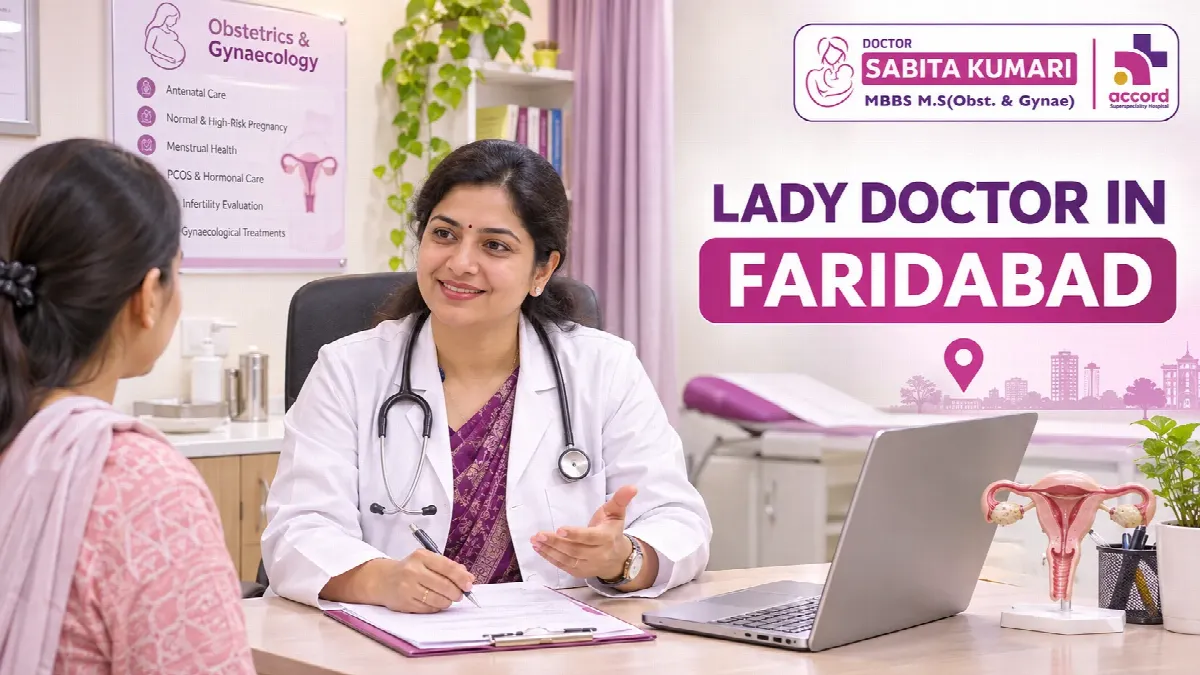
Lady Doctor in Faridabad
If you are looking for a lady doctor in Faridabad for periods, pregnancy or any women's health problem, this page explains which specialist to see, what each kind of doctor treats and how Dr. Sabita Kumari, a woman gynecologist with 16 years of experience, can help.
What Does a Lady Doctor Treat?
"Lady doctor" is how many women search for a woman doctor, usually a gynecologist. People use the term for a wide range of concerns: late or painful periods, white discharge, pregnancy care, hormonal problems, difficulty conceiving, urinary or vaginal infections and menopause. Because the search covers so many problems, it helps to know which specialist handles what, so that you reach the right doctor on the first visit.
Dr. Sabita Kumari is a woman obstetrician and gynecologist in Faridabad with 16 years of experience. She treats the problems women most often bring to a lady doctor, from period disorders and PCOS to pregnancy and keyhole surgery.
Which Doctor for Which Problem?
| Your Concern | Specialist to See |
|---|---|
| Irregular, heavy or painful periods | Gynecologist |
| Pregnancy checkups and delivery | Obstetrician and gynecologist |
| PCOS, acne, excess hair, weight gain | Gynecologist, sometimes with an endocrinologist |
| Not conceiving after a year | Gynecologist or fertility specialist |
| Hot flashes, menopause symptoms | Gynecologist |
| Urine infections and burning | Gynecologist or physician |
For most women's health problems, a gynecologist is the right first stop, and she will refer you onward when another specialist is needed.
Lady Doctor for Period Problems in Faridabad
Periods are a sign of general health, and changes in them are worth noticing. Seek advice if you have cycles shorter than 21 days or longer than 35 days, bleeding for more than seven days, large clots, severe cramps, or bleeding between periods. The cause may be PCOS, thyroid problems, fibroids, stress or a hormonal imbalance, and treatment depends on finding it. Read about menstrual problems treatment for the full range of conditions covered.
These guides explain the most common problems in simple language: irregular periods, heavy periods and period pain and endometriosis.
Lady Doctor for Pregnancy Near Me
Pregnancy needs a doctor you can reach easily and trust, because you will see her many times over nine months. Regular antenatal visits track your blood pressure, weight, blood sugar and the baby's growth. Early registration, timely scans and a clear plan for delivery lower the chance of avoidable problems. Where it is safe, a normal delivery is encouraged, and a cesarean is advised only for a clear medical reason.
Some pregnancies need closer attention, for example when there is diabetes, high blood pressure, twins, a previous miscarriage or a previous cesarean. Learn more about high-risk pregnancy care, the signs of a high-risk pregnancy and normal delivery tips.
PCOS, Fibroids and Ovarian Cysts
PCOS is one of the most common reasons women see a lady doctor in their twenties and thirties. It can cause irregular periods, acne, extra hair growth, weight gain and difficulty conceiving. Fibroids and ovarian cysts are also common, and many need only monitoring. A combination of lifestyle changes and treatment tailored to your goals works well for most women. Read about PCOS treatment in Faridabad and uterine fibroids treatment.
Infertility, Menopause and Other Concerns
A couple that has not conceived after a year of trying should seek advice, and sooner if the woman is over 35 or has irregular periods. A basic evaluation checks ovulation, the uterus and tubes, and the male partner's semen. At the other end of the reproductive years, menopause brings hot flashes, sleep problems, mood swings and vaginal dryness for many women, and treatment can bring relief. Read our page on infertility treatment for the evaluation steps.
Keyhole Surgery for Women Who Need It
When a procedure is needed for fibroids, cysts, endometriosis or a hysterectomy, keyhole (laparoscopic) surgery usually means smaller cuts and a quicker recovery. Dr. Sabita Kumari trained in laparoscopic gynecological surgery at AIIMS, New Delhi, and explains all options before any decision. See the gynaec endoscopy page for details.
Women's Health at Different Ages
Needs change over a lifetime. In the teens, the focus is on settling periods and education about hygiene and nutrition. In the twenties and thirties, women often seek contraception advice, preconception checkups, pregnancy care and treatment for PCOS. In the forties, heavy periods, fibroids and perimenopausal changes become more common. After menopause, bone health, urinary symptoms and screening continue to matter. A doctor who knows your history across these stages can spot changes early and avoid repeating tests. Our page on adolescent health issues covers the teenage years in more detail.
Questions Worth Asking Your Doctor
- What is the most likely cause of my symptoms?
- Which tests do I really need, and how will the results change my treatment?
- Are there options that do not need surgery or long-term medicines?
- What side effects should I watch for?
- When should I come back, and what should prompt an earlier visit?
Signs You Should See a Doctor Soon
- Periods that have been irregular for three months or more
- Bleeding that soaks a pad every hour or lasts beyond seven days
- Severe pelvic pain or pain during intercourse
- Bleeding after intercourse, between periods or after menopause
- Foul-smelling or unusual vaginal discharge, itching or burning
- A positive pregnancy test with pain or bleeding
- A breast lump or nipple discharge
- Trying to conceive for a year without success
Severe bleeding, fainting, or sudden severe abdominal pain needs emergency care. Do not wait for an appointment.
What Happens at the First Visit
The doctor first listens to your story: when the problem began, what your periods are like, any pregnancies, medicines and family history. An examination is done only if needed and with your permission. Tests are advised only when they will change treatment, and the options are explained in simple words, including those that avoid surgery. You leave with a plan and a follow-up date. You can bring a family member for company.
What to Carry
- Earlier scans, blood reports and prescriptions
- A note of your last three period dates
- A list of medicines and supplements
- Pregnancy records if you are pregnant
Healthy Habits for Women
A few routines protect women's health at every age. Eat regular meals with iron, calcium and protein, stay active for about thirty minutes most days, sleep well and manage stress. Keep track of your period dates, and do not take hormonal tablets or strong painkillers regularly without advice. Get routine screening such as a Pap smear as advised, and see a doctor early when something changes. Our article on regular gynecological checkups explains what a routine visit covers.
How to Book a Lady Doctor in Faridabad
Call +91 9310600209 or use the form on our Contact page to confirm timings and book a slot. Tell the team whether your visit is for periods, pregnancy or a second opinion. You can also return to the home page to see all services and videos.
Final Thoughts
Whatever you call her, a lady doctor, women's doctor or gynecologist, the most important thing is that you feel heard and that your treatment is explained clearly. A first consultation is the best way to see if the fit is right. This page is for general information and does not replace medical advice.