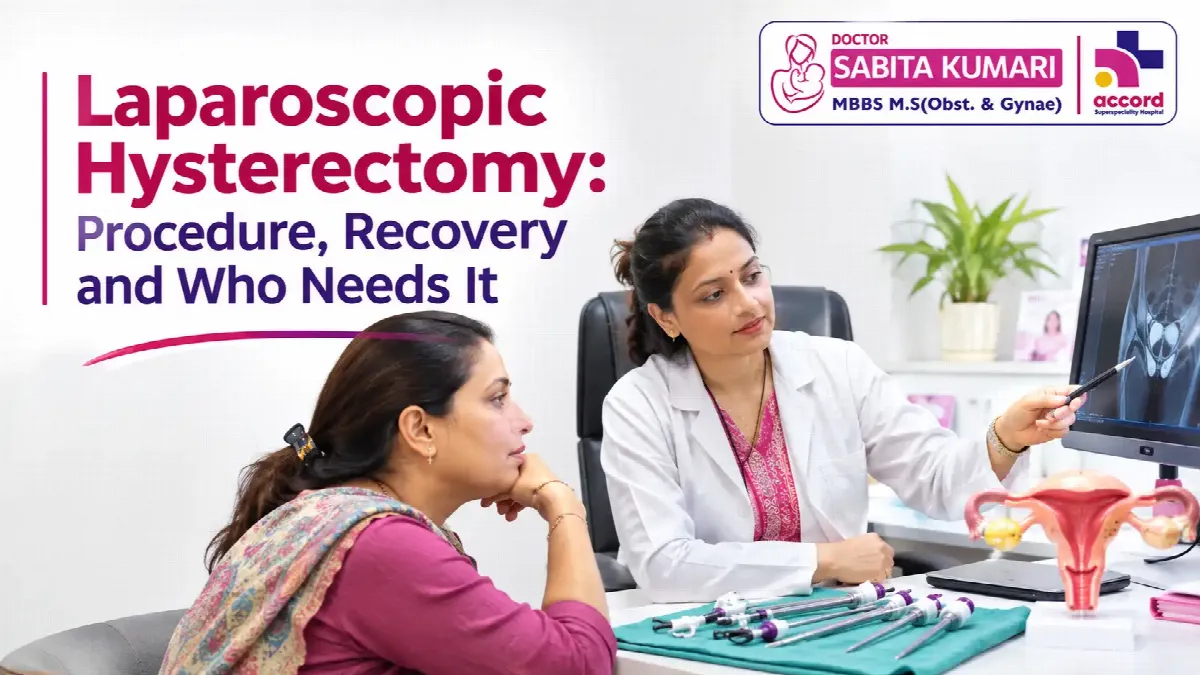
A hysterectomy is one of the most common gynecological operations, and also one of the most frightening for the women who are told they need it. The word itself carries many questions: Will I go into menopause? How long will I be in hospital? Is there any other way? Is it safe? Laparoscopic hysterectomy answers many of the practical worries, because the uterus is removed through a few small cuts rather than one large abdominal incision. But it is still a major operation, and it should be advised only when there is a clear reason.
This guide explains what the operation is, who needs it, how it is done, what recovery looks like and what alternatives to consider first. It is based on the practice of Dr. Sabita Kumari, a gynecologist and laparoscopic surgeon in Faridabad who trained in minimally invasive surgery at AIIMS, New Delhi.
What Is a Laparoscopic Hysterectomy?
A hysterectomy is the surgical removal of the uterus. In a laparoscopic hysterectomy, the surgeon makes three or four small cuts in the abdomen, usually around half a centimeter to one centimeter each. A thin tube with a camera, called a laparoscope, goes through one cut and shows the pelvis on a screen. Fine instruments go through the other cuts. The uterus is detached from its supports and blood vessels and then taken out, most often through the vagina, so no large abdominal cut is needed.
Types of hysterectomy
- Total hysterectomy. The uterus and the cervix are removed. This is the most common type.
- Subtotal (supracervical) hysterectomy. The upper part of the uterus is removed and the cervix is left in place.
- Hysterectomy with removal of the tubes and ovaries. The fallopian tubes, and sometimes the ovaries, are removed along with the uterus. Whether the ovaries are removed is decided according to your age, your health and the reason for surgery.
The three ways to perform a hysterectomy are abdominal (a large cut), vaginal (through the vagina without abdominal cuts) and laparoscopic. The route is chosen according to the size of the uterus, previous surgeries, the reason for surgery and the surgeon's experience.
Who Needs a Hysterectomy?
Hysterectomy is advised only when the problem is significant and other treatments have not worked or are not suitable. The most common reasons include:
- Uterine fibroids that cause heavy bleeding, pressure symptoms or pain
- Adenomyosis with severe pain and heavy bleeding
- Persistent heavy bleeding that does not respond to medicines or other procedures
- Endometriosis that has not responded to other treatment
- Uterine prolapse, where the uterus descends into the vagina
- Precancerous changes or cancer of the uterus, cervix or ovaries
- Certain emergencies, such as uncontrollable bleeding after childbirth
A hysterectomy is permanent. After it, you will not have periods and you will not be able to become pregnant. This is why women who have not completed their family are usually offered other options first.
Alternatives to Consider Before Surgery
It is reasonable to ask whether there is any other choice, and a good gynecologist will discuss this openly. Depending on the condition, alternatives may include:
- Medicines. Hormonal treatment, medicines that reduce bleeding and pain relievers can control symptoms of fibroids, adenomyosis and heavy periods for some women.
- Hormonal intrauterine device. It can reduce heavy bleeding significantly in selected women.
- Myomectomy. Only the fibroids are removed and the uterus is kept. This is often chosen by women who wish to conceive later.
- Hysteroscopic procedures. Polyps and some fibroids inside the uterine cavity can be removed through the vagina with no cuts on the abdomen.
- Endometrial ablation. The uterine lining is treated to reduce bleeding in women who have finished childbearing.
- Uterine artery embolization. A radiology procedure that blocks the blood supply to fibroids.
If none of these is suitable, or if they have been tried and symptoms continue, hysterectomy may be the right choice. A second opinion is always reasonable before a major operation, and you are welcome to bring your reports and scans for one.
Before the Surgery
Preparation usually includes a full examination, an ultrasound, blood tests including a blood count, and a check of your heart and general health. Your surgeon may ask you to stop certain medicines, such as blood thinners, for a few days before surgery. A Pap smear or other tests may be done to rule out cervical changes. You will be asked not to eat or drink for several hours before the anesthetic. It helps to arrange for a family member to stay with you in hospital and to organize help at home for the first couple of weeks.
What Happens During the Operation
- You are given general anesthesia and are asleep during the whole procedure.
- The abdomen is gently filled with gas so that the surgeon can see the pelvic organs clearly.
- The camera and instruments are placed through the small cuts.
- The uterus is separated from its attachments, with careful control of blood vessels and care taken to protect the bladder, ureters and bowel.
- The uterus is removed through the vagina, or in pieces through a cut if it is large.
- The top of the vagina is closed, the gas is released and the small cuts are stitched.
The operation usually takes one to three hours, depending on the size of the uterus and any scar tissue from earlier surgery or endometriosis.
Recovery After a Laparoscopic Hysterectomy
Recovery is usually quicker than after an abdominal hysterectomy because the cuts are small and there is less tissue damage. Exact times vary from person to person, and your surgeon will give instructions that fit your case. In general:
- Hospital stay. Often one to two days.
- First week. Walking around the house from the first day helps prevent clots and speeds recovery. Expect soreness, some shoulder pain from the gas and light vaginal spotting.
- Two to four weeks. Many women return to light daily activities and desk work during this period.
- Around six weeks. A check-up is done before you resume intercourse, heavy lifting and strenuous exercise.
What to avoid while you heal
- Lifting heavy objects until your doctor allows it
- Intercourse, tampons and douching until the vaginal stitches have healed and you have been cleared
- Driving until you can move comfortably and are not taking sedating medicines
- Constipation, because straining puts pressure on the healing area. Eat fiber and drink fluids
Warning signs that need a call to your doctor
- Fever or chills
- Heavy vaginal bleeding that soaks a pad within an hour
- Severe or worsening abdominal pain
- Redness, swelling or discharge from a cut
- Pain or burning while passing urine, or difficulty passing urine
- Pain, swelling or redness in a leg, or sudden breathlessness
Benefits and Risks
Compared with open surgery, laparoscopic hysterectomy is generally associated with less pain, smaller scars, less blood loss, a shorter hospital stay and a faster return to normal life. Surgeons who perform keyhole surgery regularly are able to offer it for most women, but it is not suitable for everyone. A very large uterus, extensive scarring or certain medical conditions may make another route safer.
Like any operation, it has risks. These include bleeding, infection, injury to nearby organs such as the bladder or bowel, reactions to anesthesia and blood clots. Serious complications are uncommon, and the risk is lower when the surgeon is experienced and the case is carefully selected. Your doctor should explain these risks to you before you sign the consent form.
Life After Hysterectomy
Periods and pregnancy
You will no longer have periods and cannot become pregnant. For women who had months of heavy bleeding, this brings real relief.
Menopause
If the ovaries are left in place, they continue to make hormones, and you will not enter menopause immediately. Some women still reach menopause a few years earlier than expected. If both ovaries are removed before natural menopause, menopausal symptoms begin soon after surgery, and your doctor will discuss ways to manage them.
Sexual life and emotional health
Most women return to a normal sexual life after the recovery period, and many report that their sex life improves because pain and bleeding have gone. It is normal to feel a mix of relief and sadness after the operation. Speak about your feelings with your doctor or someone you trust.
Choosing a Surgeon for Laparoscopic Hysterectomy in Faridabad
Surgical experience matters in laparoscopy. Ask your surgeon how many such operations they perform, what training they have had, how they handle complications and what their advice would be if you decided not to have surgery. Dr. Sabita Kumari has performed gynecological laparoscopic surgery for many years, trained in minimally invasive surgery at AIIMS, New Delhi, and consults at Accord Superspeciality Hospital, Budena Village, Sector 86, Faridabad. You can read about the techniques she uses on our gynaec endoscopy page and in our article everything you need to know about gynecological endoscopy. If fibroids are the reason for your surgery, the article on uterine fibroids treatment explains the other options.
Frequently Asked Questions
How long does a laparoscopic hysterectomy take?
The operation usually takes between one and three hours. The time depends on the size of the uterus and whether there is scar tissue.
Is a laparoscopic hysterectomy painful?
There is soreness for a few days, and it is usually controlled with pain relievers. Women generally have less pain than after open abdominal surgery.
When can I go back to work?
Many women with desk jobs return to work in two to four weeks. Jobs that involve heavy lifting usually need a longer break. Your surgeon will advise you based on how your recovery is going.
Will I gain weight after a hysterectomy?
The operation itself does not cause weight gain. Reduced activity during recovery or changes in hormones after ovary removal can contribute, so a healthy diet and a return to regular activity are advised.
Is hysterectomy the only treatment for fibroids?
No. Medicines, myomectomy and other procedures are options, depending on your age, the size and place of the fibroids and your plans for pregnancy. Hysterectomy is advised when these are not suitable or have not worked.
Book a Consultation
If you have been told that you need a hysterectomy, or you want a second opinion before deciding, bring your reports and ultrasound scans to a consultation. Call +91 9310600209 to confirm clinic timings or send a message through the Contact page.
This article is for general information and does not replace a medical consultation. Please see a doctor for advice about your own health.