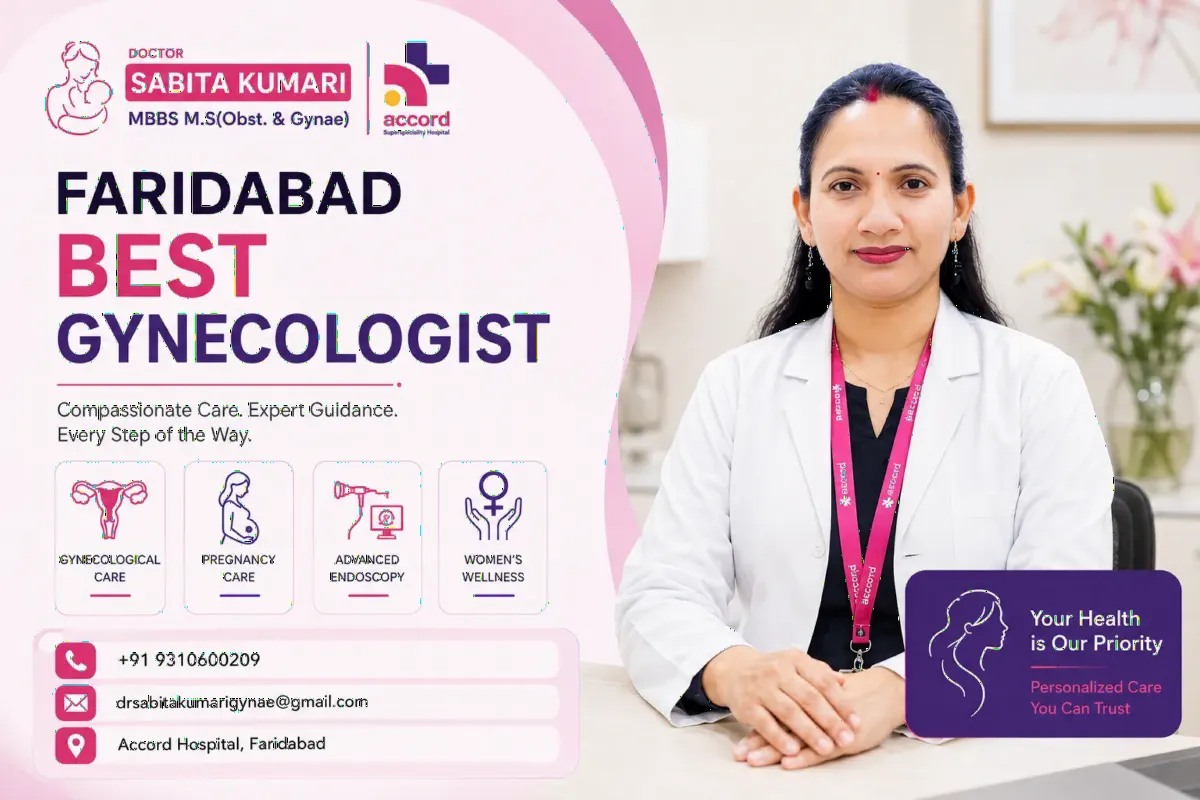
Faridabad Best Gynecologist
If you've typed "Faridabad best gynecologist" into Google at 11 PM while worried about a missed period, an unusual scan result, or just wanting a second opinion, you're not alone. Most women start this search during a moment that feels urgent, even when it isn't medically urgent at all. That's normal, and it's exactly why this guide exists.
Choosing a gynecologist isn't like picking a restaurant. You're trusting someone with information you might not even share with close family, and with decisions that can affect your body for years. This guide walks you through what actually matters when searching for a good gynaecologist in Faridabad, what conditions a gynecologist treats, when you should stop waiting and book an appointment, and how to evaluate your options with a clear head instead of a panicked 2 AM Google search.
Why Choosing the Right Gynecologist Matters
Women's health isn't a single specialty. It spans puberty, menstruation, fertility, pregnancy, childbirth, and menopause, sometimes all within the care of one doctor over decades. A gynecologist you trust early on often becomes the person who delivers your baby, manages a fibroid years later, and talks you through menopause after that.
This is why continuity matters so much. When I speak with patients, the ones who've stayed with one trusted doctor for years often catch problems earlier, simply because the doctor already knows their baseline. A new doctor every time means re-explaining your history, re-running tests, and sometimes missing patterns that only show up over multiple visits.
There's also the comfort factor. Gynecological visits involve a level of physical and emotional vulnerability that most other medical appointments don't. A doctor who makes you feel rushed, judged, or unheard can quietly discourage you from seeking care altogether, and that's a bigger risk to your health than almost any single condition.
Who Should Consult a Gynecologist?
You don't need a "serious" problem to see a gynecologist. Here's who typically benefits from a visit:
- Teenagers experiencing their first period, irregular cycles, or severe period pain
- Women in their 20s and 30s planning pregnancy, managing PCOS, or dealing with menstrual irregularities
- Pregnant women at any stage, from the first missed period through delivery
- Couples who've been trying to conceive for over a year without success
- Women over 40 approaching perimenopause or menopause
- Anyone experiencing unusual pain, bleeding, discharge, or discomfort, regardless of age
Many women are surprised to learn that routine gynecological checkups are recommended even without symptoms, much like a dental cleaning. Pap smears, pelvic exams, and basic screenings catch problems long before they become noticeable.
Services Offered by a Gynecologist
A well-rounded gynecology practice typically covers:
| Service Area | What It Includes |
|---|---|
| Pregnancy Care | Prenatal checkups, ultrasound monitoring, delivery planning |
| High-Risk Pregnancy Management | Close monitoring for diabetes, hypertension, or other complications |
| Gynaecological Surgery | Laparoscopic and minimally invasive procedures |
| Fertility Evaluation | Diagnostic testing and treatment for infertility |
| Menstrual Disorder Treatment | Management of irregular, heavy, or painful periods |
| Menopause Care | Hormonal support and symptom management |
| Preventive Screening | Pap smears, HPV testing, pelvic ultrasounds |
Common Conditions Treated
Pregnancy Care
Routine prenatal care focuses on tracking the baby's growth, monitoring the mother's health, and catching potential complications early through regular ultrasounds and blood work. Most pregnancies are low-risk and progress with standard checkups every few weeks.
High-Risk Pregnancy
Some pregnancies need closer attention. Maternal age under 18 or over 35, multiple pregnancies (twins or more), gestational diabetes, hypertension, or a history of pregnancy loss can all raise the risk profile. According to guidelines referenced by bodies like FIGO, roughly 20 to 30 percent of pregnancies fall into a higher-risk category, which is far more common than most expecting mothers assume. In my experience, the women who do best with a high-risk pregnancy are the ones who get matched with a specialist early, rather than waiting until a complication forces an urgent referral.
PCOS Treatment
Polycystic Ovary Syndrome affects hormone levels, ovulation, and metabolism. Symptoms range from irregular periods and acne to weight gain and difficulty conceiving. Treatment usually combines lifestyle changes with medication tailored to whether the goal is symptom relief or pregnancy planning.
Infertility Evaluation
Infertility isn't always a "female problem," and a thorough evaluation looks at both partners. Common causes include ovulation disorders, blocked fallopian tubes, endometriosis, and unexplained factors. I've noticed that couples often wait far too long before seeking evaluation, sometimes years, when earlier testing could have identified a treatable cause sooner.
Menstrual Disorders
Heavy bleeding, missed periods, severe cramping, or cycles that are wildly unpredictable all fall under menstrual disorders. These can stem from hormonal imbalance, fibroids, PCOS, thyroid issues, or stress. Tracking your cycle for a few months before your appointment makes diagnosis significantly faster.
Menopause Care
Menopause typically begins between ages 45 and 55, bringing hot flashes, mood changes, sleep disruption, and hormonal shifts. A menopause specialist can offer hormone therapy, lifestyle guidance, or non-hormonal options depending on your health history and preferences.
Preventive Women's Healthcare
Preventive care is the most underused tool in women's health. Annual pelvic exams, Pap smears for cervical cancer screening, and HPV testing catch issues at their most treatable stage. The NICE Guidelines and similar international standards recommend regular cervical screening starting in your mid-20s, regardless of symptoms.
When Should You Visit Immediately?
A high-risk pregnancy is a pregnancy with a greater-than-average chance of complications for the mother, the baby, or both, due to factors like maternal age, pre-existing conditions, or pregnancy-specific complications such as gestational diabetes or preeclampsia.
Beyond routine checkups, certain symptoms call for prompt attention rather than a "wait and see" approach.
Signs You Should Never Ignore
- Heavy bleeding that soaks through a pad or tampon within an hour
- Severe pelvic or abdominal pain, especially sudden and sharp
- Bleeding after menopause, at any amount
- Fever with pelvic pain or unusual discharge
- No period for three or more months without a known cause (and not pregnant)
- Pain or bleeding during pregnancy at any stage
- A pelvic mass or persistent bloating that doesn't resolve
- Severe, worsening pain during intercourse
If you notice any of these, don't wait for your next scheduled checkup. These symptoms warrant a same-week, sometimes same-day, evaluation.
How to Choose the Best Gynae Doctor in Faridabad
Faridabad has no shortage of options, which can actually make the decision harder. Here's a practical framework for narrowing it down.
1. Check qualifications and training. Look for an MD or DGO in Obstetrics and Gynaecology, ideally with additional fellowship training in laparoscopic surgery or high-risk pregnancy if that's your specific need.
2. Look at years of independent practice. A doctor with over a decade of hands-on experience has likely seen a wider range of complications and unusual presentations than someone earlier in their career.
3. Confirm hospital affiliation. A gynecologist attached to a recognized hospital gives you access to backup facilities, NICU support, and emergency surgical infrastructure if something unexpected comes up during delivery or surgery.
4. Read patient reviews carefully. Look past the star rating and read what patients actually say about communication style, wait times, and how the doctor handled complications, not just routine visits.
5. Evaluate availability for emergencies. Pregnancy and gynecological issues don't always wait for office hours. A doctor or practice with 24/7 emergency access matters more than it seems until you actually need it at 2 AM.
6. Assess communication style. Does the doctor explain things clearly? Do they answer questions without rushing you out the door? This matters enormously for long-term conditions you'll be managing together for years.
7. Consider surgical volume for procedures. If you need a laparoscopic procedure, ask how many similar surgeries the doctor has performed. Higher surgical volume generally correlates with better outcomes and fewer complications.
When you run a gynecologist near me search and start comparing names, Dr. Sabita Kumari is a useful example of what this checklist looks like in practice: 16 years of independent practice, training at AIIMS New Delhi in minimally invasive surgery, and affiliations with established hospitals in Faridabad. That combination of tenure, training, and institutional backing is exactly what the framework above is meant to help you spot, whichever doctor you ultimately choose.
Top Gynecology Doctor Near Me Faridabad: What Sets the Best Apart
Among women searching for a top gynecology doctor near me Faridabad, certain patterns repeat across the doctors patients consistently recommend. They tend to combine surgical expertise with genuine bedside manner, something that's harder to find than either quality alone.
Dr. Sabita Kumari's practice reflects this pattern closely. With experience built across QRG Health City, Apollo Hospital Faridabad, and training in laparoscopic surgery at AIIMS Delhi, her work spans the same broad range this guide has covered: high-risk pregnancy management, PCOD and menstrual disorder treatment, fibroid and ovarian cyst care, infertility support, and adolescent health concerns. Patients consistently describe her approach as attentive rather than rushed, which lines up with the communication-style criteria mentioned earlier.
If you're using this guide's framework to evaluate a gynecologist hospital near me, checking for exactly this kind of layered experience, training, and patient feedback is the most reliable shortcut available.
Why Patients Trust Dr. Sabita
Patient-Centered Approach
Every patient's history, concerns, and goals are different, even when the diagnosis looks similar on paper. Dr. Sabita's consultations are structured around understanding the full picture before recommending a treatment path, rather than defaulting to the same protocol for everyone.
Modern Diagnostic Facilities
Access to updated ultrasound technology and lab diagnostics means fewer delays between a symptom and an answer. This matters especially for high-risk pregnancy monitoring, where timing can change the recommended approach significantly.
Compassionate Care
Gynecological appointments often involve topics patients feel hesitant to bring up. When I speak with patients about what made them stay with a particular doctor long-term, it's rarely just clinical skill. It's usually that they felt heard during a vulnerable conversation.
Final Thoughts
Searching for a Faridabad best gynecologist isn't about finding a perfect doctor; it's about finding the right fit for your specific health needs, communication style, and stage of life. Whether you're dealing with a high-risk pregnancy, PCOS, fertility concerns, or simply want a reliable women's health specialist for routine care, the framework in this guide should make that decision considerably easier.
Dr. Sabita Kumari brings 16 years of focused gynecological and obstetric experience to Faridabad, with training from AIIMS Delhi and a patient-centered approach to care. If you're ready to discuss your health concerns with an experienced obstetrician and gynecologist in Faridabad, reach out to schedule a consultation and take the next step in your women's health journey.