Many women find out they have fibroids almost by accident, during a routine ultrasound or a pregnancy scan. Others live for years with heavy periods, a heavy feeling in the lower belly or frequent urination before anyone connects these problems to the uterus. Fibroids are very common. Studies that screened women with ultrasound found that by the age of 50, roughly 70 to 80 percent of women have at least one fibroid. Most never cause trouble, but for many women they do.
This guide explains the most common fibroid symptoms, how doctors confirm the diagnosis, which treatments work for which kind of fibroid, and when laparoscopic (keyhole) surgery is the right choice. It is written by the team of Dr. Sabita Kumari, an obstetrician, gynecologist and laparoscopic surgeon in Faridabad.
What Are Uterine Fibroids?
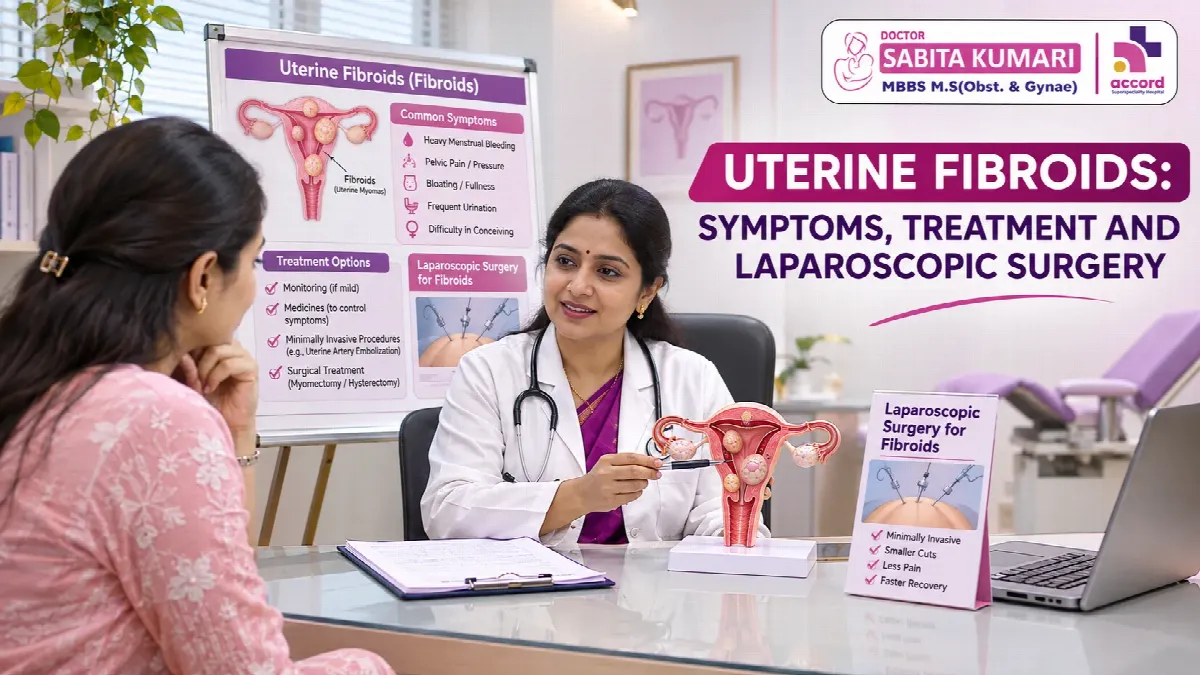
Uterine fibroids, also called myomas or leiomyomas, are non-cancerous growths that develop from the muscle wall of the uterus. They can be as small as a seed or grow larger than a melon. A woman may have a single fibroid or many of different sizes. Fibroids depend on the hormones estrogen and progesterone, so they usually grow during the reproductive years and tend to shrink after menopause.
Doctors describe fibroids by where they sit, because the location decides both the symptoms and the treatment:
- Submucosal fibroids grow just under the inner lining and bulge into the uterine cavity. Even small ones can cause heavy bleeding and affect pregnancy.
- Intramural fibroids grow within the muscle wall. Larger ones enlarge the uterus and can cause heavy periods and pressure.
- Subserosal fibroids grow on the outer surface of the uterus. They rarely affect periods but can press on the bladder, bowel or back.
- Pedunculated fibroids hang from the uterus on a stalk, inside or outside. They can twist and cause sudden pain.
The exact cause is not known. Risk is higher with increasing age in the reproductive years, a family history of fibroids, early onset of periods, obesity and high blood pressure. Having children appears to lower the risk somewhat. For a detailed overview of the condition itself, see our page on fibroid uterus.
Common Fibroid Symptoms
Many fibroids are silent. Only about a quarter to half of women with fibroids notice symptoms, and how much trouble a fibroid causes depends more on its position than its size. A small submucosal fibroid can cause more bleeding than a large one on the outside of the uterus. These are the fibroid symptoms doctors see most often.
Heavy or prolonged periods
Heavy menstrual bleeding is the classic symptom. Periods may last longer than seven days, need a pad change every hour or two, or come with large clots. Some women bleed through clothes at night or avoid going out on heavy days. Fibroids increase the surface area of the uterine lining and can interfere with the way the uterus contracts to control bleeding. Our guide to heavy periods, their causes and tests explains how to judge whether your bleeding is too heavy.
Tiredness and anemia
Months of heavy bleeding drain the body's iron. Women often come in for weakness, breathlessness on climbing stairs, hair fall, pale skin or poor concentration, without realizing the cause is blood loss from fibroids. A simple blood count and ferritin test can confirm iron deficiency anemia.
Pelvic pressure and a swollen abdomen
A large fibroid or an enlarged uterus can create a feeling of heaviness or fullness in the lower belly. Some women notice that their clothes feel tight around the waist or that their abdomen looks bloated, even without weight gain. Occasionally a woman can feel a firm lump herself.
Frequent urination and constipation
Fibroids at the front of the uterus can press on the bladder, causing a frequent urge to pass urine, waking at night to urinate or a feeling that the bladder does not empty fully. Fibroids at the back can press on the rectum and cause constipation or discomfort during bowel movements.
Pain
Painful periods, a dull ache in the lower back or legs, and pain during intercourse can all be caused by fibroids. Sudden, severe pain is less common. It may happen when a fibroid outgrows its blood supply and starts to break down (degeneration), which is more likely during pregnancy, or when a pedunculated fibroid twists. Pain of this kind needs urgent medical attention.
Difficulty getting pregnant or pregnancy problems
Most women with fibroids conceive and deliver normally. Fibroids that distort the uterine cavity, mainly submucosal ones, can lower the chance of an embryo implanting and are linked with miscarriage. Large fibroids may also cause pain in pregnancy, an abnormal position of the baby or a higher chance of caesarean delivery. If you are trying to conceive, read more about infertility evaluation and recurrent pregnancy loss.
Bleeding between periods
Spotting between periods or after intercourse can occur with submucosal fibroids and polyps. Because this symptom can also have other causes, it should always be checked by a gynecologist.
Fibroids or Something Else?
Several conditions share fibroid symptoms, which is why self-diagnosis is unreliable. Adenomyosis also causes heavy, painful periods and an enlarged uterus. Endometriosis causes painful periods and pain during intercourse, as explained in our article on when period pain may be endometriosis. Ovarian cysts can cause a pelvic lump and pressure. Hormonal imbalance, including PCOD, thyroid problems and polyps, can all cause irregular or heavy bleeding. A pelvic examination and an ultrasound usually tell these apart quickly.
When Should You See a Gynecologist?
Book an appointment if you notice any of the following:
- Periods that are heavier, longer or more painful than they used to be
- Bleeding between periods, after intercourse or after menopause
- Constant tiredness, breathlessness or a low hemoglobin report
- A feeling of fullness, a lump or swelling in the lower abdomen
- Frequent urination or constipation without another explanation
- Difficulty conceiving or repeated miscarriages
Go to an emergency department straight away if you have very heavy bleeding that soaks a pad within an hour for two hours in a row, feel faint or dizzy, or have sudden severe pelvic pain.
How Fibroids Are Diagnosed
Diagnosis starts with a conversation about your periods, pain, bladder and bowel habits and pregnancy plans, followed by a pelvic examination. An enlarged or irregular uterus often suggests fibroids. The tests that follow are simple and widely available in Faridabad.
- Pelvic ultrasound. A transabdominal and transvaginal scan is the main test. It shows the number, size and position of fibroids and checks the ovaries.
- Blood tests. A complete blood count and iron studies check for anemia. Thyroid tests and other hormone tests may be added depending on symptoms.
- Saline sonography or hysteroscopy. These show the inside of the uterine cavity in detail and are useful when a submucosal fibroid or polyp is suspected, especially in women trying to conceive.
- MRI. When there are many fibroids, when the uterus is very large, or when surgery is being planned, an MRI maps the fibroids precisely and helps separate them from adenomyosis.
- Endometrial sampling. Women over 40, or those with bleeding between periods, may need a small sample of the uterine lining to rule out other causes.
Treatment Options for Uterine Fibroids
There is no single best treatment. The right plan depends on your symptoms, the size and location of the fibroids, your age, how close you are to menopause and whether you want to become pregnant in the future. Fibroids that cause no symptoms usually need no treatment at all.
Watchful waiting
Small fibroids that cause no problems can simply be monitored with a check-up and ultrasound every 6 to 12 months. Many women near menopause choose this route because fibroids usually shrink once periods stop.
Medicines
Medicines control symptoms but do not remove fibroids. They are often the first step, a bridge to menopause, or a way to build up hemoglobin before surgery.
- Tranexamic acid and anti-inflammatory painkillers taken only on period days reduce bleeding and cramps.
- Hormonal treatments such as the hormone-releasing intrauterine device (LNG-IUS), progestin tablets or combined pills can make periods lighter when the uterine cavity is not distorted.
- GnRH medicines temporarily switch off the ovarian hormones, shrink fibroids and stop bleeding. They are usually used short term, often before surgery, because of menopause-like side effects.
- Iron supplements treat anemia. Severe anemia may need intravenous iron.
Uterine artery embolization
An interventional radiologist blocks the blood vessels feeding the fibroids through a thin tube passed from the groin or wrist. The fibroids shrink over the following months. It suits women who want to avoid surgery and do not plan a pregnancy, since its effect on future fertility is less certain than myomectomy.
Surgery
Surgery is considered when symptoms are severe, medicines have not helped, fibroids are large or growing, or fibroids are thought to be affecting fertility. There are two main approaches. Myomectomy removes only the fibroids and keeps the uterus, so pregnancy remains possible. Hysterectomy removes the uterus and is the only treatment that guarantees fibroids will not come back. For more on non-surgical and surgical options side by side, see our article on fibroid treatment approaches.
Laparoscopic Surgery for Fibroids
Most fibroid surgery today can be done through keyhole techniques rather than a large cut on the abdomen. This is where gynaec endoscopy makes a real difference to recovery.
Laparoscopic myomectomy
The surgeon makes three or four small cuts, usually 5 to 10 mm each, and passes in a thin camera (laparoscope) and fine instruments. The fibroid is cut out of the uterine wall, and the wall is then stitched in layers so that it heals strongly. The removed fibroid tissue is taken out through one of the small cuts, ideally inside a protective bag, and sent for examination under a microscope. This technique suits subserosal and intramural fibroids of most sizes in experienced hands.
Compared with open surgery, laparoscopic myomectomy generally means:
- Less pain after the operation and less need for strong painkillers
- Less blood loss and fewer wound infections
- A hospital stay of about one to two days instead of several
- A quicker return to normal activities, often within two to three weeks
- Small scars and fewer internal adhesions, which matters for future fertility
Hysteroscopic myomectomy
Submucosal fibroids that sit inside the cavity can often be removed through the vagina and cervix with a hysteroscope, a thin telescope with a cutting loop. There are no cuts on the abdomen. Most women go home the same day and return to normal routine within a few days. This is often the most effective treatment for women whose heavy bleeding or infertility is caused by a fibroid inside the cavity.
Laparoscopic hysterectomy
For women who have completed their family and have large or multiple fibroids, or who have had fibroids come back after a myomectomy, removing the uterus laparoscopically is a permanent solution. The ovaries can usually be kept, so it does not cause menopause. Read our full guide to laparoscopic hysterectomy, its procedure and recovery.
Is laparoscopy right for everyone?
Not always. Very large fibroids, a very high number of fibroids, previous major abdominal surgery or certain medical conditions may make open surgery the safer choice. In rare cases, what looks like a fibroid turns out to be a uterine sarcoma, a type of cancer. The US Food and Drug Administration estimates that a hidden sarcoma is present in roughly 1 in 225 to 1 in 580 women having surgery for presumed fibroids. This is why careful assessment before surgery and contained removal of tissue are important, especially for women over 50 or after menopause. Your surgeon should discuss which approach is safest for you.
Recovery and life after surgery
- Most women walk on the same day and eat normally within a day.
- Desk work can usually resume in about two weeks after laparoscopic myomectomy, and heavy lifting is avoided for four to six weeks.
- After myomectomy, doctors often advise waiting a few months before trying to conceive so the uterine wall heals well. Depending on how deep the fibroids were, a planned caesarean may be recommended for a future delivery.
- Fibroids can grow again after myomectomy, since the uterus is kept. Follow-up ultrasound helps detect any regrowth early.
Fibroids During Pregnancy
Fibroids found during pregnancy are usually left alone. Some grow in the first trimester, and a few cause pain from degeneration, which is managed with rest and painkillers that are safe in pregnancy. Large fibroids or fibroids low in the uterus need closer monitoring for the baby's position and delivery planning. Women with fibroids in pregnancy benefit from care with an obstetrician experienced in high-risk pregnancy care. Fibroids are generally not removed during a caesarean because of the risk of heavy bleeding.
Living With Fibroids: Practical Steps
There is no diet that dissolves fibroids, but some habits help you manage symptoms and stay healthy while you and your doctor decide on treatment.
- Keep a simple period diary noting the number of days, pad changes and clots. It helps your doctor judge the severity.
- Eat iron-rich foods such as green leafy vegetables, jaggery, lentils, eggs and meat, and take iron tablets if prescribed.
- Maintain a healthy weight and keep blood pressure under control, as both are linked with fibroid growth.
- Do not ignore a falling hemoglobin. Anemia makes surgery riskier and recovery slower.
- Avoid herbal or hormonal products bought without prescription that claim to shrink fibroids. Some contain hormones that can make bleeding worse.
Gynecology Services by Dr. Sabita Kumari in Faridabad
Dr. Sabita Kumari, MBBS, MS (Obstetrics and Gynaecology), has about 16 years of experience and trained in minimally invasive surgery at AIIMS, New Delhi. She consults and operates at Accord Superspeciality Hospital, Sector 86, Faridabad. Fibroid care is part of a wider range of women's health services:
- Fibroid uterus treatment, including medical management, laparoscopic and hysteroscopic myomectomy
- Gynaec endoscopy: laparoscopy and hysteroscopy for fibroids, cysts, endometriosis and hysterectomy
- Menstrual problems such as heavy, painful or irregular periods
- Adenomyosis diagnosis and treatment
- Ovarian cysts, including laparoscopic cyst removal
- PCOD and PCOS management
- Infertility evaluation and treatment
- High-risk pregnancy care and routine antenatal care
- Recurrent pregnancy loss evaluation
- Ectopic pregnancy treatment, including laparoscopic surgery
- Amenorrhea (absent periods) evaluation
- Adolescent health issues for teenage girls
If you are looking specifically for a fibroid specialist, our page on uterine fibroids treatment in Faridabad explains how to book an assessment.
Book a Consultation
If heavy periods, pelvic pressure or other fibroid symptoms are affecting your daily life, an ultrasound and a consultation can give you clear answers and a plan that fits your goals. Call or WhatsApp +91 9310600209 to confirm clinic timings, or use the form on our Contact page. Bring any recent ultrasound reports and blood tests with you.
This article is for general information and does not replace a medical consultation. Please see a doctor for advice about your own health.