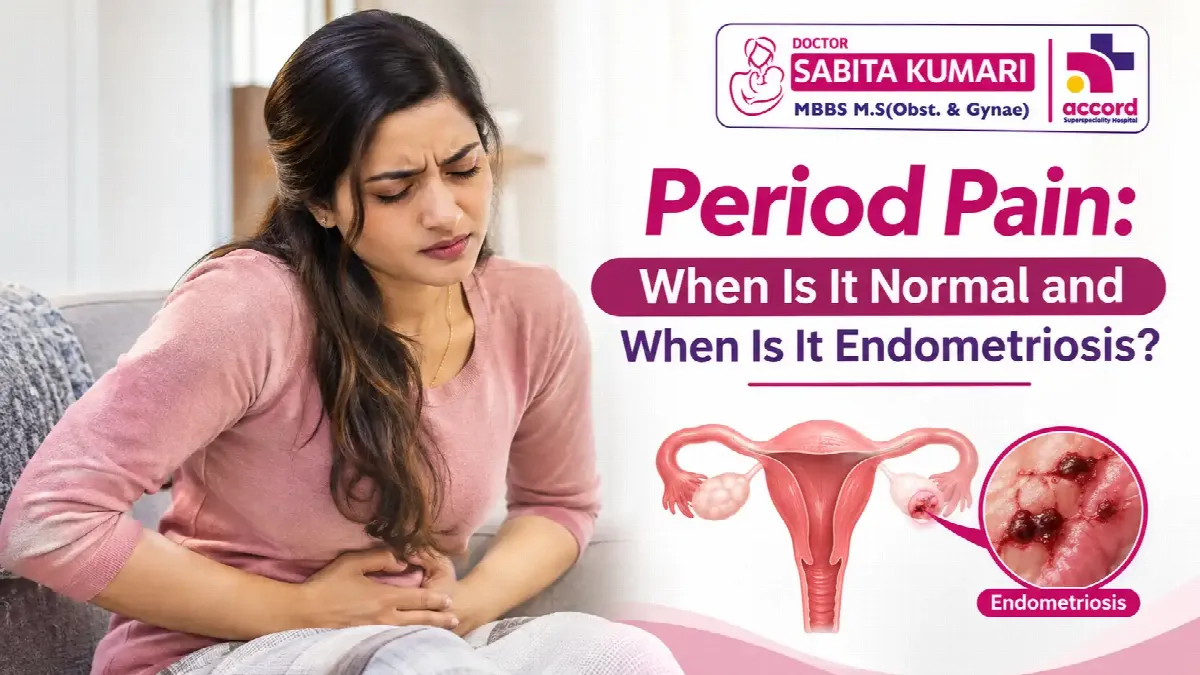
Many women grow up believing that painful periods are simply part of being a woman. Mild cramps for a day or two are normal. Pain that sends you to bed, makes you miss work or college, or keeps getting worse every year is not something you are expected to live with. In a significant number of cases, severe period pain has an underlying cause, and one of the most common and most overlooked is endometriosis.
This guide explains what normal period pain feels like, which signs suggest something else, how endometriosis and adenomyosis differ, and what treatment options exist. It is written by the clinic of Dr. Sabita Kumari, a gynecologist and laparoscopic surgeon in Faridabad, for women who want to know when to stop managing the pain on their own and get it assessed.
Why Periods Cause Pain
Just before and during a period, the lining of the uterus releases chemicals called prostaglandins. These make the uterine muscle contract to shed the lining. Higher prostaglandin levels cause stronger contractions, and stronger contractions cause more pain. The medical term for painful periods is dysmenorrhea, and it comes in two forms.
Primary dysmenorrhea
This is period pain without any underlying disease. It usually begins within a year or two of the first period, starts a few hours before or when bleeding begins, and lasts one to three days. The pain is felt as cramps in the lower abdomen, sometimes spreading to the back or thighs. It often improves with age or after childbirth.
Secondary dysmenorrhea
This is pain caused by a condition in the pelvis. It tends to start later in life, often after years of comfortable periods, begins earlier in the cycle, lasts longer and gets worse over time. The most common causes are endometriosis, adenomyosis and fibroids, followed by pelvic infection and, in some women, scarring from earlier surgery.
Normal Period Pain or a Warning Sign?
The lists below are not a diagnosis, but they help you decide whether your pain fits the usual pattern.
Pain that is usually normal
- Cramps that begin around the start of bleeding and settle within two or three days
- Pain that responds to rest, a hot water bag or a simple pain reliever
- A pattern that has stayed the same for years
- No pain at other times of the month
Pain that deserves a medical check
- Pain that stops you from going to work, school or normal activities
- Pain that does not respond to usual pain relievers
- Pain that is getting worse with each cycle
- Pain during sex, during bowel movements or while passing urine, especially around your period
- Very heavy bleeding, clots or periods lasting more than seven days
- Pelvic pain on days when you are not bleeding
- Difficulty conceiving after a year of trying
- Fainting, vomiting or fever with period pain
If more than one item from the second list sounds familiar, an examination and an ultrasound are the sensible next steps.
What Is Endometriosis?
Endometriosis happens when tissue similar to the lining of the uterus grows outside the uterus. It is most often found on the ovaries, the fallopian tubes and the surfaces inside the pelvis. This tissue responds to monthly hormones just as the uterine lining does. It thickens and bleeds, but the blood has no way to leave the body. The result is inflammation, pain, scar tissue and, over time, adhesions that can join pelvic organs together.
Symptoms of endometriosis
- Painful periods that become more severe over the years
- Chronic pelvic or lower back pain
- Pain during or after intercourse
- Painful bowel movements or bladder discomfort during periods
- Heavy or irregular bleeding
- Fatigue and bloating, sometimes called "endo belly"
- Difficulty getting pregnant
The severity of pain does not always match how much endometriosis is present. Some women with mild disease have severe pain, while others with extensive disease have few symptoms. Endometriosis can also form cysts on the ovaries, known as endometriomas. If your ultrasound mentions an ovarian cyst, read our guide on ovarian cysts to understand your options.
Endometriosis vs Adenomyosis
The two conditions are often confused because both cause painful, heavy periods. The difference is where the tissue grows. In endometriosis, it grows outside the uterus. In adenomyosis, the tissue grows into the muscular wall of the uterus itself, making the uterus larger and tender. Adenomyosis is more common in women over 35 or those who have had children, and it often causes heavy bleeding along with pain. A woman can have both conditions at the same time. You can read more about the second condition on our adenomyosis page.
How Painful Periods Are Diagnosed
The doctor begins with your history: when the pain began, how it changes through the month, how it affects your daily life, and whether you have pain with sex or with bowel movements. A pelvic examination follows when appropriate.
- Pelvic ultrasound. This checks the uterus and ovaries for fibroids, cysts, and signs of adenomyosis.
- MRI. It is sometimes advised to map deep endometriosis or to confirm adenomyosis when the ultrasound is unclear.
- Blood tests. These rule out infection, anemia, and sometimes other causes of pain.
- Laparoscopy. This is a keyhole procedure in which a thin camera is placed through a small cut near the navel. It allows the surgeon to see endometriosis directly, take a sample if needed and treat it in the same sitting. You can read about the technique on our gynaec endoscopy page.
A normal ultrasound does not rule out endometriosis, because small deposits and adhesions do not always show up. This is one reason the condition is often diagnosed late. If your symptoms strongly suggest it, your doctor may advise treatment or laparoscopy even when the scan looks normal.
Treatment Options for Painful Periods
Self-care that helps with mild pain
- A hot water bag or warm bath on the lower abdomen
- Light exercise such as walking or yoga
- Regular meals and enough fluids
- Rest on the heaviest days
Pain-relief medicines
Anti-inflammatory pain relievers work best when started at the first sign of pain, because they reduce prostaglandin production. They should be taken with food and only as advised by your doctor or pharmacist, especially if you have stomach problems, kidney disease or asthma. Using strong painkillers every month for years without a diagnosis only delays treatment of the cause.
Hormonal treatment
Hormonal pills, a hormonal intrauterine device or other hormone therapies reduce or stop ovulation and thin the uterine lining. This lowers pain and bleeding in primary dysmenorrhea, endometriosis and adenomyosis. The right option depends on your age, your health history and whether you plan to become pregnant soon.
Surgery
Surgery is considered when medicines fail, when there are large endometriomas, when fertility is affected, or when the diagnosis needs to be confirmed. In experienced hands, keyhole surgery can remove endometriosis deposits and release adhesions through small cuts. Recovery is usually faster than with open surgery. For women with adenomyosis or fibroids who have finished childbearing and have severe symptoms, removal of the uterus is sometimes an option after full discussion. Our page on fibroid treatment explains related procedures.
Endometriosis and fertility
Endometriosis is one of the recognized reasons women have difficulty conceiving, because it can damage the tubes and ovaries or cause inflammation in the pelvis. It does not mean you cannot become pregnant. Many women with endometriosis conceive naturally or with help. If you are trying to conceive and have painful periods, mention it early at your consultation. Our infertility page explains the evaluation steps.
Painful Periods in Teenagers
Period pain is the most common reason teenagers miss school. Most of it is primary dysmenorrhea and improves with simple measures. A visit is advised when pain is severe from the first cycles, when it is not controlled by usual pain relievers, or when there is heavy bleeding. Early diagnosis matters, because endometriosis can begin in adolescence and often goes unrecognized for years. A private, unhurried consultation helps teens and parents ask questions comfortably. See our guide on adolescent health issues for more.
Seeing a Gynecologist in Faridabad for Period Pain
Dr. Sabita Kumari has 16 years of experience in gynecology and obstetrics and trained in minimally invasive surgery at AIIMS, New Delhi. She consults at Accord Superspeciality Hospital, Budena Village, Sector 86, Faridabad. At your first visit she will listen to your full history, explain what each test is for, and discuss medical and surgical options so that you can make the decision. You can find our general guidance on menstrual problems here, and our related article on amenorrhea care in Faridabad covers the opposite problem of missed periods.
Frequently Asked Questions
Is severe period pain normal?
Mild to moderate cramps are normal. Pain that stops you from doing everyday activities, does not respond to usual treatment, or is getting worse is not normal and should be checked.
Can endometriosis be cured?
Endometriosis is a long-term condition, so it is managed rather than permanently cured. Medicines and surgery can control pain well for many women, and treatment plans are adjusted as life stages change.
Does a normal ultrasound mean I do not have endometriosis?
No. Ultrasound can miss small deposits and adhesions. Your doctor will weigh your symptoms along with the scan and may suggest a trial of treatment or laparoscopy.
Can period pain affect pregnancy?
Period pain on its own does not. The conditions behind secondary dysmenorrhea, such as endometriosis, can affect fertility, so it is useful to mention painful periods if you are trying to conceive.
Which doctor should I see for painful periods?
A gynecologist. If the pain is severe or has changed, choose one with experience in endometriosis, adenomyosis and keyhole surgery.
Book a Consultation
If period pain is limiting your life, there is a reason to look into it. Call +91 9310600209 to confirm clinic timings or use the form on our Contact page. Bring any ultrasound reports and a note of your period dates.
This article is for general information and does not replace a medical consultation. Please see a doctor for advice about your own health.