The first 12 to 13 weeks of pregnancy are the busiest weeks of your baby's development. By the end of the first trimester, the heart is beating, the major organs have formed, and tiny fingers and toes are taking shape, often before you have told anyone outside the family. It is also the time when the most important early checks happen: confirming the pregnancy is in the right place, dating it accurately, and spotting health issues that are easiest to manage when found early.
This guide works as a practical first trimester checklist. It walks you week by week through the scans and blood tests you can expect, the supplements and vaccines that matter, what to eat and avoid, common symptoms and how to ease them, and the warning signs that need a call to your doctor. It is written by the team of Dr. Sabita Kumari, an obstetrician and gynecologist in Faridabad.
What Counts as the First Trimester?
Pregnancy is counted from the first day of your last menstrual period (LMP), not from the day of conception. So when a pregnancy test turns positive around the time of a missed period, you are already about 4 weeks pregnant. The first trimester runs from week 1 to the end of week 13. Your due date is calculated as roughly 40 weeks from the LMP, and an early scan is used to confirm or adjust it.
If you are still planning a pregnancy, our preconception checklist covers the steps to take before you conceive.
Week by Week: What Happens in the First Trimester
Weeks 4 to 6
The pregnancy test turns positive and periods stop. The embryo is about the size of a grain of rice, the neural tube that becomes the brain and spinal cord is forming, and the heart begins to beat. Many women notice breast tenderness, tiredness and the first waves of nausea. This is the right time to book your first visit and make sure you are taking folic acid.
Weeks 7 to 9
The baby's heartbeat can usually be seen on ultrasound, arms and legs are budding, and the face is taking shape. Nausea and food aversions are often at their peak. The early pregnancy scan is usually done in this window to confirm the location, number of babies and due date.
Weeks 10 to 13
All major organs have formed and the baby is now called a fetus. Fingers and toes separate, and the baby starts to move, although you will not feel it yet. The NT scan and double marker test fall in this window. For many women, nausea begins to ease and energy improves towards the end of week 13, and the risk of miscarriage drops considerably once a healthy heartbeat has been seen at this stage.
Your First Trimester Checklist at a Glance
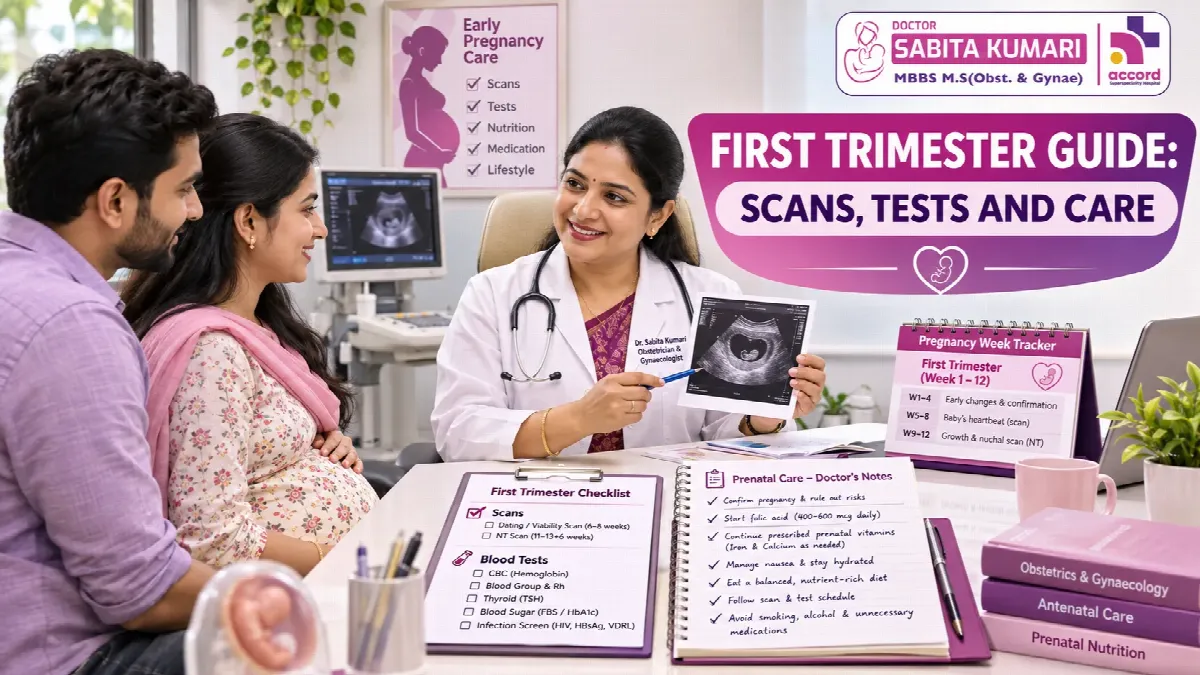
- Book your first antenatal visit as soon as the pregnancy test is positive, ideally by 6 to 8 weeks.
- Start or continue folic acid daily, and take iron and calcium only as advised.
- Have an early ultrasound to confirm the pregnancy is in the uterus, check the heartbeat and date the pregnancy.
- Complete the routine first-visit blood and urine tests.
- Plan the NT scan and double marker test between 11 and 13 weeks 6 days.
- Get your Td (tetanus-diphtheria) vaccination as scheduled by your doctor.
- Review every medicine and supplement you take with your doctor.
- Stop smoking and alcohol completely, and limit caffeine.
- Learn the warning signs that need urgent attention.
The First Antenatal Visit
The first visit sets the foundation for the whole pregnancy. Your doctor will ask about the date of your last period, previous pregnancies, miscarriages or caesarean sections, medical conditions such as thyroid disease, diabetes or high blood pressure, medicines you take and your family history. Your weight, height, blood pressure and general health are recorded, and a due date is calculated.
This is also when your doctor decides whether your pregnancy needs extra monitoring. Women with conditions such as diabetes, high blood pressure, thyroid disorders, previous miscarriages, twins, age over 35 or a previous complicated pregnancy may be advised high-risk pregnancy care. Being labelled high risk simply means closer follow-up, and most such pregnancies end well. Our article on signs of a high-risk pregnancy explains this in more detail.
Bring a list of questions, any previous reports and the names of all medicines and supplements you use, including ayurvedic or herbal products.
First Trimester Scans
Early pregnancy scan (6 to 9 weeks)
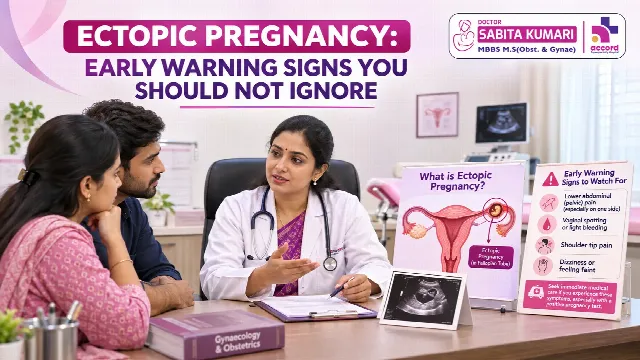
An early ultrasound, often done through the vagina for a clearer view at this stage, answers three key questions. Is the pregnancy inside the uterus? Is there a heartbeat? How many babies are there? It also measures the baby to date the pregnancy accurately. This scan is especially important if you have pain or spotting, a previous ectopic pregnancy or miscarriage, irregular periods or conceived with fertility treatment. Read our guide on ectopic pregnancy warning signs to understand why confirming the location early matters.
NT scan (11 weeks to 13 weeks 6 days)
The nuchal translucency (NT) scan measures a small pocket of fluid at the back of the baby's neck and checks early anatomy, including the skull, limbs, stomach and bladder. Combined with your age and the double marker blood test, it estimates the chance of chromosomal conditions such as Down syndrome. The timing window is narrow, so book it as soon as your dating scan is done.
The NT scan is a screening test, not a diagnosis. A higher-risk result means further testing is offered, such as cell-free DNA (NIPT), chorionic villus sampling or amniocentesis, after proper counseling.
First Trimester Blood and Urine Tests
Most of these tests are done at the first visit. They check your health and identify conditions that can affect you or your baby.
- Complete blood count and hemoglobin to detect anemia, which is common in Indian women and easy to treat when found early.
- Blood group and Rh type. Rh negative mothers need antibody checks and anti-D protection at the right times.
- Blood sugar test. In India, a glucose challenge or oral glucose test is commonly done at the first visit to screen for diabetes in pregnancy and repeated later in pregnancy.
- Thyroid function (TSH). Thyroid problems are common and can affect the baby's development if untreated.
- Infection screening: HIV, hepatitis B (HBsAg), hepatitis C and syphilis (VDRL), with consent. Treatment during pregnancy greatly reduces the risk to the baby.
- Urine routine and culture to look for infection, protein and sugar.
- Double marker test (free beta hCG and PAPP-A) along with the NT scan.
- Additional tests such as thalassemia screening, rubella immunity, vitamin D or blood pressure-related tests, depending on your history.
Keep all reports in one folder and carry it to every visit.
Supplements and Vaccines
Folic acid
Folic acid helps prevent neural tube defects, serious birth defects of the brain and spine that develop in the first weeks of pregnancy. Ideally it is started at least one month before conception and continued through the first trimester. If you have not started yet, begin as soon as you know you are pregnant. Your doctor will advise the right dose, which may be higher if you have diabetes, epilepsy, high body weight or a previous baby with a neural tube defect.
Iron, calcium and other supplements
Iron and calcium are usually started from the second trimester, earlier if you are anemic. Iodized salt helps meet iodine needs. Avoid high-dose vitamin A supplements and any herbal product not approved by your doctor.
Vaccines
The Td (tetanus-diphtheria) vaccine is given during pregnancy as per your doctor's schedule to protect you and your newborn. An inactivated flu vaccine is safe in pregnancy and recommended in many settings. Live vaccines such as MMR are avoided during pregnancy.
Diet and Lifestyle in the First Trimester
What to eat
- Small, frequent meals with whole grains, dals, vegetables, fruits, milk, curd and paneer
- Protein from pulses, eggs, fish low in mercury, chicken or soy
- Iron-rich foods such as green leafy vegetables, jaggery, dates and legumes, with vitamin C to help absorption
- Plenty of water, coconut water or buttermilk
Weight gain in the first trimester is usually small, often only 1 to 2 kg. "Eating for two" is not needed yet.
What to avoid
- Alcohol and smoking, including second-hand smoke, completely
- Unpasteurized milk and soft cheeses, raw or undercooked eggs, meat and seafood
- Unwashed fruits and vegetables and street food of uncertain hygiene
- Excess caffeine. Keep tea and coffee to about two cups a day.
- Any medicine, including painkillers and home remedies, without checking with your doctor
Exercise, work and travel
Regular walking, gentle yoga and prenatal exercise are safe and helpful for most women, unless your doctor advises rest. Most women can continue working. Avoid lifting very heavy weights, exposure to chemicals or radiation, and contact sports. Travel is usually safe in a healthy pregnancy, but discuss long trips with your doctor first.
Common First Trimester Symptoms and How to Cope
- Nausea and vomiting. Eat small dry snacks before getting up, avoid an empty stomach and greasy food, and sip fluids through the day. Ginger may help. Seek care if you cannot keep fluids down, as severe vomiting (hyperemesis gravidarum) may need treatment.
- Tiredness. Rest when you can and keep a regular sleep routine. Persistent extreme tiredness may signal anemia or thyroid problems.
- Breast tenderness. A supportive, well-fitting bra helps.
- Frequent urination. Normal, but burning or pain needs a urine test.
- Constipation and bloating. More fiber, fluids and gentle activity usually help.
- Mood changes. Hormones and worry can cause ups and downs. Talk to your partner and your doctor if low mood or anxiety persists.
- Mild cramps. Light, period-like cramps can be normal as the uterus grows, but severe or one-sided pain must be checked.
Warning Signs: When to Call Your Doctor
Contact your doctor promptly, or go to the hospital, if you have:
- Vaginal bleeding, especially if it is heavy or comes with cramps
- Severe or one-sided abdominal pain, or pain at the tip of the shoulder
- Fainting or severe dizziness
- Vomiting so severe that you cannot keep fluids down, or signs of dehydration
- Fever above 38°C (100.4°F)
- Burning or pain while passing urine
- Severe headache or blurred vision
Bleeding in early pregnancy does not always mean a problem, but it should always be assessed. If you have had more than one miscarriage, see our guide on recurrent miscarriage causes, tests and treatment and our recurrent pregnancy loss care page.
Pregnancy With an Existing Gynecological Condition
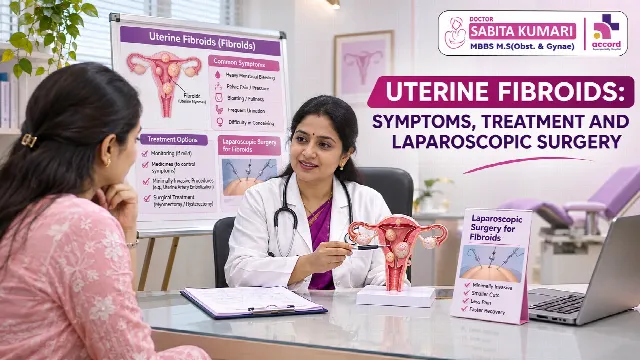
Some women begin pregnancy with conditions that need a specific plan. Fibroids are usually harmless in pregnancy but large ones need monitoring; read our article on uterine fibroid symptoms and treatment. Women with PCOD have a higher chance of diabetes in pregnancy and need early sugar testing. Women who conceived after infertility treatment or IVF usually need an early scan and closer follow-up. Previous caesarean section, thyroid disease and high blood pressure also call for a tailored plan through high-risk pregnancy care.
Looking Ahead to the Second Trimester
As you move into the second trimester, nausea usually eases and energy returns. The next milestones include the anomaly scan at around 18 to 20 weeks, iron and calcium supplements, a repeat sugar test, and regular checks of blood pressure and baby's growth. It is also a good time to start thinking about your birth preferences; our article on normal delivery tips and when a C-section is needed is a useful starting point.
Choosing the right doctor early makes the whole journey smoother. Our guide on choosing a gynecologist in Faridabad for pregnancy checkups explains what to look for.
Gynecology Services by Dr. Sabita Kumari in Faridabad
Dr. Sabita Kumari, MBBS, MS (Obstetrics and Gynaecology), has about 16 years of experience and trained in minimally invasive surgery at AIIMS, New Delhi. She consults and delivers at Accord Superspeciality Hospital, Sector 86, Faridabad. Her services include:
- High-risk pregnancy care and routine antenatal care from the first trimester to delivery
- Recurrent pregnancy loss evaluation and treatment
- Ectopic pregnancy diagnosis and treatment
- Infertility evaluation and treatment
- Gynaec endoscopy: laparoscopy and hysteroscopy
- Fibroid uterus treatment
- Ovarian cysts treatment
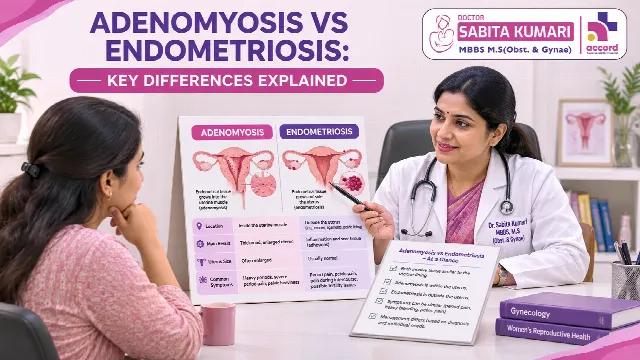
- Adenomyosis diagnosis and treatment
- Menstrual problems such as heavy, painful or irregular periods
- PCOD and PCOS management
- Amenorrhea (absent periods) evaluation
- Adolescent health issues for teenage girls
Book Your First Pregnancy Visit
A good start in the first trimester sets the tone for a healthy pregnancy. Call or WhatsApp +91 9310600209 to book your first antenatal visit or early scan, or use the form on our Contact page. Bring your pregnancy test result, the date of your last period and any previous medical reports.
This article is for general information and does not replace a medical consultation. Please see a doctor for advice about your own health.