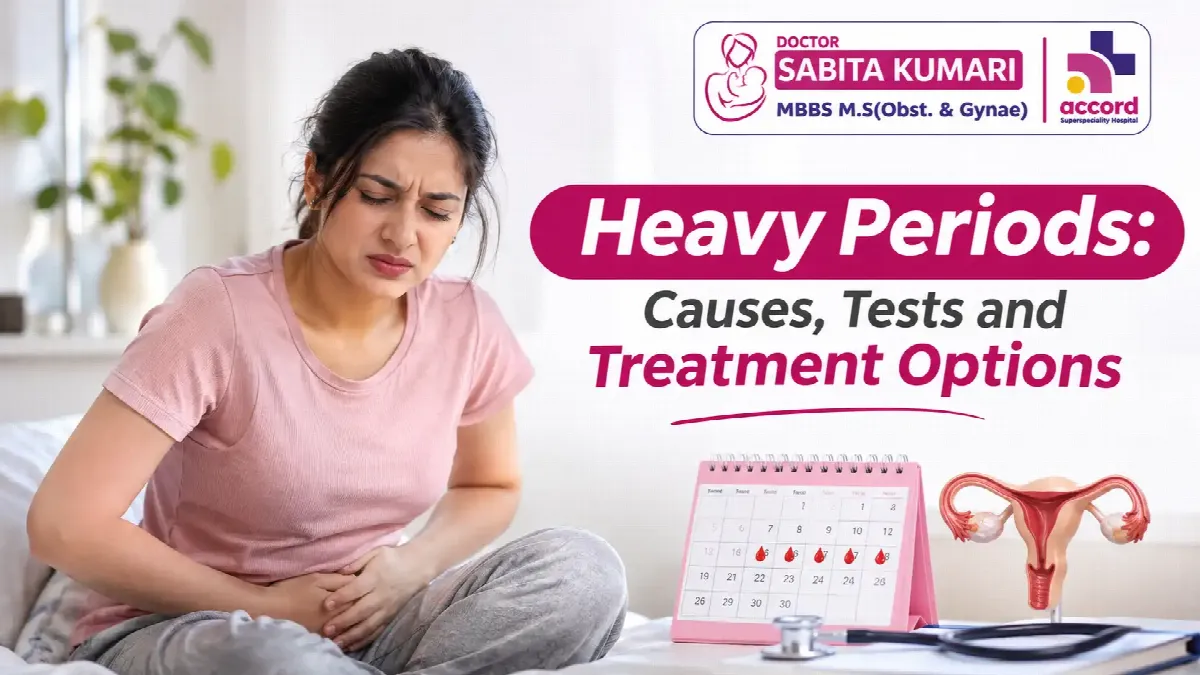
Many women adjust their lives around heavy periods without realizing that something can be done about it. They carry spare clothes, avoid travel on certain days, change pads at night and feel tired for days afterwards. Heavy menstrual bleeding is common, and in most cases it has a cause that can be identified and treated. It is also one of the leading reasons for iron deficiency anemia in women, which makes it worth taking seriously.
This guide explains how to tell whether your periods are heavy, the most common causes, the tests a gynecologist is likely to advise and the treatments available, from medicines to keyhole surgery. It is written by the clinic of Dr. Sabita Kumari, a gynecologist and laparoscopic surgeon in Faridabad.
What Counts as a Heavy Period?
It is hard to measure menstrual blood at home, so doctors use practical signs. Your periods may be heavy if:
- You soak through a pad or tampon every hour for several hours in a row
- You need to change protection during the night, or use two pads at once
- Bleeding lasts longer than seven days
- You pass blood clots larger than a coin
- Bleeding interferes with your work, sleep, travel or social life
- You feel tired, breathless, dizzy or have a fast heartbeat during or after your period
The medical term is menorrhagia. What matters most is not a number but how much bleeding affects your health and daily life. If it does, it is worth seeing a doctor.
Common Causes of Heavy Periods
Uterine fibroids
Fibroids are non-cancerous growths in the muscle of the uterus. Depending on their size and place, they can cause long, heavy periods, clots, pressure on the bladder and a feeling of fullness in the lower abdomen. They are very common in women in their 30s and 40s. You can read more on our page about fibroid uterus treatment and in our article on uterine fibroids.
Adenomyosis
In adenomyosis, the tissue that lines the uterus grows into the muscular wall. The uterus becomes enlarged and tender, and periods become heavy and painful. It is common in women over 35 and in those who have had children. See our page on adenomyosis for more details.
Polyps
Endometrial or cervical polyps are small soft growths that can cause heavy periods, bleeding between periods or bleeding after intercourse. They are usually benign and can be removed easily with a hysteroscopy.
Hormonal imbalance
When ovulation does not happen regularly, the uterine lining builds up for longer than usual and is shed in a heavy, irregular bleed. This is common in teenagers, in women with PCOS and in women approaching menopause. Thyroid disease can also cause heavy cycles.
Bleeding and clotting disorders
Some women have heavy periods from their very first cycle because of a problem with blood clotting, such as von Willebrand disease. A family history of heavy bleeding, easy bruising or bleeding after dental work or delivery is a clue. A hematologist may be involved in diagnosis.
Medicines and devices
Blood thinners and some other medicines can increase menstrual bleeding. A copper intrauterine device can make periods heavier for the first few months or longer.
Other causes
Thickening of the uterine lining (endometrial hyperplasia), infections of the pelvis, complications of pregnancy such as miscarriage, and in rare cases cancer of the uterus or cervix can also cause heavy or abnormal bleeding. This is why persistent heavy bleeding should be examined rather than treated with trial and error, especially after the age of 40 or if bleeding happens after menopause.
Why Heavy Periods Should Not Be Ignored
Regular heavy bleeding drains the body's iron stores. Anemia can develop slowly, and many women assume that tiredness, hair fall and poor concentration are just part of a busy life. Signs of anemia include:
- Constant fatigue and weakness
- Pale skin or pale inner eyelids
- Breathlessness on mild exertion
- Dizziness or headaches
- Brittle nails and hair fall
- Cravings to chew ice, which is called pica
A blood count and an iron level check quickly confirm whether you are anemic.
When to See a Doctor
Book an appointment if your periods are consistently heavy, if they have recently become heavier than usual, or if you have any of the symptoms of anemia described above. Also seek an examination when you have:
- Bleeding between periods or after intercourse
- Periods that last longer than seven days
- Severe pain along with heavy bleeding
- Heavy bleeding that began after the age of 40
- Any bleeding after menopause
Go to an emergency department if you soak through more than one pad an hour for two or more hours, feel faint or dizzy, or have chest pain or a very fast heartbeat.
Tests for Heavy Periods
The doctor will ask about your cycle, the amount of bleeding, pain, past surgeries, medicines and family history. Tests are chosen to match what you describe.
- Blood tests. A complete blood count and iron level (ferritin) check for anemia, and thyroid tests are common. A pregnancy test is done when relevant.
- Pelvic ultrasound. It shows fibroids, polyps, ovarian cysts and the thickness of the uterine lining, and it can suggest adenomyosis.
- Hysteroscopy. A thin camera is passed through the cervix to view the inside of the uterus. Polyps and small growths can often be removed in the same sitting. Learn more on our gynaec endoscopy page.
- Endometrial sampling. A small sample of the lining is taken when there is a risk of hyperplasia or cancer, such as in women over 40 or with irregular bleeding.
- Clotting tests. They are advised if there is a history that suggests a bleeding disorder.
Treatment Options for Heavy Periods
The right treatment depends on the cause, your age, whether you plan to have children and what matters most to you. Surgery is a last choice, not a first one.
Treating anemia
Iron tablets, and in some cases iron given through a drip, rebuild stores that bleeding has depleted. Foods such as green leafy vegetables, lentils, jaggery, dates, beans and meat help, and vitamin C taken with iron improves absorption. Treating anemia improves energy but does not stop the bleeding, so the cause still needs attention.
Medicines that reduce bleeding
- Non-hormonal medicines. Tranexamic acid, taken during the days of heavy bleeding, reduces blood loss. Anti-inflammatory pain relievers can reduce both bleeding and cramps in some women. Both must be used under medical advice.
- Hormonal treatment. Combined oral contraceptive pills, progesterone tablets and a hormonal intrauterine device make periods lighter and more regular. The hormonal device is one of the most effective options for many women.
Procedures that keep the uterus
- Hysteroscopic removal of polyps or small fibroids. It is done through the vagina and requires no cuts on the abdomen.
- Myomectomy. Only the fibroids are removed, either through keyhole surgery or an open cut, and the uterus is kept. This is a common choice for women who want to have children later.
- Endometrial ablation. The lining of the uterus is treated to reduce bleeding. It is suitable for women who have completed their families.
Hysterectomy
When other treatments have failed, are not suitable, or the problem is severe, removal of the uterus ends heavy periods permanently. When possible, it is done by keyhole surgery, which means smaller cuts, less pain and a quicker recovery. It is a permanent decision, so it is made after a full discussion.
Self-Care During Heavy Periods
- Eat iron-rich foods and consider an iron supplement only after a blood test
- Drink enough fluids and rest on the heaviest days
- Use a menstrual diary or app to record the number of pads used, the days of bleeding and any clots
- Avoid taking aspirin for pain, as it can increase bleeding unless prescribed
- Do not stop prescribed medicines on your own
Heavy Periods in Teenagers and Perimenopausal Women
Heavy bleeding is particularly common in the first few years after periods start, when ovulation is still irregular, and again in the years leading to menopause. It is often treatable with medicine alone. It still needs a proper evaluation, especially if you feel unwell or anemic. Read our guides on adolescent health and on menstrual disorders such as amenorrhea for related information.
Consulting a Gynecologist in Faridabad
Dr. Sabita Kumari has treated menstrual disorders, fibroids and adenomyosis for 16 years, and trained in minimally invasive surgery at AIIMS, New Delhi. She consults at Accord Superspeciality Hospital, Budena Village, Sector 86, Faridabad. At the first consultation she looks for the cause, explains the choices from medicines to surgery, and lets the patient decide at her own pace. See our overview of menstrual problems treatment to know more.
Frequently Asked Questions
How much bleeding is too much during a period?
If you soak a pad or tampon every hour for several hours, pass large clots, bleed for more than seven days or feel weak and breathless, the bleeding is too heavy and should be checked.
Can heavy periods cause anemia?
Yes. Regular heavy bleeding is one of the most common causes of iron deficiency anemia in women. A blood test confirms it, and treatment includes iron and treating the cause of the bleeding.
Are heavy periods a sign of cancer?
Usually not. Fibroids, polyps, hormonal imbalance and adenomyosis are far more common causes. Persistent abnormal bleeding should still be examined, particularly after the age of 40 or after menopause, to rule out serious causes.
Will I need surgery for heavy periods?
Most women do not. Medicines control bleeding in many cases. Surgery is suggested when there is a growth such as a polyp or fibroid, or when medicines do not work.
Can heavy periods affect fertility?
The bleeding itself does not, but some of the causes, such as fibroids that distort the uterine cavity or PCOS, can make it harder to conceive. If you are trying to have a baby, mention it so that treatment is chosen to protect fertility.
Book a Consultation
You do not have to plan your life around your periods. Call +91 9310600209 to confirm clinic timings or use the form on our Contact page. Bring recent blood reports and ultrasound scans if you have them.
This article is for general information and does not replace a medical consultation. Please see a doctor for advice about your own health.