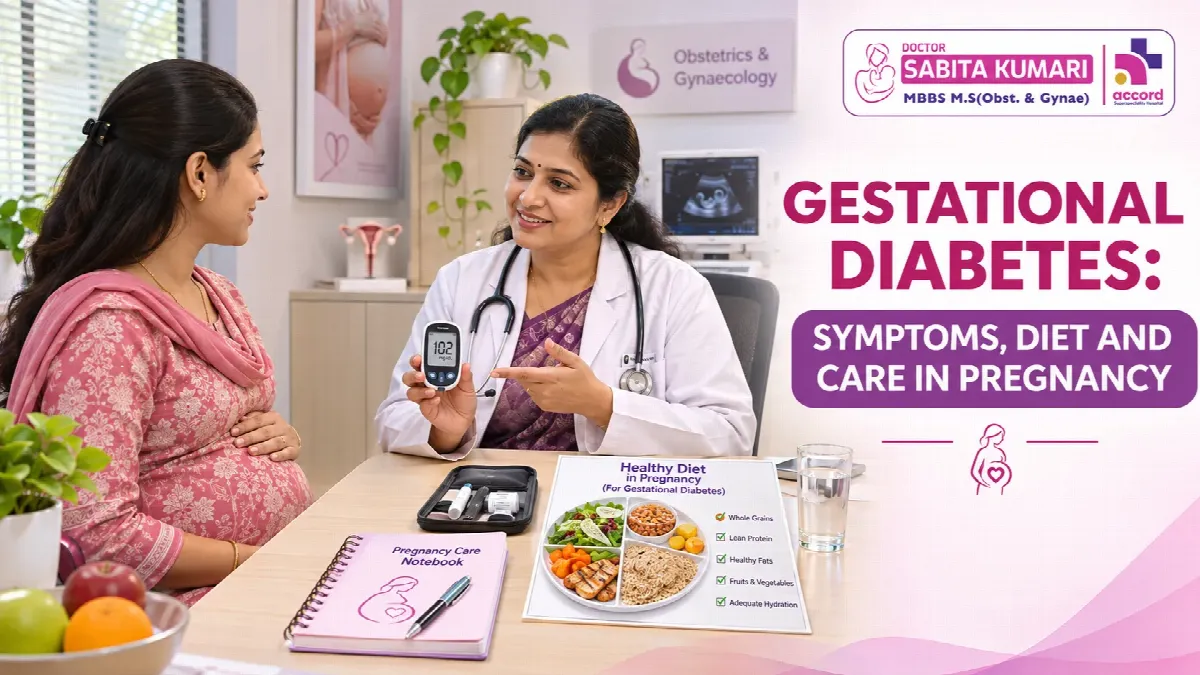
Many women are surprised to hear the words "sugar in pregnancy" when they have never had diabetes before. Gestational diabetes is high blood sugar that develops for the first time during pregnancy, and it is one of the most common pregnancy complications in India. Most women feel completely normal, which is why it is usually found only through a routine blood test.
The reassuring part is that gestational diabetes responds very well to timely care. With the right diet, activity and, when needed, medicines, most women go on to have healthy babies and normal deliveries. This guide from the team of Dr. Sabita Kumari, an obstetrician and gynecologist in Faridabad, explains why it happens, its symptoms, how it is tested in India, what to eat, how it is treated and what happens after delivery.
What Is Gestational Diabetes?
During pregnancy, the placenta produces hormones that help the baby grow. These hormones also make the mother's body less responsive to insulin, the hormone that moves sugar from the blood into the cells. Most women make extra insulin to keep up. When the body cannot make enough, blood sugar rises, and this is gestational diabetes mellitus (GDM).
It is different from type 1 or type 2 diabetes that exists before pregnancy, although some women diagnosed in early pregnancy may in fact have had undiagnosed type 2 diabetes. GDM usually goes away after delivery, but it is an important early signal about a woman's future health.
Who Is at Higher Risk?
Indian women, as a group, have a higher risk of gestational diabetes than many other populations. This is why Indian guidelines recommend testing every pregnant woman rather than only those with risk factors. The risk is higher with:
- Being overweight before pregnancy, or gaining weight rapidly in pregnancy
- A parent, brother or sister with diabetes
- Gestational diabetes in a previous pregnancy
- A previous baby weighing more than about 3.5 to 4 kg at birth
- PCOS or PCOD. Our article on PCOD and fertility explains the link between PCOS and insulin resistance.
- Age over 30 to 35
- High blood pressure, thyroid problems or a sedentary lifestyle
- A previous unexplained stillbirth or a baby with a birth defect
- Twin or multiple pregnancy
Having risk factors does not mean you will develop GDM, and many women without any risk factors still develop it.
Gestational Diabetes Symptoms
Most women with gestational diabetes have no symptoms at all. When symptoms do appear, they are easy to mistake for normal pregnancy changes:
- Increased thirst and a dry mouth
- Passing urine more often than usual
- Unusual tiredness
- Blurred vision
- Repeated urine or vaginal yeast infections
- The baby measuring larger than expected on scans, or extra fluid around the baby (polyhydramnios)
Because symptoms are so unreliable, testing is the only way to know. Do not skip the sugar test even if you feel well.
How Gestational Diabetes Is Tested in India
In India, the national guideline recommends a simple single-step test, often called the DIPSI test, for every pregnant woman.
- You drink 75 grams of glucose dissolved in water. You do not need to be fasting.
- A blood sample is taken exactly 2 hours later.
- A 2-hour value of 140 mg/dL or more is diagnosed as gestational diabetes.
The test is done at the first antenatal visit, ideally in the first trimester, and repeated at 24 to 28 weeks if the first result was normal. Some doctors use the fasting 75-gram oral glucose tolerance test (OGTT) with fasting, 1-hour and 2-hour values, especially in women at high risk. A fasting blood sugar or HbA1c may also be checked early in pregnancy to look for pre-existing diabetes. Our first trimester guide to scans, tests and care lists the other tests done at the first visit.
Why Gestational Diabetes Matters
Well-controlled GDM rarely causes serious problems. Uncontrolled high sugar, however, can affect both mother and baby.
Risks for the baby
- Growing too large (macrosomia), which makes delivery harder and increases the chance of shoulder injury during birth
- Low blood sugar soon after birth
- Breathing difficulty and jaundice in the newborn
- Premature birth
- Higher chance of obesity and diabetes later in life
- In poorly controlled cases, a higher risk of stillbirth late in pregnancy
Risks for the mother
- High blood pressure and pre-eclampsia
- A higher chance of caesarean delivery
- Excess fluid around the baby
- Gestational diabetes in future pregnancies
- A much higher lifetime risk of type 2 diabetes
Because of these risks, women with GDM are usually managed under high-risk pregnancy care, with closer monitoring of sugar levels, blood pressure and the baby's growth. Our article on signs of a high-risk pregnancy explains what extra care involves.
Gestational Diabetes Diet: What to Eat
Diet is the foundation of treatment, and most women control their sugar with diet and activity alone. The aim is not to starve or cut out food groups, but to spread carbohydrates evenly through the day and choose foods that release sugar slowly. A dietitian can tailor a plan to your weight, routine and food preferences.
Build every meal around these foods
- Whole grains in small portions: multigrain or whole wheat roti, bajra, jowar, ragi, oats, brown rice or small portions of regular rice mixed with dal and vegetables
- Protein at every meal: dal, chana, rajma, sprouts, paneer, curd, eggs, fish or chicken
- Plenty of non-starchy vegetables: leafy greens, lauki, tori, beans, cauliflower, cabbage, cucumber and salads
- Whole fruits in measured portions: guava, apple, pear, orange, papaya or berries, one portion at a time, rather than juice
- Healthy fats in moderation: a few nuts, seeds such as flax or chia, and cooking oil in limited amounts
Foods to limit or avoid
- Sugar, jaggery, honey, sweets, mithai, cakes and biscuits
- Fruit juices, packaged drinks, sweetened tea or coffee and cold drinks
- Refined flour (maida) items such as white bread, naan, bhatura and bakery products
- Fried snacks such as samosa, pakora and namkeen
- Large servings of rice, potato or other starchy foods at one meal
- Very sweet fruits in large quantities, such as mango, chikoo, grapes and banana
Practical eating tips
- Eat three small meals and two to three healthy snacks, roughly every 2 to 3 hours. Avoid long gaps.
- Keep breakfast lighter in carbohydrates, as sugar tends to rise most in the morning.
- A small bedtime snack, such as a glass of milk or a handful of nuts, helps prevent low sugar at night if your doctor advises it.
- Eat vegetables and protein first and carbohydrates last in a meal; it can soften the sugar rise.
- Drink enough water through the day.
A sample day of eating
This is only an example to show how meals can be spread out. Portions should be set with your doctor or dietitian.
- Early morning: a glass of water and a few soaked almonds or walnuts
- Breakfast: vegetable besan chilla or moong dal chilla with curd, or a small bowl of vegetable oats with an egg
- Mid-morning: one guava or apple, or a bowl of sprouts chaat
- Lunch: one or two multigrain rotis, a bowl of dal, a green vegetable sabzi, salad and a small bowl of curd
- Evening: roasted chana or makhana with unsweetened tea, or a glass of buttermilk
- Dinner: one or two rotis or a small portion of rice with paneer, chicken or rajma and plenty of vegetables
- Bedtime, if advised: a small glass of milk without sugar
Checking your sugar after meals shows which foods suit you best. Two women can react very differently to the same food, so your readings guide the fine-tuning.
Never skip meals or follow extreme low-carb or fasting diets in pregnancy. The baby needs steady nutrition, and crash diets can do harm.
Exercise and Daily Activity
Physical activity helps the body use insulin better and lowers blood sugar. For most women with GDM, these habits are safe and effective:
- A 10 to 15-minute walk after each main meal
- About 30 minutes of moderate activity on most days, such as brisk walking or prenatal yoga
- Avoiding long periods of sitting; stand up and move every hour
Check with your doctor before starting any exercise, especially if you have bleeding, a low-lying placenta, high blood pressure or other complications.
Monitoring Your Blood Sugar
Most women with GDM are asked to check their blood sugar at home with a glucometer. Your doctor will tell you how often, usually fasting in the morning and one or two hours after meals. Commonly used targets in pregnancy are:
- Fasting: below about 95 mg/dL
- 1 hour after a meal: below about 140 mg/dL
- 2 hours after a meal: below about 120 mg/dL
Your own targets may differ slightly, so follow your doctor's advice. Write every reading in a diary or app along with what you ate, and bring it to each visit. These records show whether diet alone is enough or whether medicine is needed.
Treatment When Diet Is Not Enough
If sugar levels stay above target despite diet and exercise, medicine is added. This is common and is not a sign of failure.
- Insulin is the most widely used treatment in pregnancy. It does not cross the placenta and is safe for the baby. Your doctor will teach you how to take the injections and adjust the dose based on your readings.
- Metformin tablets may be used in selected women, sometimes along with insulin, after discussing their benefits and limitations.
Never start, stop or change any diabetes medicine on your own. Learn the signs of low blood sugar, such as shakiness, sweating, confusion or a racing heartbeat, and keep glucose tablets or a sweet drink handy if you are on insulin.
Monitoring the Baby and Planning Delivery
Women with gestational diabetes have more frequent check-ups. Extra growth scans in the third trimester check the baby's size and the amount of fluid. Your doctor will also keep a close watch on your blood pressure and urine protein, and may advise monitoring of the baby's heartbeat towards the end of pregnancy.
Many women with well-controlled GDM have a normal delivery at term. If sugar control is difficult or the baby is growing very large, your doctor may recommend delivery a little earlier, induction of labour or, in some cases, a caesarean section. Our article on normal delivery tips and when a C-section is needed explains how these decisions are made. During labour, blood sugar is checked regularly, and after birth the baby's sugar is tested and early breastfeeding is encouraged.
After Delivery: Protecting Your Long-Term Health
For most women, blood sugar returns to normal soon after the baby is born, and insulin or metformin can usually be stopped. But gestational diabetes is an early warning sign.
- Have a blood sugar test 6 to 12 weeks after delivery to confirm that the diabetes has gone.
- Continue screening for diabetes every one to three years, as advised by your doctor.
- Breastfeed if you can; it helps both you and your baby.
- Return to a healthy weight gradually and stay active.
- Plan your next pregnancy with your doctor and get tested early in that pregnancy. Our preconception checklist is a good place to start.
Children born to mothers with GDM also benefit from a healthy diet and active lifestyle from an early age.
Can Gestational Diabetes Be Prevented?
Not every case can be prevented, but the risk can be lowered. Reaching a healthy weight before pregnancy, staying active, eating a balanced diet with fewer refined carbohydrates and sugars, and managing PCOS or thyroid problems before conception all help. If you have had GDM before, starting these steps well before your next pregnancy makes a real difference.
Gynecology Services by Dr. Sabita Kumari in Faridabad
Dr. Sabita Kumari, MBBS, MS (Obstetrics and Gynaecology), has about 16 years of experience and trained in minimally invasive surgery at AIIMS, New Delhi. She consults and delivers at Accord Superspeciality Hospital, Sector 86, Faridabad. Her services include:
- High-risk pregnancy care, including gestational diabetes, high blood pressure and thyroid disorders in pregnancy
- Recurrent pregnancy loss evaluation and treatment
- Ectopic pregnancy diagnosis and treatment
- Infertility evaluation and treatment
- PCOD and PCOS management
- Gynaec endoscopy: laparoscopy and hysteroscopy
- Fibroid uterus treatment
- Ovarian cysts treatment
- Adenomyosis diagnosis and treatment
- Menstrual problems such as heavy, painful or irregular periods
- Amenorrhea (absent periods) evaluation
- Adolescent health issues for teenage girls
For more on choosing the right specialist, see our guide to the best high-risk pregnancy doctor in Faridabad.
Book a Consultation
If you are pregnant and have not had your sugar test, or you have been told you have gestational diabetes, timely care makes all the difference. Call or WhatsApp +91 9310600209 to book an appointment, or use the form on our Contact page. Bring your previous sugar reports and your glucometer diary if you have one.
This article is for general information and does not replace a medical consultation. Please see a doctor for advice about your own health.