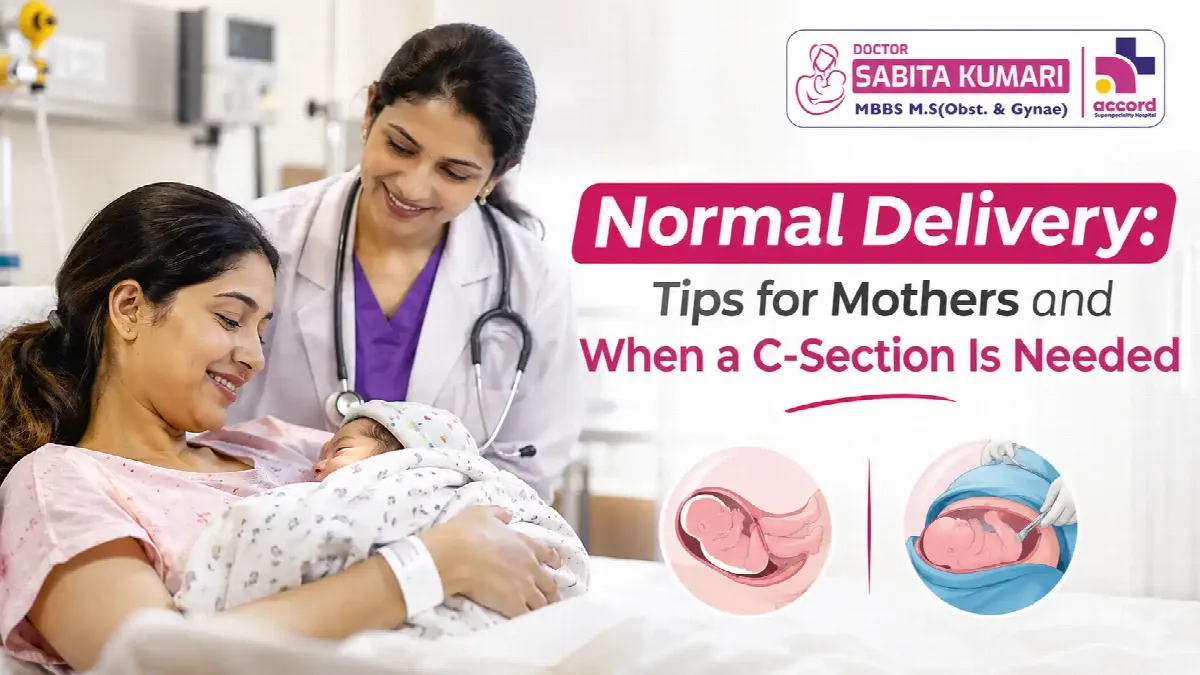
Most women hope to have a normal delivery, and for good reason. When pregnancy is healthy and labor progresses well, a vaginal birth usually means a shorter hospital stay, quicker recovery and a smoother start to breastfeeding. But a good birth is not defined by the route alone. The goal is a healthy mother and a healthy baby, and sometimes a cesarean section is the safest way to reach it.
This guide covers practical steps to prepare for a normal delivery, what labor feels like, when to go to the hospital, and the situations in which a C-section becomes necessary. It is written for expectant mothers and their families by the clinic of Dr. Sabita Kumari, an obstetrician and gynecologist in Faridabad with 16 years of experience.
What Is a Normal Delivery?
A normal (vaginal) delivery is the birth of a baby through the birth canal, with labor starting on its own or being started with medical help. It usually happens between 37 and 42 weeks of pregnancy. Most healthy women with a single baby in the head-down position can attempt a normal delivery, and the medical team monitors the mother and baby throughout labor.
Tips to Prepare for a Normal Delivery
Attend all antenatal checkups
Regular visits let your doctor track your blood pressure, weight, blood sugar, the baby's growth and the baby's position. Problems such as high blood pressure, diabetes, low iron or a low-lying placenta are easier to manage when found early. If any of these are present, your doctor may advise a plan that includes close monitoring. Our guide to the signs of a high-risk pregnancy explains what to watch for.
Eat well and keep your weight in a healthy range
A balanced diet with enough protein, iron, calcium, folate, fruits, vegetables and fluids supports the baby and keeps you strong for labor. Gaining too much weight can raise the risk of diabetes, high blood pressure and a larger baby, which can make delivery more difficult. Take iron and calcium supplements as prescribed. Do not follow crash diets or herbal products during pregnancy without asking your doctor.
Stay active as advised
For most healthy pregnancies, daily walking, prenatal yoga and gentle stretching are helpful. Exercise improves stamina, sleep, mood and circulation. Stop and call your doctor if you have bleeding, leaking of fluid, dizziness, chest pain or regular contractions before term. Women with placenta previa, a weak cervix or other risk factors may be told to avoid certain activities.
Learn about labor
Antenatal classes and good-quality videos help you understand the stages of labor, breathing techniques, positions, and the choices for pain relief. You can also watch our video on important tips for normal delivery in the video gallery. Women who understand what is happening during labor are usually calmer, and a calm mind makes it easier to cope with contractions.
Practice breathing and relaxation
Slow, deep breathing, a relaxed jaw and shoulders, and changing positions during contractions can all reduce the sensation of pain. Practicing a few minutes each day in the last trimester makes it easier to use them in labor.
Sleep and manage stress
Rest as much as you can, especially in the third trimester. Talk to your doctor or a trusted family member if you feel anxious, low or overwhelmed. Emotional health is an important part of pregnancy care.
Prepare your hospital bag and plan the journey
Pack your reports, identification, insurance papers, clothes for you and the baby, sanitary pads and toiletries by the 36th week. Decide in advance who will accompany you, how you will travel and how long the journey to the hospital takes, so that you are not rushed when labor begins.
Discuss your birth preferences
Talk to your doctor about pain relief, who can be with you in the labor room, and what happens if a C-section becomes necessary. A birth plan is a conversation, not a contract, and it should remain flexible.
Signs That Labor Is Starting
- Regular contractions. They become stronger, longer and closer together, and they do not ease with rest or a change of position. Practice contractions (Braxton Hicks) are irregular and usually settle with rest or water.
- Show. A pink or blood-stained mucus discharge can appear a few days or hours before labor.
- Water breaking. A gush or steady trickle of fluid from the vagina.
- Back pain and pelvic pressure. A dull ache in the lower back that comes and goes with tightening of the abdomen.
When to Go to the Hospital
Call your doctor or go to the hospital if:
- Contractions come about every five minutes, last about a minute each and have continued for an hour, often called the 5-1-1 guide
- Your water breaks, even if you have no contractions
- You have vaginal bleeding that is more than light spotting
- The baby moves much less than usual
- You have severe headache, blurred vision, swelling of the face or hands, or severe pain below the ribs
- You are less than 37 weeks pregnant and have contractions, leaking fluid or bleeding
If you are unsure, it is always better to call and ask.
Stages of a Normal Delivery
First stage: dilation of the cervix
The cervix thins out and opens up to about 10 centimeters. This is the longest stage, especially in a first pregnancy, and can take many hours. Early on, contractions are mild and spaced out, and you can often rest at home or walk around. In the active phase, they become strong and regular.
Second stage: pushing and birth
When the cervix is fully open, you feel a strong urge to push. With guidance from the doctor or midwife, you push with contractions until the baby is born. This stage can take from a few minutes to a couple of hours.
Third stage: delivery of the placenta
A few minutes after the baby is born, the placenta separates and is delivered. The doctor checks it is complete and watches the bleeding. A medicine is often given to help the uterus contract and reduce the chance of heavy bleeding.
Pain Relief Options in Labor
- Non-medical methods. Breathing exercises, changing positions, walking, a warm shower, massage and the presence of a supportive person.
- Epidural analgesia. A thin tube is placed in the lower back, and medicine is given to numb the lower body while you stay awake. It gives strong pain relief and is available at hospitals with an anesthesiologist.
- Other options. Some hospitals offer other injectable or inhaled pain relief. Discuss what is available at your chosen hospital in advance.
Pain relief is a personal choice. There is no right or wrong approach, and you can change your mind during labor.
When Is a C-Section Needed?
A cesarean section is a surgical delivery of the baby through a cut in the abdomen and uterus. It is a safe and life-saving operation when it is needed. It may be planned ahead of time or decided during labor. Common reasons include:
- Labor that does not progress. The cervix stops opening or the baby does not descend despite strong contractions.
- Signs of fetal distress. The baby's heart rate shows that it is not coping with labor.
- Breech or sideways position. The baby is not head-down near term, and a vaginal delivery is not considered safe.
- Placenta previa. The placenta covers the cervix, which can cause severe bleeding.
- Placental abruption or cord prolapse. Emergencies that threaten the baby's oxygen supply.
- A very large baby or a small pelvis. The baby cannot pass safely through the birth canal.
- Twins or multiple pregnancy. Depending on the positions of the babies and other factors.
- Certain medical problems. Some forms of high blood pressure, heart disease or active genital herpes can make a vaginal birth less safe.
- Previous cesarean or uterine surgery. A trial of labor after a cesarean is possible for some women, depending on the type of scar and other factors, and should be decided with your doctor.
A C-section decided early because it is the safest course is a good decision, not a failure. Women with high-risk pregnancy conditions often need close planning to choose the safest time and route for delivery.
Normal Delivery or C-Section: Key Differences
- Recovery. After a normal delivery, most women walk soon after birth and go home within a day or two. After a C-section, the hospital stay is usually a few days and full recovery takes longer.
- Pain. A normal delivery involves labor pain, perineal soreness and sometimes stitches. A C-section involves wound pain for a few weeks.
- Risks. Both are safe in the right circumstances. A normal delivery carries risks such as tears and, occasionally, an emergency C-section. A C-section carries surgical risks such as infection, bleeding and a scar on the uterus that matters in later pregnancies.
- Breastfeeding. It can start in either case, and support from the nurses and family helps.
Recovery After a Normal Delivery
- Rest as much as possible and accept help with household tasks
- Clean the stitched area gently and keep it dry, and use a cold pack or warm sitz bath as advised
- Eat fiber and drink plenty of water to prevent constipation
- Breastfeed on demand and ask for help if feeding is painful
- Expect vaginal bleeding for several weeks, gradually becoming lighter
- Attend the follow-up visit at about six weeks, or earlier if you have concerns
Seek help urgently if you have heavy bleeding, fever, foul-smelling discharge, severe pain, leg swelling or pain, chest pain, or feelings of deep sadness or anxiety that do not go away.
Choosing a Pregnancy Doctor in Faridabad
The best preparation for a safe delivery is a doctor you trust and see regularly. Dr. Sabita Kumari provides antenatal care, delivery planning and high-risk pregnancy care, and consults at Accord Superspeciality Hospital, Budena Village, Sector 86, Faridabad. You can read how to choose well in our guide on picking the best pregnancy doctor in Faridabad and our article on the best doctor for pregnancy. Women with existing health conditions can also read our tips for managing a high-risk pregnancy.
Frequently Asked Questions
Can every woman have a normal delivery?
Most healthy women with a single baby in the head-down position can try. Some conditions, such as placenta previa or certain medical problems, make a C-section safer. Your doctor will guide you based on your pregnancy.
How can I increase my chances of a normal delivery?
Go to all antenatal checkups, keep your weight and blood sugar in a healthy range, stay active as advised, learn about labor, and choose a doctor and hospital that support vaginal birth when it is safe.
Does a normal delivery hurt more than a C-section?
Labor is painful, but there are several ways to manage it, including epidural pain relief. A C-section is done under anesthesia, but the wound can be painful for some weeks afterwards.
Can I have a normal delivery after a C-section?
Some women can, depending on the reason for the earlier C-section, the type of scar and the current pregnancy. Discuss it early in pregnancy with your doctor.
Is it safe to delay going to the hospital?
If your water has broken, you are bleeding, the baby is moving less, or contractions are regular and strong, do not wait. Early contractions that are mild and irregular can often be managed at home, but call your doctor if you are unsure.
Book a Consultation
If you are pregnant or planning a pregnancy, regular antenatal visits are the best way to prepare for a safe delivery. Call +91 9310600209 to confirm clinic timings or use the form on our Contact page.
This article is for general information and does not replace a medical consultation. Please see a doctor for advice about your own pregnancy.