Many women begin thinking about pregnancy only after a test turns positive, but the weeks and months before conception have a real effect on the health of the mother and the baby. Preparing for pregnancy does not mean doing everything perfectly. It means making a handful of well-chosen changes, checking a few health issues and starting key supplements early. This checklist explains what to do, in what order, and when to ask for medical advice.
Why Preconception Planning Matters
The first weeks of pregnancy are when the baby's brain, spine and heart begin to form, often before a woman knows she is pregnant. Entering pregnancy with controlled blood sugar, a healthy weight, up-to-date vaccines and adequate folic acid lowers the risk of birth defects, miscarriage, premature birth and complications such as high blood pressure. A preconception visit is also a good time to treat conditions that may make conceiving harder.
Step 1: Book a Preconception Check-Up
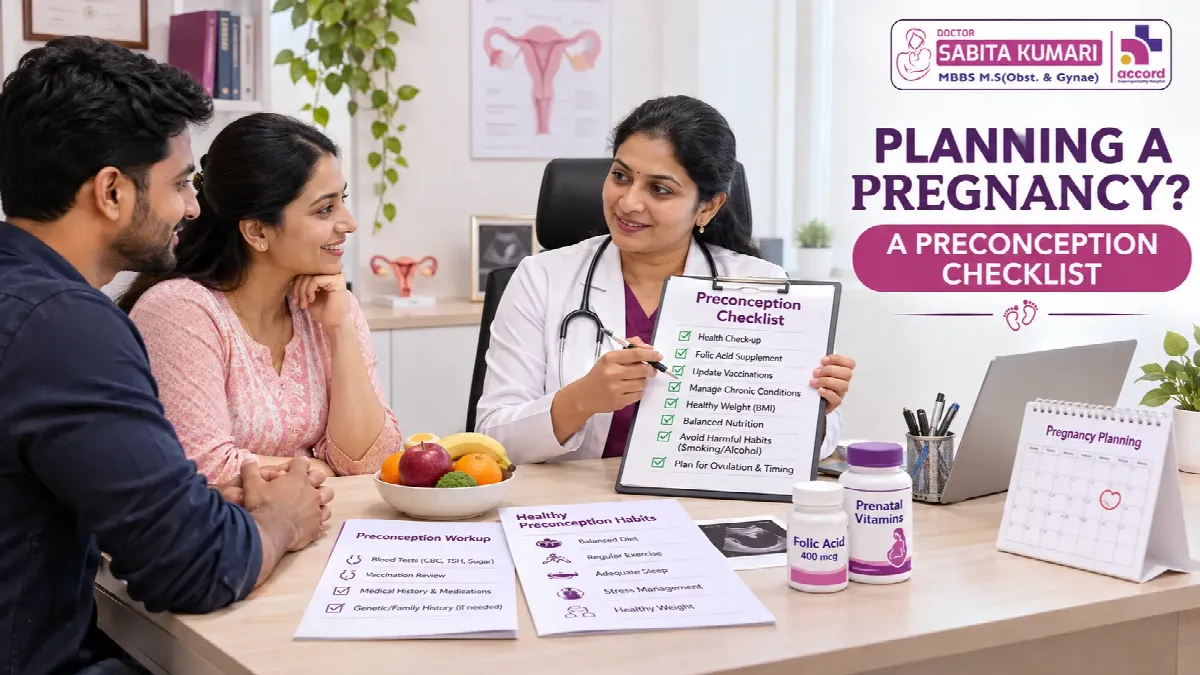
Ideally, see a gynecologist two to three months before you start trying. The visit usually includes a discussion of your periods, past pregnancies, medical conditions, medicines and family history, along with a general and pelvic examination. Your doctor may advise a Pap smear if it is due, and a pelvic ultrasound if you have irregular periods, pain or a history of fibroids or cysts.
Step 2: Start Folic Acid
Folic acid reduces the risk of neural tube defects such as spina bifida. A daily dose of 400 micrograms is standard, starting at least one month before conception and continuing through the first three months of pregnancy. Women with diabetes, epilepsy, obesity or a previous baby with a neural tube defect may need a higher dose, which your doctor will prescribe.
Step 3: Check Your Blood Tests
Basic tests help catch silent problems. Depending on your history, your doctor may suggest:
- Haemoglobin and iron levels to check for anaemia
- Blood group and Rh factor
- Fasting blood sugar or HbA1c
- Thyroid function (TSH)
- Vitamin D and vitamin B12
- Screening for HIV, hepatitis B and syphilis
- Immunity to rubella and chickenpox
Step 4: Review Your Medicines
Some medicines are unsafe in pregnancy, including certain medicines for acne, epilepsy, blood pressure and thyroid or autoimmune conditions. Do not stop any prescribed medicine on your own. Instead, ask your doctor to review everything you take, including herbal products and supplements, before you try to conceive.
Step 5: Update Your Vaccines
Vaccines against rubella, chickenpox and hepatitis B protect you and the baby. Live vaccines such as MMR and chickenpox should be given at least a month before trying to conceive. Influenza and whooping-cough vaccines are given during pregnancy, and your doctor will guide the timing.
Step 6: Reach a Healthy Weight
Being underweight or overweight can disturb ovulation and increase pregnancy complications. Even a small loss of five to ten percent of body weight can improve ovulation in women with excess weight. Aim for steady changes through balanced meals and regular activity rather than crash diets.
Step 7: Eat and Move Well
- Fill half your plate with vegetables and fruit, and include whole grains, pulses and protein
- Include iron-rich foods such as leafy greens, beans and jaggery in moderation, and pair them with vitamin C
- Have dairy or other calcium sources daily
- Walk or exercise for about 30 minutes most days
- Limit sugary drinks, processed snacks and fried foods
- Drink plenty of water
Step 8: Cut Out Harmful Habits
Smoking, tobacco chewing and alcohol reduce fertility and increase the risk of miscarriage and low birth weight. Limit caffeine to about one cup of coffee a day. Partners benefit too, because smoking and alcohol can affect sperm quality.
Step 9: Understand Your Cycle
Knowing when you ovulate improves your chances. In a regular 28-day cycle, ovulation happens around day 14, and the most fertile days are the five days before ovulation and the day itself. Having intercourse every two to three days across the fertile window is a simple approach. Ovulation kits and cycle apps can help, but they are not perfect, so do not stress over exact timing.
Step 10: Look After Mental Health
Stress alone rarely prevents pregnancy, but ongoing anxiety and poor sleep make the journey harder. Maintain regular sleep, stay physically active, and share your plans with your partner. If you feel low or overwhelmed, speak to your doctor or a counsellor.
Conditions Worth Treating Before Pregnancy
- Diabetes and thyroid disease, to bring levels into the right range
- PCOS and irregular periods, which may need ovulation support
- Fibroids or polyps that distort the uterus
- Endometriosis, which may affect fertility
- Anaemia and vitamin deficiencies
- Sexually transmitted or pelvic infections
The Partner's Checklist
Preparing for pregnancy is a shared project. The male partner should avoid smoking and heavy drinking, maintain a healthy weight, keep laptops and hot baths away from the testicles for long periods, review medicines and consult a doctor if there are concerns about semen quality.
Planning Pregnancy After 35
Women over 35 can and do have healthy pregnancies, but fertility declines gradually and some risks rise, including miscarriage, gestational diabetes and high blood pressure. If you are 35 or older, begin the preconception steps early, do not delay the check-up, and seek fertility advice after six months of trying rather than twelve. Your doctor may also discuss screening options during pregnancy and closer monitoring.
Planning Pregnancy After a Previous Loss or C-Section
After a miscarriage, many couples can try again once they feel ready, and a doctor can advise on tests if there have been repeated losses. After a caesarean delivery, doctors usually advise waiting at least 18 months before the next pregnancy so that the scar can heal well and complication risks stay low. Share your obstetric history openly at the preconception visit so that a personal plan can be made.
A Simple Month-by-Month Plan
- Three months before: book a check-up, review medicines, update vaccines and start improving diet and activity.
- Two months before: complete blood tests, treat any anaemia or thyroid problems and cut out smoking and alcohol.
- One month before: start folic acid if you have not already, track your cycle and begin trying if all is well.
- While trying: have regular intercourse in the fertile window, stay active and keep stress in check.
What to Avoid While Trying
Avoid unproven fertility supplements, herbal remedies and crash diets promoted on social media, as some can interfere with hormones or medicines. Avoid raw or undercooked meat and eggs, unpasteurised milk and excess fish high in mercury. Stay away from X-rays unless needed, and check with your doctor before using any new medicine, including over-the-counter products. Small precautions now protect you from worry later.
When to Seek Fertility Advice
If you are under 35 and have not conceived after twelve months of regular unprotected intercourse, or after six months if you are 35 or older, a fertility evaluation is advised. See a doctor earlier if your periods are irregular or absent, if you have known endometriosis or pelvic infection, or after repeated miscarriage. Read more about infertility evaluation and treatment on our website.
Preconception Care in Faridabad
Dr. Sabita Kumari is a gynecologist in Faridabad who offers preconception counselling, pregnancy planning and fertility evaluation. You can learn about her approach on the about page. To book a visit call +91 9310600209 or use the contact page. This article is for general information and does not replace medical advice.