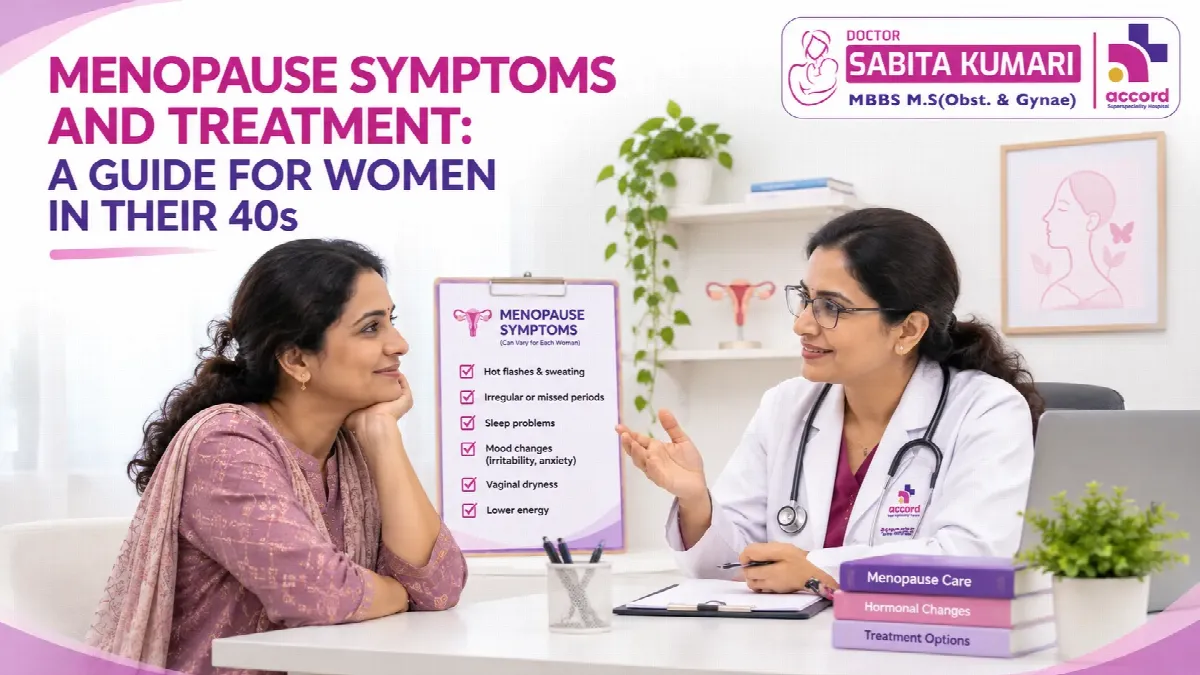
Periods that suddenly come early or late, waking up drenched in sweat, feeling irritable for no clear reason, or forgetting words mid-sentence. Many women in their 40s notice changes like these and are not sure whether to blame stress, work, thyroid or simply age. Often, the real reason is the gradual hormonal shift that leads up to menopause.
In India, menopause tends to arrive earlier than in Western countries. The Indian Menopause Society estimates the average age at around 46 years, and the changes leading up to it usually start about four years earlier. That makes your 40s the decade when understanding menopause symptoms really matters. This guide from the team of Dr. Sabita Kumari, an obstetrician and gynecologist in Faridabad, explains the stages of menopause, common and less obvious symptoms, when to see a doctor, and the treatments and lifestyle steps that help.
Perimenopause, Menopause and Postmenopause
Menopause is not a single day but a transition that unfolds over several years.
- Perimenopause is the transition phase, when the ovaries gradually make less estrogen and progesterone and ovulation becomes irregular. It commonly starts in the early to mid-40s and lasts around four years on average, though it can be shorter or longer. Most symptoms begin here.
- Menopause is confirmed when you have had no period for 12 months in a row without any other cause, such as pregnancy or medication.
- Postmenopause is the rest of life after that point. Some symptoms ease, while long-term health risks such as bone loss and heart disease become more important.
Menopause before 40 is called premature menopause or premature ovarian insufficiency, and between 40 and 45 it is called early menopause. Both need a medical evaluation, because the longer a woman lives without estrogen, the greater the effect on bones and heart.
Early Signs of Menopause in Your 40s
The first sign is usually a change in the menstrual cycle rather than hot flashes. Common early changes include:
- Periods coming closer together, then later becoming further apart
- Periods becoming heavier or lighter, longer or shorter than usual
- Skipped periods for a month or two
- More noticeable premenstrual symptoms, such as breast tenderness and mood swings
- Trouble sleeping, even before hot flashes start
Irregular periods in your 40s are common, but heavy, prolonged or very frequent bleeding is not something to accept as "just menopause". Conditions such as fibroids, polyps and thickening of the uterine lining are also common at this age. Our guide on heavy periods, causes and treatment explains when bleeding needs a check-up.
Common Menopause Symptoms
Every woman's experience is different. Some have very few symptoms, while others find them disruptive for years. These are the most common menopause symptoms.
Hot flashes and night sweats
A sudden wave of heat spreads across the face, neck and chest, often with sweating, redness and a racing heartbeat, followed by chills. Hot flashes may last a few seconds to several minutes. When they happen at night, they cause night sweats that soak clothes and bedding and disturb sleep. Hot flashes can continue for several years after the last period.
Sleep problems
Difficulty falling asleep, waking frequently or waking too early are very common, sometimes due to night sweats and sometimes due to hormonal effects on the brain. Poor sleep then worsens tiredness, mood and concentration.
Mood changes, anxiety and low mood
Irritability, sudden mood swings, anxiety, tearfulness and low mood can appear during perimenopause, especially in women with a history of premenstrual mood symptoms or depression. These are real effects of changing hormones, not a sign of weakness, and they respond to treatment.
Brain fog and memory lapses
Many women describe forgetfulness, difficulty concentrating or losing their train of thought. These changes are usually temporary and improve after the transition.
Vaginal dryness and painful intercourse
Falling estrogen makes the tissues of the vagina and vulva thinner, drier and less elastic. This can cause itching, burning, discomfort during intercourse and a higher chance of vaginal infections. Unlike hot flashes, these symptoms tend to get worse over time if not treated. Doctors call this genitourinary syndrome of menopause.
Urinary symptoms
Frequent urination, urgency, leakage when coughing or sneezing, and repeated urinary infections become more common as the bladder and urethra are also affected by low estrogen.
Joint and muscle aches
Aches, stiffness and pains in joints and muscles are among the most frequently reported symptoms in Indian women. They are often mistaken for arthritis or vitamin deficiency.
Weight gain and body changes
Metabolism slows with age and hormonal changes shift fat towards the waist. Many women notice weight gain around the abdomen even without eating more.
Skin, hair and other changes
- Dry, thinner skin and more wrinkles
- Hair thinning on the scalp, and sometimes more facial hair
- Lower sex drive
- Headaches or migraines that change in pattern
- Palpitations, which should be checked by a doctor to rule out heart or thyroid causes
Long-Term Health After Menopause
Some effects of menopause are silent but important for long-term health.
- Bone health: bone loss speeds up in the years around menopause, raising the risk of osteoporosis and fractures. Many Indian women already have low vitamin D and calcium intake, which adds to the risk.
- Heart health: estrogen helps protect blood vessels. After menopause, cholesterol, blood pressure and the risk of heart disease rise.
- Diabetes and weight: abdominal weight gain is linked with insulin resistance and type 2 diabetes.
This is why the menopause years are an ideal time for a full health check-up, not just treatment of symptoms. Our article on the importance of regular gynecological check-ups explains which screenings matter at this stage.
When to See a Gynecologist
Book an appointment if:
- Symptoms such as hot flashes, poor sleep or mood changes are affecting your work, relationships or daily life
- Your periods are very heavy, last more than a week, come more often than every 21 days, or you bleed between periods or after intercourse
- You have any bleeding after 12 months without a period. Postmenopausal bleeding always needs prompt evaluation.
- Your periods stopped before the age of 40, or before 45 with troublesome symptoms
- You have vaginal dryness, painful intercourse or repeated urinary infections
- You want to discuss hormone therapy or your risk of osteoporosis and heart disease
How Menopause Is Diagnosed
In women over 45 with typical symptoms and irregular periods, menopause is usually diagnosed from the history alone, without blood tests. Your doctor will ask about your periods, symptoms, medical and family history, and medicines.
Tests may still be useful to rule out other causes and assess your overall health:
- Thyroid function tests, as thyroid problems can mimic menopause symptoms
- Hemoglobin, blood sugar, lipid profile, vitamin D and calcium
- FSH and other hormone levels, mainly in women under 45 or when the picture is unclear
- Pelvic ultrasound if there is abnormal bleeding
- Pap smear, breast examination and mammography as per screening schedules
- Bone density scan (DEXA) for women at higher risk of osteoporosis
Treatment Options for Menopause Symptoms
Treatment is tailored to your symptoms, health history and preferences. Not every woman needs medicines, but no woman needs to suffer in silence.
Menopausal hormone therapy (MHT)
Hormone therapy replaces some of the estrogen the ovaries no longer make and is the most effective treatment for hot flashes and night sweats. It also helps sleep, mood, vaginal dryness and bone protection. Women who still have a uterus need a progestogen along with estrogen to protect the uterine lining.
For most healthy women under 60 or within 10 years of menopause, the benefits of hormone therapy usually outweigh the risks. It is not suitable for everyone, for example women with a history of breast cancer, blood clots, stroke, heart disease or unexplained vaginal bleeding. The decision should always be made with your gynecologist after a full assessment, and therapy is reviewed regularly.
Local vaginal estrogen
Low-dose estrogen creams, tablets or rings applied inside the vagina treat dryness, painful intercourse and recurrent urinary infections. Very little is absorbed into the bloodstream, so they can be used by many women who cannot take full hormone therapy. Vaginal moisturizers and lubricants also help.
Non-hormonal medicines
For women who cannot or prefer not to take hormones, certain non-hormonal medicines can reduce hot flashes and help with mood and sleep. Your doctor will choose one based on your symptoms and other health conditions.
Bone protection
Calcium and vitamin D supplements, weight-bearing exercise and, when needed, specific medicines for osteoporosis help keep bones strong.
Treatment of abnormal bleeding
If bleeding is heavy or irregular in perimenopause, the cause is treated first, which may involve hormonal treatment, a hormone-releasing intrauterine device or hysteroscopy. If other treatments fail or there is a significant problem such as large fibroids, a hysterectomy may be considered. Read our guide on laparoscopic hysterectomy and who needs it.
Lifestyle Steps That Make a Real Difference
Food and nutrition
- Include calcium-rich foods such as milk, curd, paneer, ragi, sesame seeds and green leafy vegetables every day.
- Get vitamin D from safe sun exposure and supplements if your level is low.
- Eat plenty of vegetables, fruits, whole grains, dals and legumes, with adequate protein at every meal.
- Soy foods and flaxseeds contain plant compounds that help some women with mild hot flashes.
- Limit sugar, fried food, refined flour and excess salt to protect your heart and control weight.
- Cut down on tea, coffee, spicy food and alcohol if they trigger hot flashes.
Exercise
- At least 150 minutes of moderate activity a week, such as brisk walking, cycling or swimming
- Strength training two or three times a week to protect muscles and bones
- Yoga, stretching and balance exercises to reduce stiffness and the risk of falls
Sleep and stress
- Keep the bedroom cool and well ventilated, and wear light cotton clothing at night.
- Follow a regular sleep routine and reduce screen time before bed.
- Try breathing exercises, meditation or yoga to manage stress and hot flashes.
- Talk openly with your family. Their understanding makes a big difference during this phase.
Avoid smoking
Smoking brings menopause earlier, worsens hot flashes and greatly increases the risk of heart disease and osteoporosis. Quitting at any age helps.
Contraception in Your 40s
Irregular periods do not mean you cannot get pregnant. Ovulation can still happen unpredictably during perimenopause, and unplanned pregnancies in the 40s are more common than many women expect. Doctors generally advise continuing contraception until you have gone 12 months without a period if you are over 50, or 24 months if you are under 50. Some methods, such as the hormone-releasing intrauterine device, also reduce heavy bleeding and can later be combined with estrogen therapy. Discuss the best option with your gynecologist.
Common Myths About Menopause
- Myth: Menopause symptoms are all in the mind. Hot flashes, sleep problems and mood changes are caused by real hormonal changes and can be treated.
- Myth: Every woman must simply put up with it. Effective treatments exist, from lifestyle changes to hormone therapy and non-hormonal medicines.
- Myth: Hormone therapy is always dangerous. For most healthy women under 60 or within 10 years of menopause, the benefits usually outweigh the risks when therapy is chosen and monitored by a doctor.
- Myth: Heavy bleeding in the 40s is just menopause. Heavy or irregular bleeding can be due to fibroids, polyps or changes in the uterine lining and should always be checked.
- Myth: Weight gain at menopause cannot be controlled. Regular exercise, strength training and mindful eating help most women manage their weight through this transition.
Gynecology Services by Dr. Sabita Kumari in Faridabad
Dr. Sabita Kumari, MBBS, MS (Obstetrics and Gynaecology), has about 16 years of experience and trained in minimally invasive surgery at AIIMS, New Delhi. She consults at Accord Superspeciality Hospital, Sector 86, Faridabad. Her services include:
- Menopause care, including symptom management and hormone therapy counseling
- Menstrual problems such as heavy, irregular or painful periods in the 40s
- Fibroid uterus, adenomyosis and ovarian cyst treatment
- Gynaec endoscopy: laparoscopy, hysteroscopy and laparoscopic hysterectomy
- PCOD and PCOS management
- Infertility evaluation and treatment
- High-risk pregnancy care and routine antenatal care
- Ectopic pregnancy and recurrent pregnancy loss care
- Amenorrhea (absent periods) evaluation
- Adolescent health issues for teenage girls
- Pap smear and routine gynecological check-ups
Book a Consultation
Menopause is a natural stage of life, but its symptoms do not have to control your days. If you are in your 40s and noticing changes in your periods, sleep, mood or comfort, a consultation can help you understand what is happening and choose the right support. Call or WhatsApp +91 9310600209 to book an appointment, or use the form on our Contact page.
This article is for general information and does not replace a medical consultation. Please see a doctor for advice about your own health.