Many women walk into a gynecologist's clinic with a dozen questions in mind and walk out having asked none of them. Nerves, embarrassment, a busy waiting room or simply forgetting in the moment are all common. Yet the questions you ask, and the information you share, shape the quality of care you receive far more than most people realise.
Whether it is your very first appointment, your first visit to a new doctor, or your first check-up in many years, a little preparation goes a long way. This guide to your first visit gynecologist appointment lists seven questions worth asking, explains why each one matters, and covers what to expect, what to bring and how to feel more comfortable. It is written by the team of Dr. Sabita Kumari, an obstetrician and gynecologist in Faridabad.
Why the First Gynecologist Visit Matters
The first consultation sets up a relationship that may last for years, through periods, pregnancy, family planning and menopause. It is when the doctor learns your health history and you learn how the doctor works. A good first visit leaves you feeling heard, informed and confident about where to turn if a problem comes up.
Gynecologists are trained to discuss intimate topics every day. Nothing you ask will surprise them, and honest answers help them give you the right advice. Regular check-ups also catch problems such as anemia, thyroid imbalance, PCOS, infections and early cervical changes before they cause trouble. Our article on the importance of regular gynecological check-ups explains why routine visits are worth the time.
Before You Go: How to Prepare
- Note the date of your last period and your usual cycle length, flow and any pain. A simple period-tracking app makes this easy.
- Write down your symptoms, when they started and what makes them better or worse.
- List all medicines and supplements, including contraceptive pills, thyroid tablets, vitamins and herbal products.
- Collect previous reports, such as ultrasounds, blood tests, Pap smear results and operation notes.
- Know your family history, especially of breast, ovarian or uterine cancer, diabetes, thyroid disease, early menopause or blood clots.
- Write your questions on your phone or a piece of paper, starting with the most important.
If possible, book the appointment for a day when you are not on your period, especially if a Pap smear or swab may be needed. If your concern is heavy or irregular bleeding, however, do not delay the visit just because of your period.
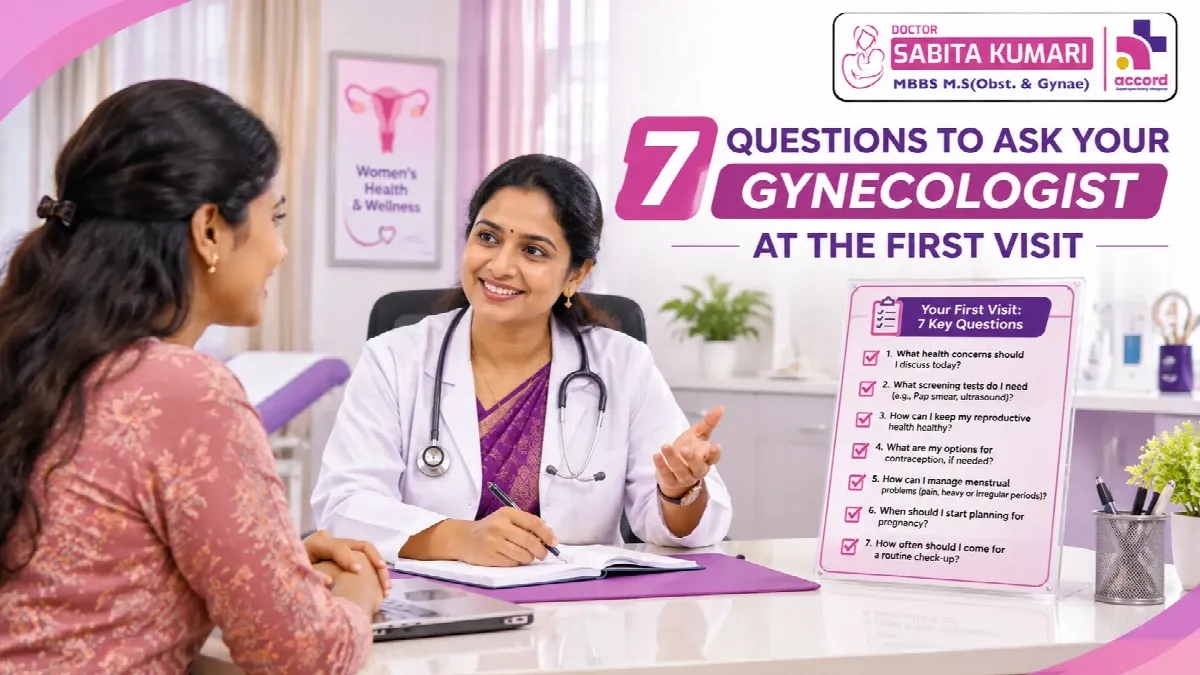
7 Questions to Ask Your Gynecologist at the First Visit
1. Are my periods normal?
Many women live for years with periods that are heavier, more painful or more irregular than they should be, simply because they never knew what "normal" looks like. Describe your cycle honestly: how many days between periods, how many days of bleeding, how often you change pads, whether you pass clots, and whether pain stops you from working or studying.
A normal cycle usually comes every 21 to 35 days, with bleeding for up to about seven days. Very heavy bleeding, bleeding between periods, cycles that are very short or very long, or severe pain deserve investigation. These can be signs of fibroids, polyps, PCOS, thyroid problems, endometriosis or other conditions that are treatable. Our menstrual problems page explains common causes and treatments.
2. Which screening tests do I need, and how often?
Screening tests look for problems before symptoms appear. Ask your doctor which ones are right for your age and history, and when you should repeat them. Common screenings include:
- Pap smear and/or HPV test to detect early changes in the cervix that could lead to cervical cancer
- Breast examination, and mammography from the recommended age or earlier if you have a strong family history
- Blood tests such as hemoglobin, thyroid function, blood sugar, vitamin D and cholesterol
- Pelvic ultrasound if you have symptoms or abnormal findings
- Bone density scan around and after menopause for women at risk
Ask the doctor to write down your next due dates so you do not lose track.
3. Which contraception is right for me?
If you are sexually active and not planning pregnancy right now, contraception is one of the most useful topics to discuss. Options include condoms, combined pills, progestin-only pills, injections, the copper intrauterine device (IUD), the hormone-releasing intrauterine device and permanent methods.
Each method has different effectiveness, side effects and benefits. Some, like the hormonal IUD, also reduce heavy and painful periods. Your doctor will consider your age, medical history, smoking status, future pregnancy plans and personal preference. Ask about emergency contraception too, so you know what to do if a method fails.
4. Is this symptom something to worry about?
This is the moment to bring up anything that has been bothering you, however small or embarrassing it seems. Common concerns include:
- Changes in vaginal discharge, itching or odour
- Pain during intercourse
- Pelvic or lower abdominal pain
- Leakage of urine when coughing or sneezing
- Breast lumps, pain or nipple discharge
- Acne, excess facial hair or unexplained weight gain
- Bleeding after intercourse or after menopause
Be specific about when the symptom started and how it affects your daily life. Many of these issues have simple explanations and treatments, but a few need prompt evaluation, which is why they should never be ignored.
5. How can I prepare for a healthy pregnancy?
Even if pregnancy is a few years away, it helps to ask. Your doctor can check your immunity to rubella, review medicines that are not safe in pregnancy, advise on folic acid, and look for conditions such as anemia, thyroid problems, diabetes or PCOS that are best controlled before conception.
If you have been trying for a while without success, ask when you should be evaluated. As a general guide, women under 35 should see a doctor after 12 months of trying, and those 35 or older after 6 months. Our preconception checklist covers the key steps to take before trying to conceive.
6. How does my family history affect my health?
Some conditions run in families. Tell your doctor if close relatives have had breast, ovarian, uterine or bowel cancer, diabetes, thyroid disease, early menopause, blood clots or heart disease. Then ask how this changes your risk and whether you need earlier or more frequent screening.
For example, a strong family history of breast or ovarian cancer may mean starting breast imaging earlier or considering genetic counseling. A family history of diabetes means paying closer attention to weight, diet and blood sugar, especially before and during pregnancy.
7. What lifestyle changes would help me most?
Diet, weight, exercise, sleep and stress all influence periods, fertility, hormones and long-term health. Instead of general advice, ask what would make the biggest difference for you. Your doctor may suggest:
- Iron-rich foods or supplements if you are anemic
- Weight management and regular exercise if you have PCOS or irregular periods
- Calcium and vitamin D for bone health
- Stopping smoking and limiting alcohol
- Vaccines such as HPV and tetanus
- Better sleep and stress management
Small, specific changes are easier to follow than a long list of rules, so ask your doctor to help you prioritise.
What Happens During the First Visit
Knowing what to expect can ease a lot of anxiety. A typical first gynecology consultation includes:
- A conversation about your periods, symptoms, medical and surgical history, medicines, pregnancies, contraception and family history
- A general check-up, including weight, height and blood pressure
- A breast examination if it is relevant to your age or symptoms
- A pelvic examination only if needed, which may include looking at the vulva, a speculum examination to see the cervix and a gentle internal examination
- Tests such as a Pap smear, swabs, blood tests or an ultrasound, depending on your needs
A pelvic examination usually takes only a few minutes. The doctor should explain each step, ask for your consent and stop if you are uncomfortable. You can ask for a female attendant to be present, and you can ask questions at any point. For teenagers and women who have not been sexually active, an internal examination is usually not needed at the first visit.
Tips to Feel More Comfortable
- Remember that gynecologists see these concerns every day. There is no question too small or too personal.
- Tell the doctor if you feel nervous. Saying it out loud helps them go at your pace.
- Wear comfortable, easy-to-remove clothing.
- Empty your bladder before the examination unless asked not to.
- Bring a trusted family member or friend if it helps, or ask to speak to the doctor alone if you prefer.
- Ask the doctor to explain medical terms in simple language.
- Before leaving, repeat back the key points and next steps to make sure you have understood.
Questions Teenagers and Their Parents Often Ask
For a teenage girl, the first gynecology visit is usually a friendly conversation about periods, growth, acne, hygiene and any worries. Parents often ask whether their daughter's irregular or painful periods are normal, when to be concerned about delayed periods, and about the HPV vaccine. A good doctor will also give the girl a few minutes alone to ask her own questions. Learn more about our adolescent health services.
Questions for Women in Their 40s and Beyond
If you are approaching or past menopause, your questions will naturally shift. Useful questions at this stage include:
- Are my irregular or heavier periods part of perimenopause, or do they need tests?
- What can I do about hot flashes, poor sleep or mood changes?
- Is hormone therapy suitable for me, and what are the benefits and risks in my case?
- Do I need a bone density scan, mammogram or other screening now?
- How can I manage vaginal dryness or urine leakage?
Any bleeding after periods have stopped for a year should always be reported, even if it is light.
When Not to Wait for a Routine Visit
Some symptoms need prompt attention rather than a planned appointment. Contact a doctor quickly or go to the hospital if you have:
- Very heavy bleeding that soaks a pad every hour, or bleeding with dizziness or fainting
- Severe or sudden pain in the lower abdomen
- Pain or bleeding with a positive pregnancy test
- Fever with pelvic pain or foul-smelling discharge
- Any bleeding after menopause
Common Myths About Visiting a Gynecologist
- Myth: You only need a gynecologist when you are pregnant. Gynecologists care for women's health at every stage, from puberty to menopause and beyond.
- Myth: Every visit includes an internal examination. Examinations are done only when needed and with your consent.
- Myth: If nothing hurts, there is no need for a check-up. Many conditions, including cervical changes, anemia and thyroid problems, have no symptoms in the early stages.
- Myth: Embarrassing symptoms are best ignored. Problems such as discharge, urine leakage or pain during intercourse are common and usually easy to treat once discussed.
After the Visit: Next Steps
- Make sure you know what each test is for and when results will be ready.
- Ask how you will be informed of results and what to do if you do not hear back.
- Note the date of your next check-up or screening.
- Follow the treatment plan, and complete any course of medicine fully.
- Contact the clinic if your symptoms get worse or new symptoms appear before your next visit.
Gynecology Services by Dr. Sabita Kumari in Faridabad
Dr. Sabita Kumari, MBBS, MS (Obstetrics and Gynaecology), has about 16 years of experience and trained in minimally invasive surgery at AIIMS, New Delhi. She consults at Accord Superspeciality Hospital, Sector 86, Faridabad, and offers a full range of women's health services:
- Routine gynecological check-ups, Pap smear and screening
- Menstrual problems such as heavy, painful or irregular periods
- Contraception counseling
- PCOD and PCOS management
- Infertility evaluation and preconception care
- High-risk pregnancy care and routine antenatal care
- Fibroid uterus, adenomyosis and ovarian cyst treatment
- Gynaec endoscopy: laparoscopy and hysteroscopy
- Ectopic pregnancy and recurrent pregnancy loss care
- White discharge and vaginal infection treatment
- Adolescent health issues and menopause care
Book Your First Visit
Your first visit to a gynecologist is the start of a long-term partnership for your health. Come prepared with your questions, and expect to be listened to. Call or WhatsApp +91 9310600209 to book an appointment, or use the form on our Contact page.
This article is for general information and does not replace a medical consultation. Please see a doctor for advice about your own health.