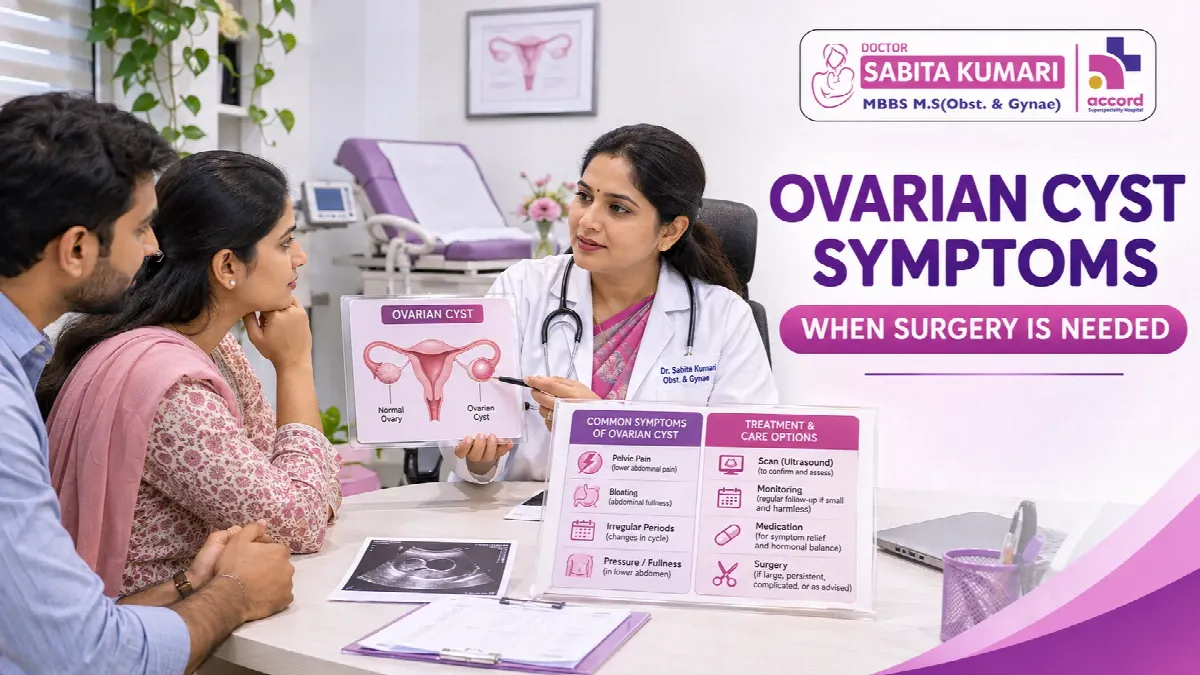
Hearing the words "ovarian cyst" on an ultrasound report can be alarming. The good news is that most ovarian cysts are harmless, form as part of the normal menstrual cycle and disappear on their own within weeks. Still, some cysts cause pain or complications and a few need treatment. This guide explains the symptoms of ovarian cysts, the different types, how they are checked and when surgery is actually needed.
What Is an Ovarian Cyst?
An ovarian cyst is a fluid-filled sac that develops on or inside an ovary. The ovaries release an egg every month, and the follicle that holds the egg can sometimes fail to open or reseal and fill with fluid. Cysts are very common in women of reproductive age, and many are found by chance during a scan done for another reason.
Types of Ovarian Cysts
Functional cysts
These are the most common and are linked to ovulation. Follicular cysts and corpus luteum cysts usually measure two to five centimeters and resolve within one to three cycles without treatment.
Endometriomas
Often called chocolate cysts, these contain old blood and develop in women with endometriosis. They tend to persist and can cause painful periods and fertility problems.
Dermoid cysts
Dermoid cysts (mature teratomas) contain tissues such as hair or fat. They are usually benign but do not disappear on their own and may need removal if large.
Cystadenomas
These develop from the surface cells of the ovary and can grow quite large. They are usually benign but are often removed because of size.
Polycystic ovaries
In PCOS, the ovaries contain many small follicles, sometimes described as a string of pearls on a scan. This is different from a single large cyst and is managed as a hormonal condition.
Ovarian Cyst Symptoms
Many women have no symptoms at all. When symptoms do occur, they may include:
- Dull or sharp pain in the lower abdomen or pelvis, often on one side
- A feeling of heaviness, fullness or bloating
- Pain during intercourse
- Pain during bowel movements or pressure on the bladder
- Irregular or painful periods
- Difficulty emptying the bladder completely
- Nausea or vomiting with sudden pain
Symptoms That Need Urgent Care
A cyst can twist the ovary (torsion) or burst, and both need prompt treatment. Go to a hospital quickly if you have sudden severe pelvic pain, pain with fever or vomiting, dizziness or fainting, or rapid breathing. Do not wait for it to pass.
How Ovarian Cysts Are Diagnosed
An ultrasound, usually transvaginal, is the main test and shows the size, shape and contents of the cyst. Features such as thick walls, solid areas and blood flow help the doctor judge whether it is likely to be simple or needs closer attention. Further tests may include:
- Pregnancy test, to rule out ectopic pregnancy
- Blood tests, including CA-125 in selected cases, usually for women over 40 or with worrying features
- MRI or CT when the ultrasound is not conclusive
- Repeat ultrasound after a few weeks to see whether a functional cyst has settled
Treatment Options for Ovarian Cysts
Watchful waiting
Small, simple cysts that cause no trouble are usually watched with a repeat scan after six to eight weeks. Most vanish by themselves.
Medicines
Pain relief helps with discomfort. Hormonal pills can prevent new functional cysts from forming in women who get them repeatedly, though they do not shrink existing ones.
When surgery is needed
Surgery is considered when a cyst is larger than about five to seven centimeters, keeps growing, does not go away after a few cycles, causes persistent pain, twists or bursts, or has features that raise suspicion. In most cases, the cyst can be removed by laparoscopic surgery through tiny cuts, preserving the healthy ovary and allowing a quicker recovery. You can read more about ovarian cyst treatment and about laparoscopic gynecological surgery on our website.
Ovarian Cysts and Fertility
Most functional cysts do not affect fertility. Endometriomas can reduce ovarian reserve and need careful planning, especially in women who wish to conceive. If you are trying for a baby and have a cyst, discuss the timing of treatment with your doctor so that healthy ovarian tissue is protected.
Can Ovarian Cysts Be Prevented?
Functional cysts cannot always be prevented, but regular check-ups help detect problems early. Women who get repeated cysts may benefit from hormonal treatment. Maintaining a healthy weight, managing PCOS and reporting persistent pelvic pain promptly are sensible steps.
Are Ovarian Cysts Cancerous?
The great majority are benign, especially in younger women. The risk of a cancerous cyst is higher after menopause and when a cyst has solid parts or grows quickly. This is why persistent cysts, and any new cyst after menopause, are evaluated carefully rather than ignored.
Self-Care During a Cyst
- Use a warm compress or hot water bottle on the lower abdomen for cramps
- Take pain relief only as advised by your doctor
- Avoid strenuous exercise or heavy lifting if you have pain, because twisting is a risk
- Keep track of your pain and periods in a diary
- Attend your follow-up scan even if you feel fine
Cysts in Different Stages of Life
In teenagers, cysts are usually functional and settle on their own, and surgery is rarely needed. During the reproductive years, most cysts are linked to ovulation, endometriosis or PCOS, and treatment aims to relieve symptoms while protecting fertility. During pregnancy, small cysts are often found at the first scan and usually resolve without any treatment. After menopause, the ovaries no longer ovulate, so any new cyst should be looked at with greater care and followed up with scans and, where needed, blood tests.
Recovery After Laparoscopic Cyst Surgery
Most women go home the same day or the next day after laparoscopic cystectomy. Mild shoulder-tip pain from the gas used during surgery and some bloating settle in a day or two. Light walking is encouraged from the first day. Many women return to desk work within a week and to normal routine within two weeks, although heavy lifting and strenuous exercise should wait until the doctor allows it. The removed tissue is usually sent for examination so that the exact type of cyst is confirmed. A follow-up visit a couple of weeks later reviews the report and plans any further treatment, such as hormonal medicines to prevent new cysts.
Questions to Ask Your Doctor About a Cyst
- What type of cyst is it, and how big is it?
- Is it likely to go away by itself?
- When should I have the next scan?
- Are any blood tests needed?
- If surgery is advised, will the ovary be saved?
- How will it affect my plans for pregnancy?
Bringing earlier ultrasound reports and a note of your last menstrual period to the appointment helps your doctor compare the cyst over time. Asking questions and understanding the plan reduces anxiety, and in most cases the answer is reassuring: a cyst is common, usually harmless and very treatable when it does need attention.
When to See a Gynecologist
Book a visit if you have recurring pelvic pain, bloating that does not settle, painful periods, a cyst found on a scan or a cyst that is not shrinking on follow-up. You can learn more about the doctor on the about page.
Ovarian Cyst Treatment in Faridabad
Dr. Sabita Kumari is a gynecologist in Faridabad experienced in both medical management and laparoscopic treatment of ovarian cysts, with the aim of avoiding unnecessary surgery. To book a consultation call +91 9310600209 or use the contact page. This article is for general information and does not replace medical advice.